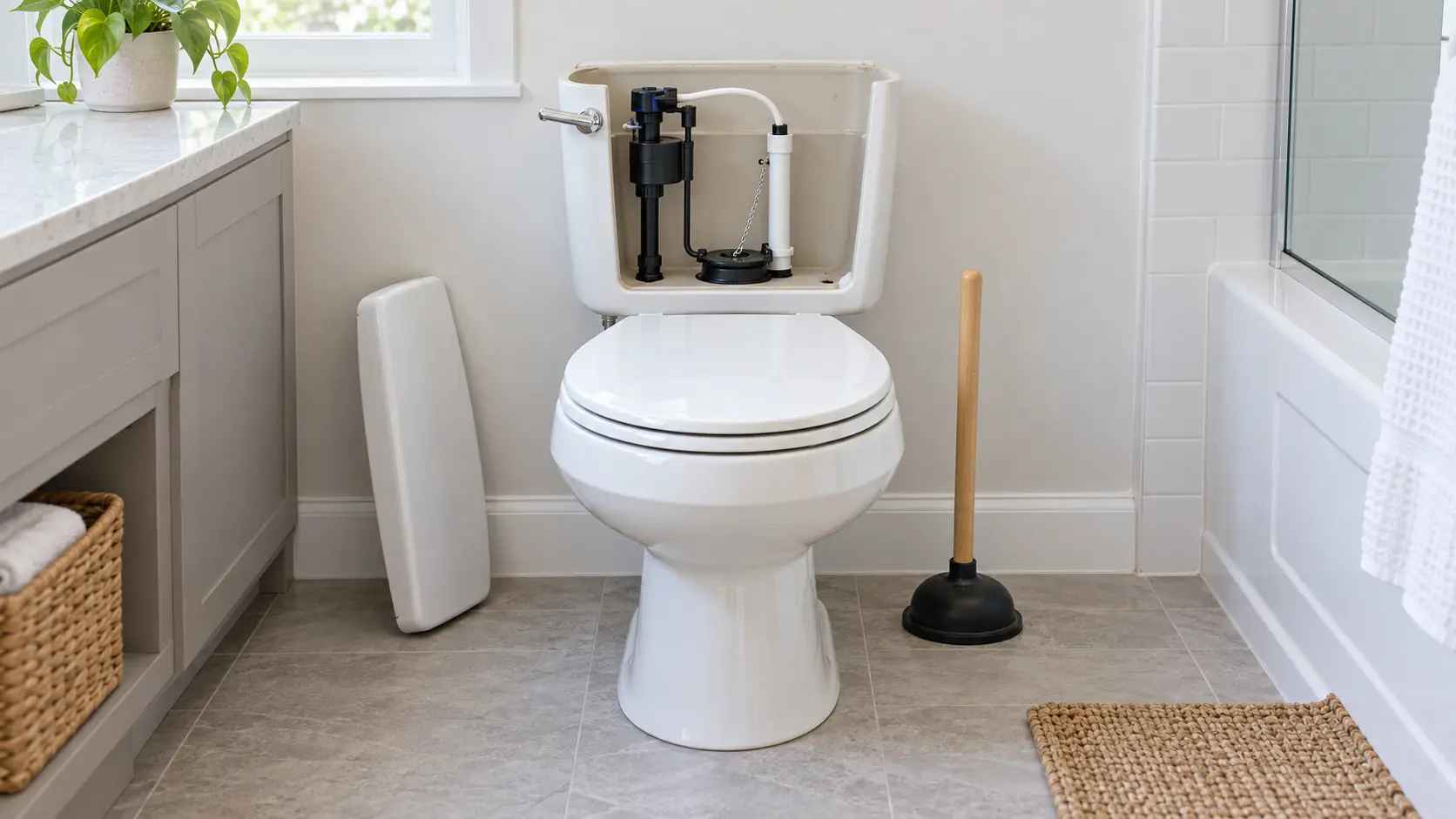
A toilet that won't flush does not always mean the drain is completely clogged. The problem may be in the bowl, inside the tank, at the water supply, or in the flushing mechanism. The fastest way to narrow it down is to watch what happens when you press the handle.
If the bowl is rising, stop flushing
Do not keep pressing the handle if the water is climbing toward the rim. A rising bowl points toward a blockage, and another flush can increase the chance of an overflow. If needed, close the toilet's water-supply shutoff valve while you diagnose the problem.
Start with what happens when you try to flush
You do not need to identify every part in the tank before troubleshooting. Start with the symptom you can actually see.
| What happens? | Check first | Likely area |
|---|---|---|
| The bowl fills or water rises toward the rim | Stop repeated flushing and check for a clog | Bowl trapway or drain |
| The bowl rises, then drains slowly | Look for a partial obstruction | Trapway or downstream drain |
| The handle moves but little or nothing happens | Open the tank and inspect the handle, lift chain, and flush valve | Tank mechanism |
| The tank has little or no water | Check the shutoff valve, fill valve, and tank water level | Water supply / fill system |
| The toilet flushes, but weakly or incompletely | Check water level, flapper or flush valve, rim holes, and possible partial clog | Tank, bowl, or trapway |
| The tank refills very slowly or not at all | Check the water supply and fill valve | Fill system |
1. The bowl fills with water or rises when you flush
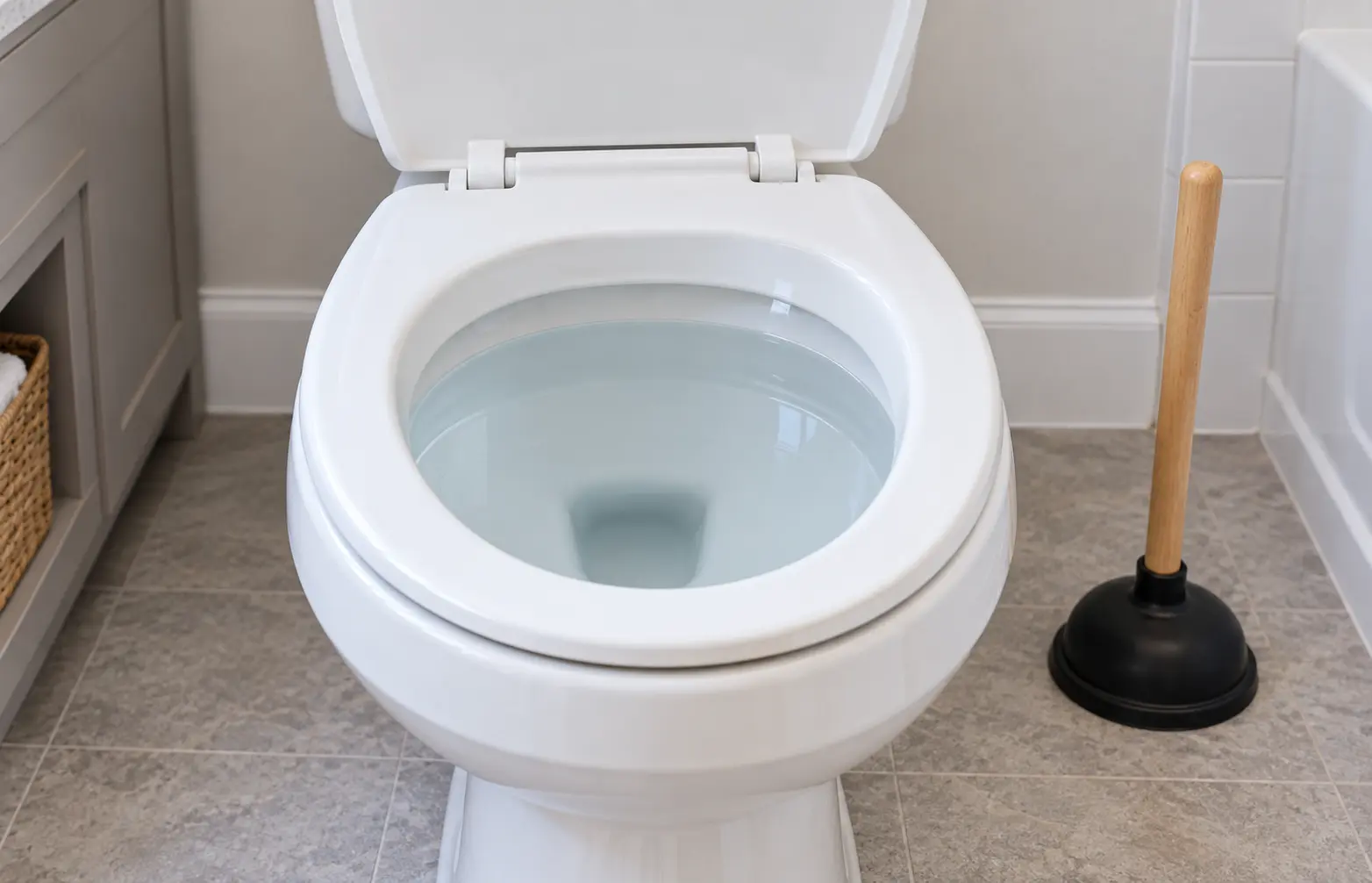
When the water level in the bowl rises instead of clearing normally, a blockage is one of the first things to suspect. TOTO troubleshooting guidance specifically identifies a bowl that rises and then slowly drains as a common sign of a clog.
Stop flushing repeatedly. If the bowl is already high, give the water time to settle before doing anything else.
Start with a toilet plunger
Use a toilet plunger that can form a seal around the drain opening. Keep enough water in the bowl to cover the plunger cup, make a firm seal, and use controlled plunging strokes rather than violent splashing.
If plunging does not clear it
A closet auger is the next appropriate tool for a blockage that is farther into the toilet trapway. If the obstruction cannot be cleared without forcing the tool or the toilet repeatedly backs up, stop and call a plumber.
2. The handle moves, but the toilet does not flush
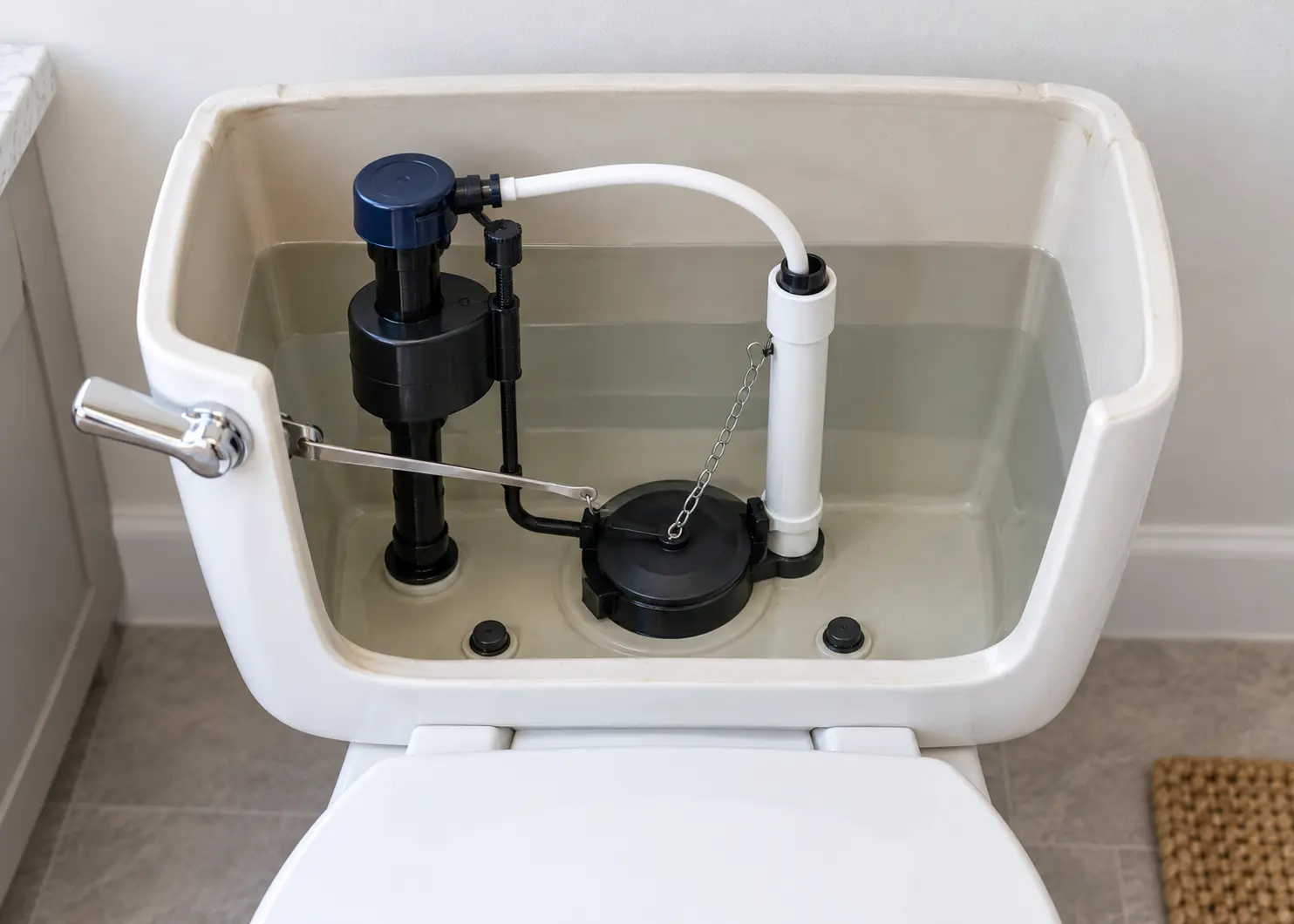
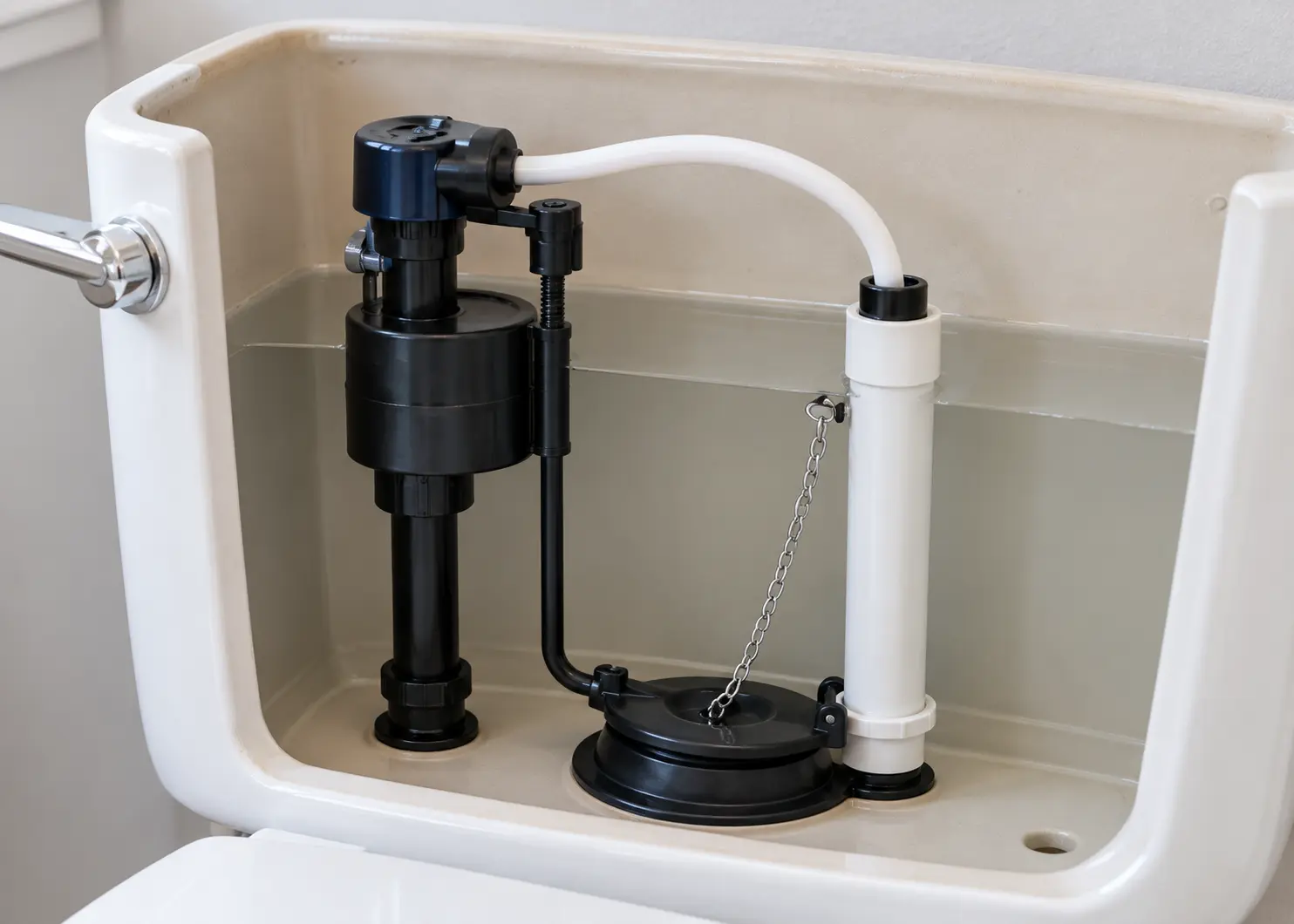
Remove the tank lid and press the handle while watching the mechanism. On a conventional toilet, the handle or trip lever pulls a chain that lifts the flapper or flush valve so tank water can enter the bowl.
Kohler/Sterling troubleshooting guidance lists a disconnected chain and excessive chain slack as causes of a toilet that will not flush. American Standard guidance likewise emphasizes correct chain adjustment.
What to look for inside the tank
- The chain has come off the handle arm or flush valve.
- The chain has so much slack that the handle cannot lift the valve far enough.
- The trip lever or handle moves without operating the chain.
- The flapper or flush valve is sticking or not lifting normally.
Do not force the mechanism. Reconnect a detached chain if the attachment points are intact, or adjust excessive slack according to the toilet manufacturer's instructions.
Avoid treating one exact chain measurement as universal. Different flush systems use different mechanisms, and the correct adjustment depends on the toilet.
3. Check the water level in the tank
A toilet needs enough stored water to produce its designed flush. Kohler, American Standard, and other toilet manufacturers all identify low tank water as a cause of poor or incomplete flushing.
With the tank full, compare the water level with the manufacturer's waterline mark or the level specified for that toilet. Do not assume that one fixed measurement applies to every model.
If the tank level is too low
Check that the toilet's shutoff valve is fully open and that the fill valve is actually allowing the tank to refill.
Also make sure the refill tube is routed correctly according to the toilet manufacturer's instructions.
4. The tank will not refill or fills very slowly
If there is little or no water in the tank after a flush, the toilet may not have enough water available for the next flush.
Start at the wall shutoff valve. Make sure it has not been partly or fully closed. If the supply is open but the tank still does not refill normally, the fill valve becomes a stronger suspect.
Kohler and TOTO both describe fill-valve debris or contamination as a possible reason for abnormal filling. Manufacturer procedures may involve opening and flushing a specific fill-valve assembly, but those procedures vary by valve design.
5. The toilet flushes, but not all the way
A weak or incomplete flush sits between a complete no-flush and a full drain blockage. Several different faults can produce the same symptom.
Low tank water
Too little stored water reduces the volume available for the flush. Compare the tank level with the marked or manufacturer-specified level.
Flapper or flush valve closes too early
If the valve closes before enough water leaves the tank, the flush can be incomplete. Chain adjustment and the correct replacement part matter.
Partial clog
A restricted trapway can let some water pass while preventing a normal, fast siphon. A bowl that rises and then slowly drains is an important clue.
Restricted rim holes or bowl jet
Mineral deposits or debris can reduce water flow into the bowl and weaken the flushing action.
6. Check the flapper or flush valve
On toilets that use a flapper, the flapper needs to lift enough to release the designed amount of water and then return to the valve seat correctly.
A damaged, misaligned, incorrect, or poorly adjusted flapper can contribute to flushing problems. Some toilets use a canister or another flush-valve design instead, so match replacement parts to the toilet rather than choosing a part only because it looks similar.
If you have to hold the handle down to get a complete flush, watch the flapper or flush valve while operating the handle. If it drops before enough water has left the tank, inspect the chain adjustment and confirm that the installed valve or flapper is correct for the toilet.
7. Mineral buildup can weaken the bowl wash
Water does not enter the bowl only through one large opening. Many toilets also direct water through rim holes and a bowl jet to create the flushing action.
Kohler and American Standard both identify obstructed rim holes or jets as a possible cause of a poor flush. Kohler specifically notes that hard-water deposits can restrict flow through the rim holes.
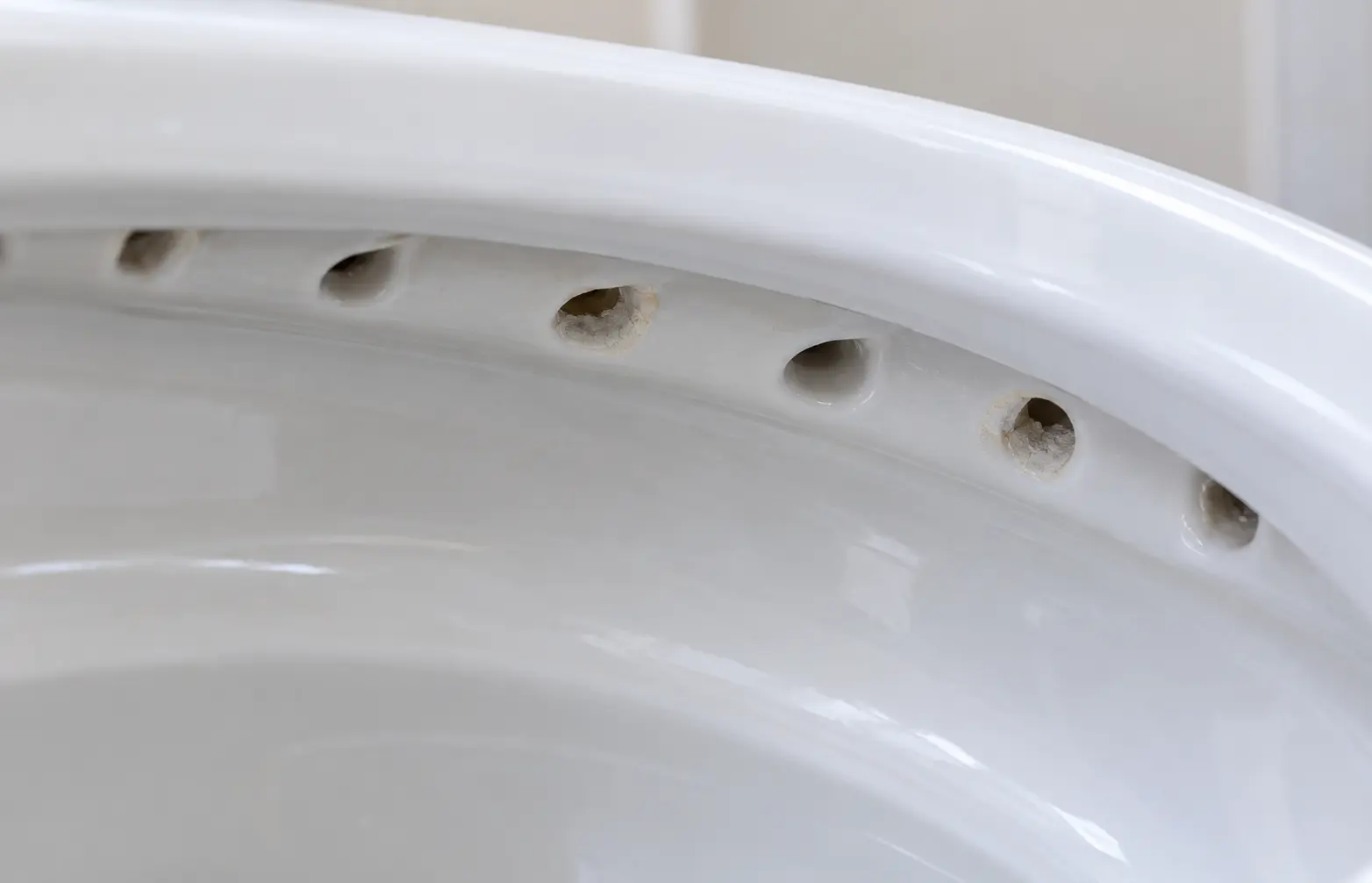
If the tank appears to operate normally but the bowl wash is noticeably weak, inspect the visible rim openings for buildup. Deep cleaning procedures vary by manufacturer, so use the toilet maker's maintenance instructions before applying cleaners inside hidden rim passages.
8. When the problem may be beyond the toilet
If the tank mechanism, water level, bowl passages, and obvious toilet clog have been ruled out, the problem may be farther downstream.
Manufacturer troubleshooting material from Kohler, American Standard, and TOTO acknowledges that drain or vent restrictions can contribute to poor flushing. Gurgling or bubbling can also be a clue that the issue is not limited to the handle or tank components.
Leave roof vent work to a professional
A vent problem does not justify climbing onto a roof as a first DIY step. If basic toilet-level checks do not explain the symptom, especially when drainage noises or repeated backups are involved, a plumber can evaluate the drain and vent system more safely.
A practical troubleshooting order
| Step | Check | What it tells you |
|---|---|---|
| 1 | Watch the bowl during a flush attempt | Rising water points toward a clog or restriction |
| 2 | Remove the tank lid and operate the handle | Confirms whether the chain and flush mechanism move |
| 3 | Check tank water level | Low water can explain a weak or incomplete flush |
| 4 | Check water supply and refill | Separates a fill problem from a drain problem |
| 5 | Inspect flapper / flush valve operation | Shows whether enough water is being released |
| 6 | Inspect rim wash and consider a partial clog | Addresses weak flushing when the tank appears normal |
| 7 | Escalate persistent drain or vent symptoms | The fault may be beyond the toilet itself |
When to call a plumber
Basic tank checks and a straightforward toilet clog are reasonable homeowner troubleshooting tasks. Stop and get professional help when the blockage cannot be cleared with appropriate toilet tools, when the toilet repeatedly backs up, when the flushing mechanism is damaged beyond a simple adjustment, or when the symptoms suggest a drain or vent problem beyond the fixture.
Calling earlier also makes sense if you are unsure which replacement part fits the toilet. Flush valves, flappers, fill valves, and canister systems are not universally interchangeable.
Frequently asked questions
Why won't my toilet flush if it isn't clogged?
Check the tank. A disconnected or overly loose chain, low tank water, a problem with the handle or trip lever, a flapper or flush valve that does not open correctly, or a tank that is not refilling can all prevent a normal flush even when the drain is clear.
Why does the toilet bowl fill with water but not flush?
A bowl that rises during the flush and then drains slowly commonly points toward a clog or partial obstruction in the toilet trapway or drain. Stop repeated flushing and address the blockage first.
Why do I have to hold the toilet handle down?
Watch the flush valve while holding the handle. If the flapper or valve closes before enough tank water has been released, the chain adjustment or the installed flush-valve component may need attention.
Why isn't my toilet tank filling?
Make sure the shutoff valve is open. If water is available but the tank still fills slowly or not at all, inspect the fill valve according to the manufacturer's instructions. Debris or a malfunctioning valve can interfere with normal refilling.
Why is my toilet flushing weakly?
Common areas to check are the tank water level, flapper or flush-valve operation, rim holes and bowl jet, and a possible partial obstruction in the trapway. A problem farther into the drain or vent system is possible when toilet-level causes have been ruled out.
Technical references used for this guide
Troubleshooting guidance was cross-checked against manufacturer and major home-improvement resources rather than relying only on general repair articles.
Kohler/Sterling Homeowners Guide; Kohler Poor Toilet Rim Wash guidance; Kohler fill-valve maintenance guidance; American Standard poor-flush and water-control-valve guidance; TOTO Product FAQ; and Lowe's Common Toilet Problems guidance.