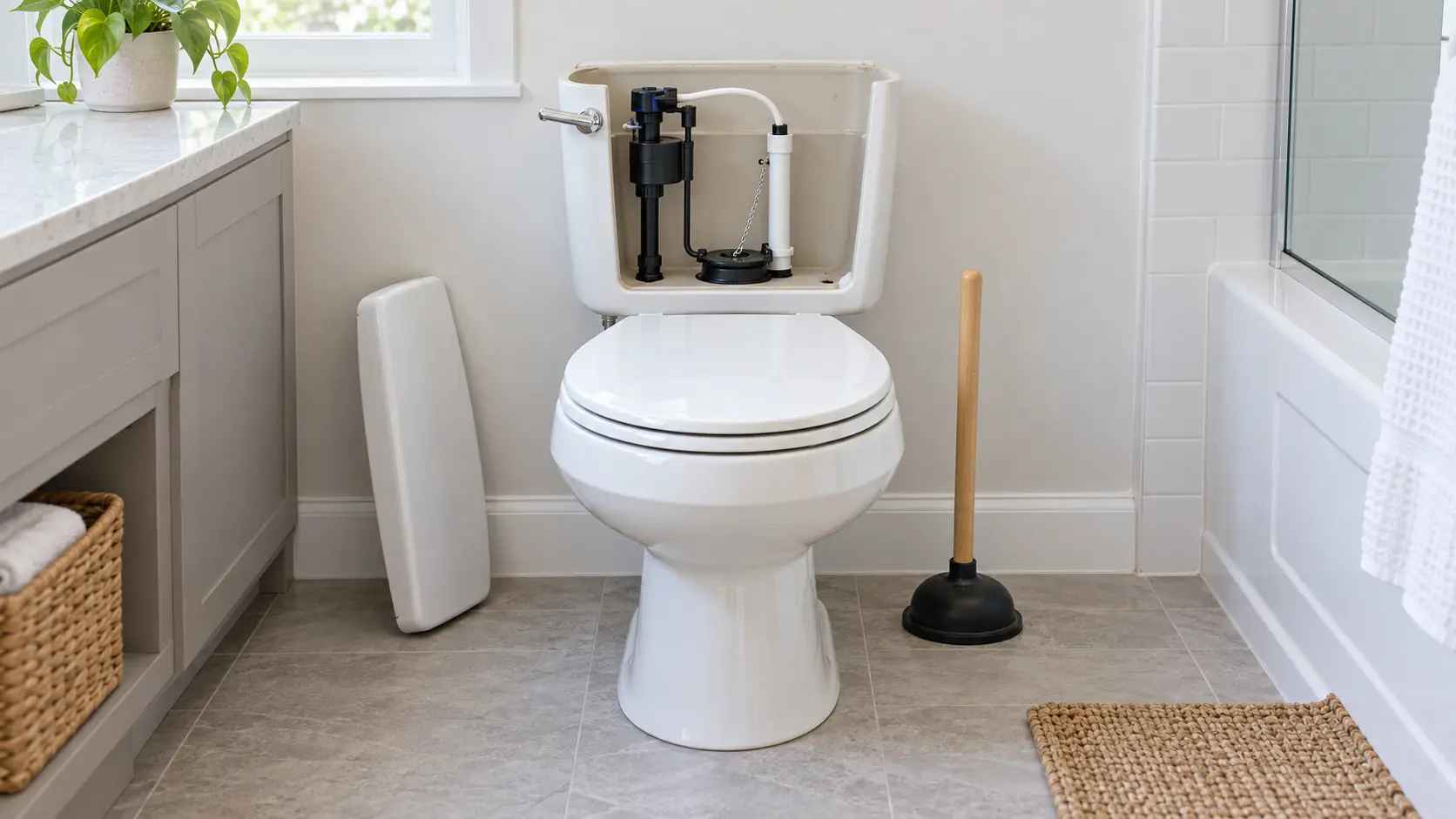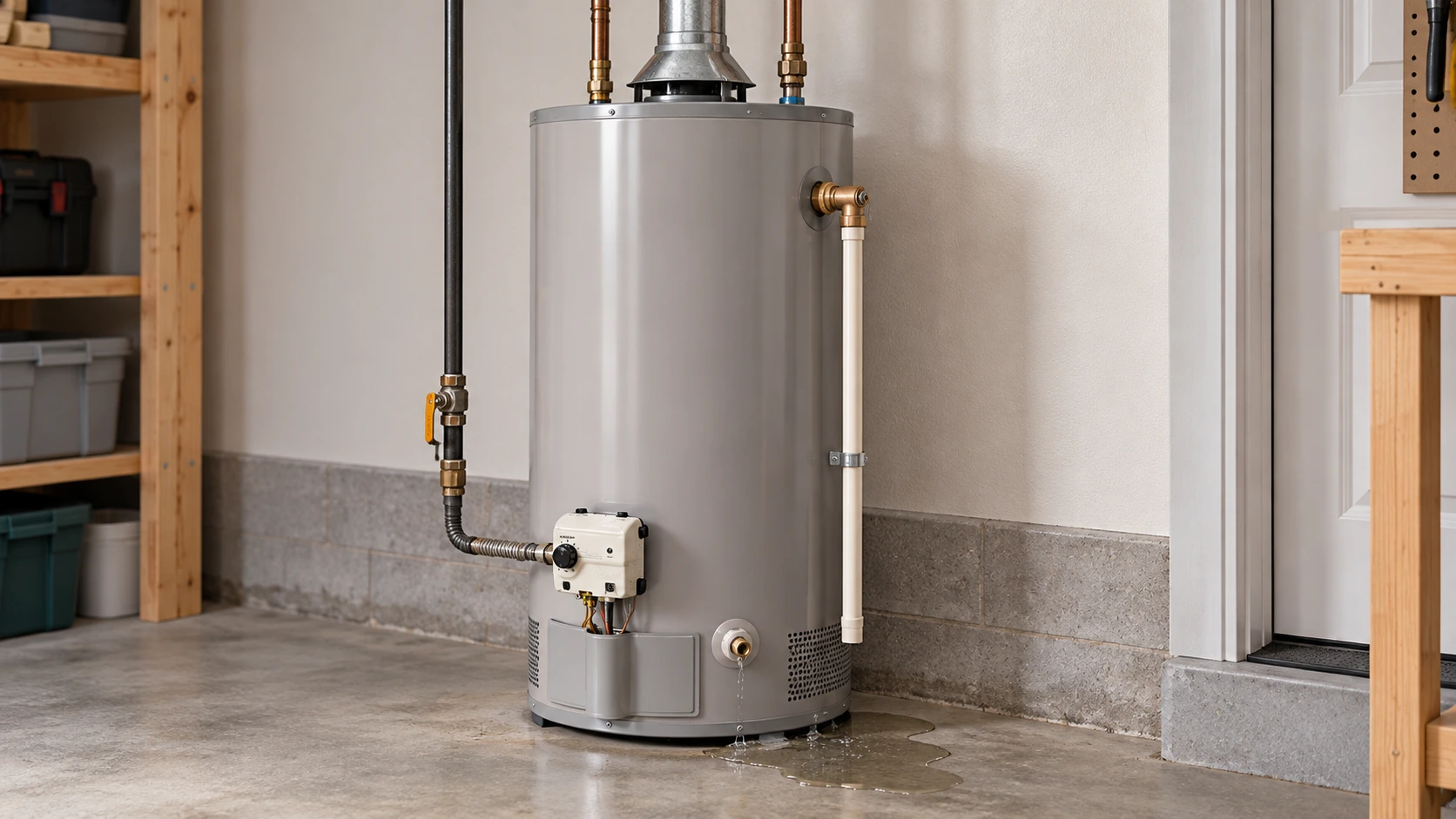
If your water heater is leaking, do not assume the tank itself has failed just because you see water on the floor. Water can come from a plumbing connection, the temperature and pressure relief system, a drain valve, condensation, an electric heating-element area, or the tank itself.
The most useful first step is to find the highest point where the water first appears. The location, amount of water, and timing of the leak usually tell you far more than the puddle on the floor.
Water heater leaking? Start with these three questions
How much water is there?
A damp fitting or a few drops calls for a different response than a steady stream or a puddle that keeps growing.
Where does the water start?
Trace upward from the puddle. The highest wet point may be a top connection, T&P discharge pipe, drain valve, electric access panel, or the tank itself.
When does it happen?
A continuous leak, an intermittent drip during heating, and temporary condensation do not point to the same cause.
What to do first when your water heater is leaking
If the leak is small, dry the accessible exterior of the heater and the nearby floor so you can tell where new water appears. A clean paper towel can make a slow seep at a fitting easier to spot.
If the leak is steady or getting worse, focus on limiting water damage first. If the cold-water shutoff serving the heater is clearly identified and safely accessible without entering standing water or touching wet electrical equipment, shutting off the incoming water can limit additional leakage.
Do not start removing valves, plumbing fittings, electrical access covers, or gas components just because water is visible. Finding the source first prevents a simple diagnosis from turning into an unnecessary repair.
Gas or electric water heater?
Gas storage heater
Typically has a burner/control area near the bottom and a vent or draft hood above the tank. Condensation from combustion can sometimes be mistaken for a water leak.
Electric storage heater
Typically has one or more element access panels on the tank. Water near those panels deserves extra caution because electrical components are located behind them.
Make sure the water is actually coming from the water heater
Water on the floor beneath a heater does not prove that the tank has failed. Water can travel down the jacket from a connection near the top, follow a pipe, drip from a relief-valve discharge line, or come from equipment nearby.
Before deciding the heater itself is leaking, inspect the area around it. Look above and beside the unit as well as underneath it. Nearby plumbing, a drain line, HVAC equipment, or another appliance can sometimes send water toward the heater.
Condensation can look like a leak
Gas-fired storage water heaters can produce condensation under some operating conditions. Moisture can form on cooler surfaces when the burner is operating and then drip downward, sometimes collecting beneath the heater.
Condensation is especially easy to confuse with a tank leak because the water may appear at the bottom even though the tank shell is not the source.
More consistent with condensation
- Moisture appears around a gas-fired heater during or after heating.
- The amount is limited rather than continuously increasing.
- The moisture later stops or dries.
More concerning for an active leak
- Water continues to return after the area is dried.
- A wet trail can be traced to a fitting, valve, panel, or tank area.
- The puddle continues to grow.
Do not use those signs as a substitute for tracing the water. They are clues that help you decide where to look next.
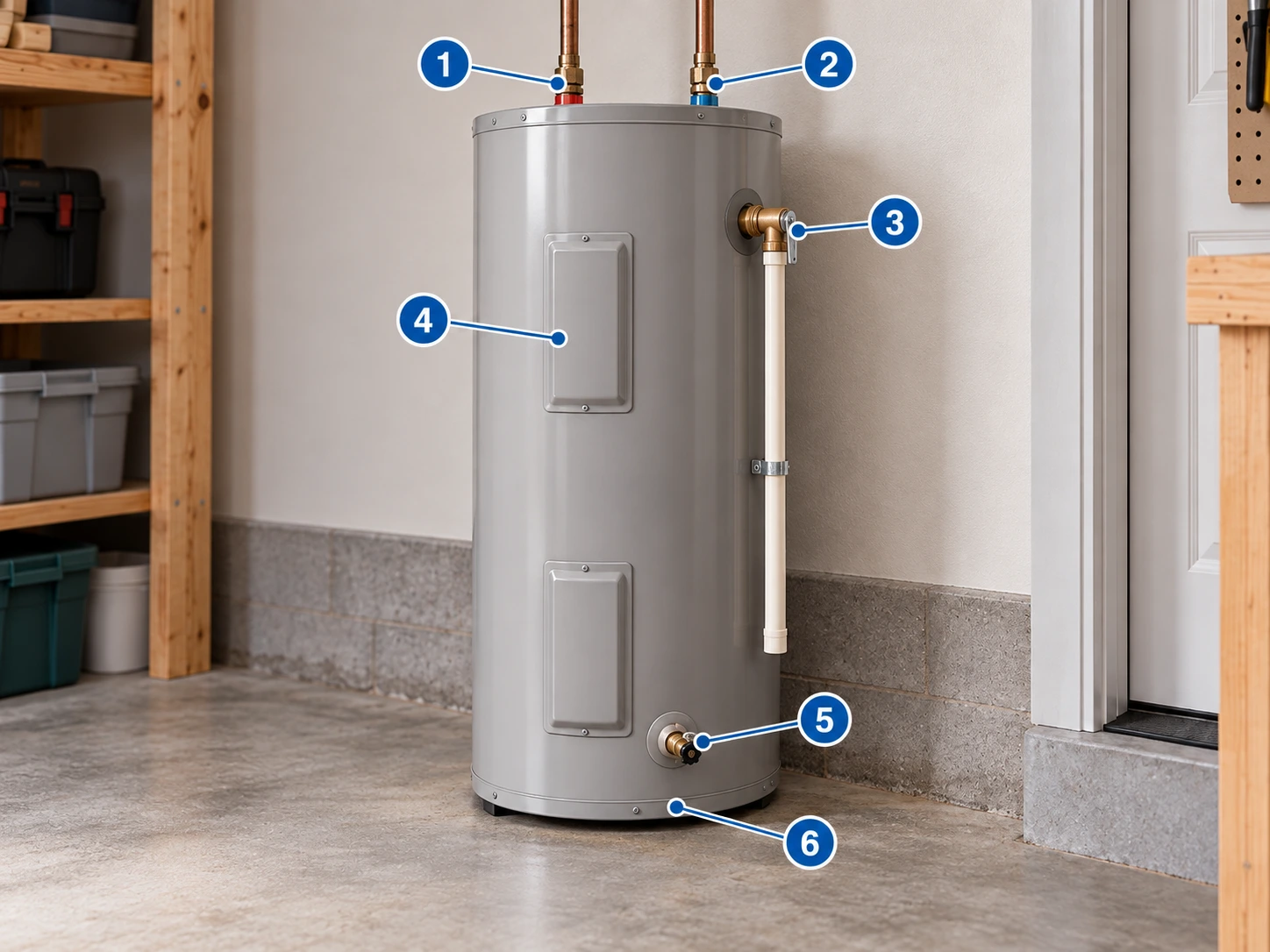
Find where the leak starts
Work from the puddle upward. The first place you see water is not necessarily where the leak begins; gravity can carry water a long way down the outside of the heater.
| Where water first appears | Check next | What it may indicate | Priority |
|---|---|---|---|
| Top of the heater | Hot/cold connections and nearby fittings | A plumbing connection may be leaking and sending water down the jacket. | Diagnose |
| T&P discharge pipe | Relief valve and discharge path | Pressure, thermal expansion, temperature, or a valve-related condition may need investigation. | Important |
| Drain-valve area | Valve outlet and tank connection | The drain valve or the connection where it enters the tank may be involved. | Diagnose |
| Electric access panel | Heating-element area | Water may be coming from the element or sealing area behind the panel. | Electrical caution |
| Bottom or base | All sources above, then the tank area | Water may have travelled downward, or the tank itself may require evaluation. | Trace first |
Water leaking from the top of the heater
If the highest wet point is at the top, check the visible plumbing connections before looking anywhere else. Water from a cold-water inlet, hot-water outlet, or another nearby fitting can run down the jacket and eventually create a puddle that looks like a bottom leak.
How to check a slow connection leak
- Dry the accessible connection and surrounding surface.
- Wait and watch for moisture to return.
- Use a clean, dry paper towel around the outside of the connection to reveal a slow seep.
- Look below the connection for a water trail running down the tank.
Do not automatically tighten every fitting. Different connections use different sealing methods, and excessive tightening can damage a fitting or make an existing problem worse.
If the connection is visibly corroded, damaged, difficult to identify, or leaking steadily, that is a reasonable point to move from observation to professional repair.
Water from the T&P relief valve or discharge pipe
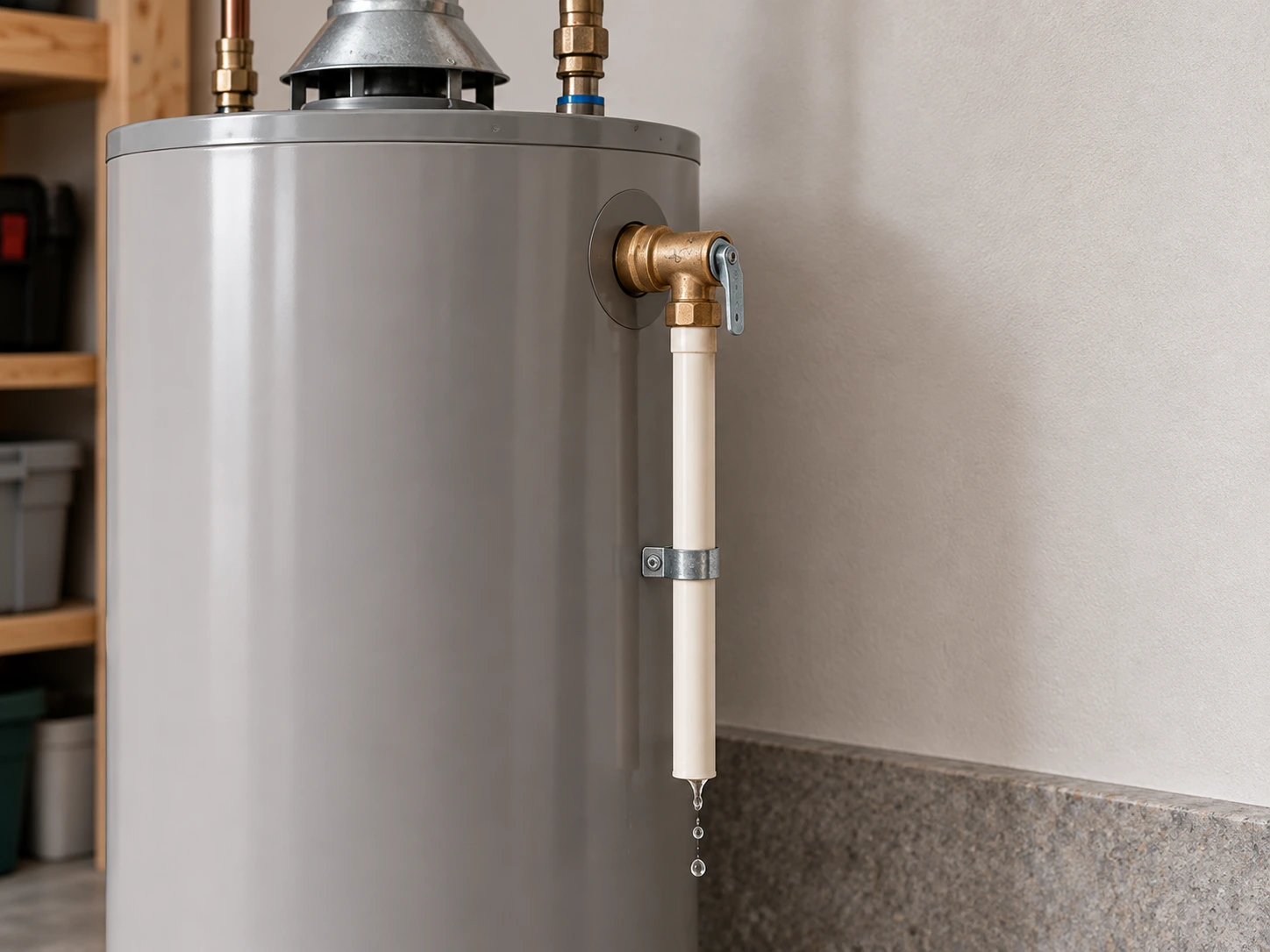
The temperature and pressure relief valve is a safety device. Its purpose is fundamentally different from a drain valve or ordinary plumbing connection.
Why a T&P valve may drip
A dripping relief-valve discharge does not automatically mean the valve itself is defective. When water is heated, it expands. In a closed plumbing system, that expansion can raise system pressure and cause the relief valve to discharge.
Other pressure or temperature conditions can also cause discharge, so the amount and frequency matter. An occasional small discharge and a large flow of very hot water should not be treated as the same symptom.
When T&P discharge needs professional attention
- The discharge is substantial rather than an occasional drip.
- The water is unusually hot.
- The valve repeatedly discharges during normal use.
- The discharge piping is damaged, restricted, or incorrectly installed.
- You cannot determine whether pressure or thermal expansion is involved.
Water leaking from the drain valve
The drain valve sits near the bottom of a storage-tank water heater and is used when the tank needs to be drained or flushed. Because of its location, it is easy to blame the valve whenever water is visible near the bottom.
First confirm that the water actually starts at the drain valve. Dry the valve and the tank surface above it, then watch where moisture returns.
Water at the valve outlet
Moisture appearing directly at the outlet points toward the valve itself or its closure rather than the tank base.
Water behind the valve
Moisture where the valve enters the heater may involve the valve connection and deserves different repair consideration.
Removing or replacing a drain valve can require shutting down and draining the water heater correctly. For this broad diagnosis, the important step is identifying whether the valve is truly the source rather than assuming it is.
Water around an electric heating-element access panel
Electric storage water heaters commonly have access panels covering the heating elements and electrical controls. If moisture appears around one of those panels, water may be leaking around an element or its sealing area behind the cover.
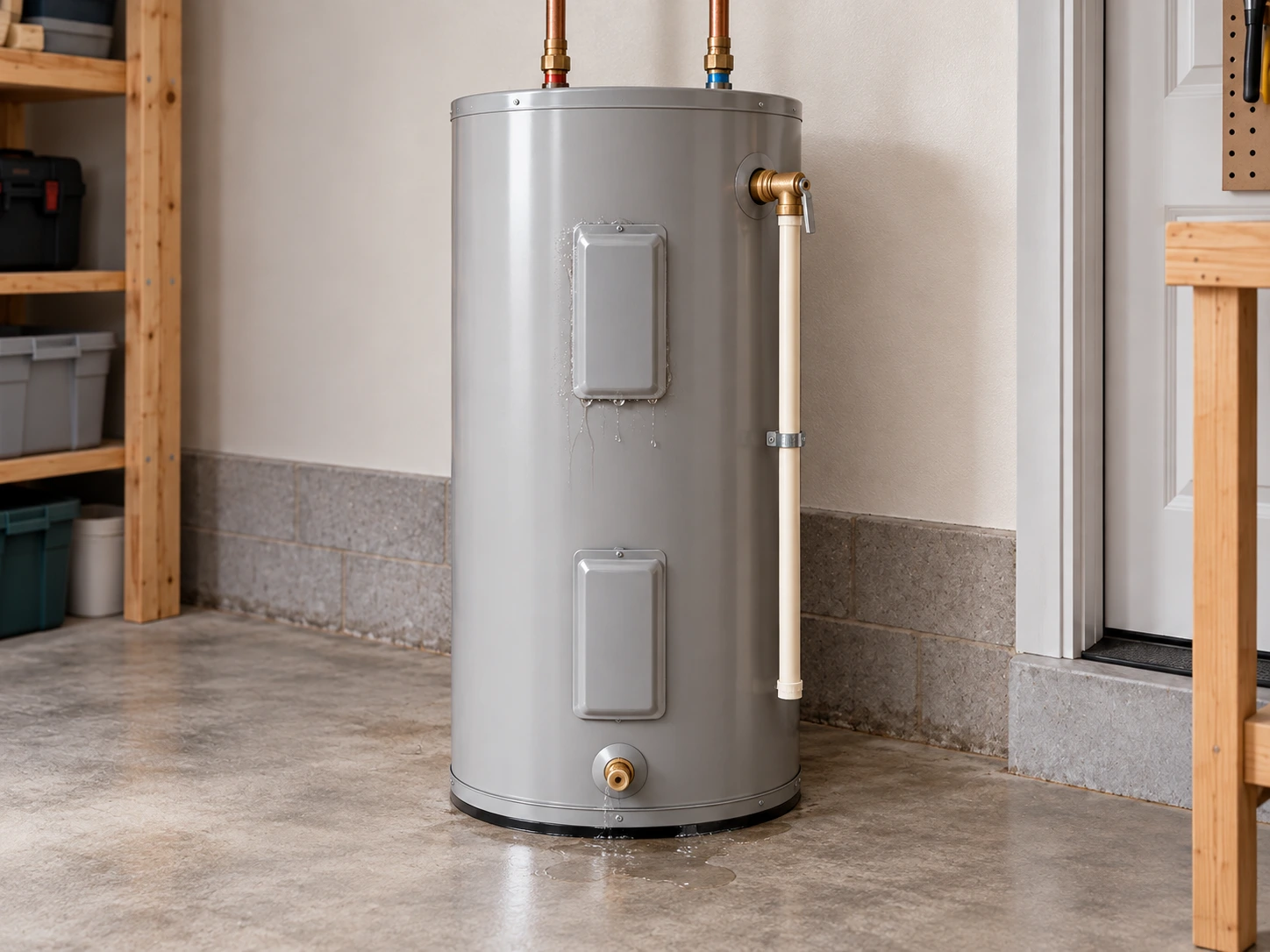
From the outside, note which panel is wet and whether water is running down from somewhere above it. That observation alone can help distinguish a potential element-area leak from water simply travelling down the tank.
Water leaking from the bottom of the heater
Water at the bottom is one of the easiest symptoms to misdiagnose because almost every leak above the base can eventually end up there.
Before concluding that the storage tank itself has failed, check for water travelling downward from:
- the hot- or cold-water connection at the top;
- another upper fitting;
- the T&P relief valve or discharge piping;
- the drain-valve area;
- an electric heating-element opening;
- condensation on a gas-fired heater;
- another appliance, drain, or pipe nearby.
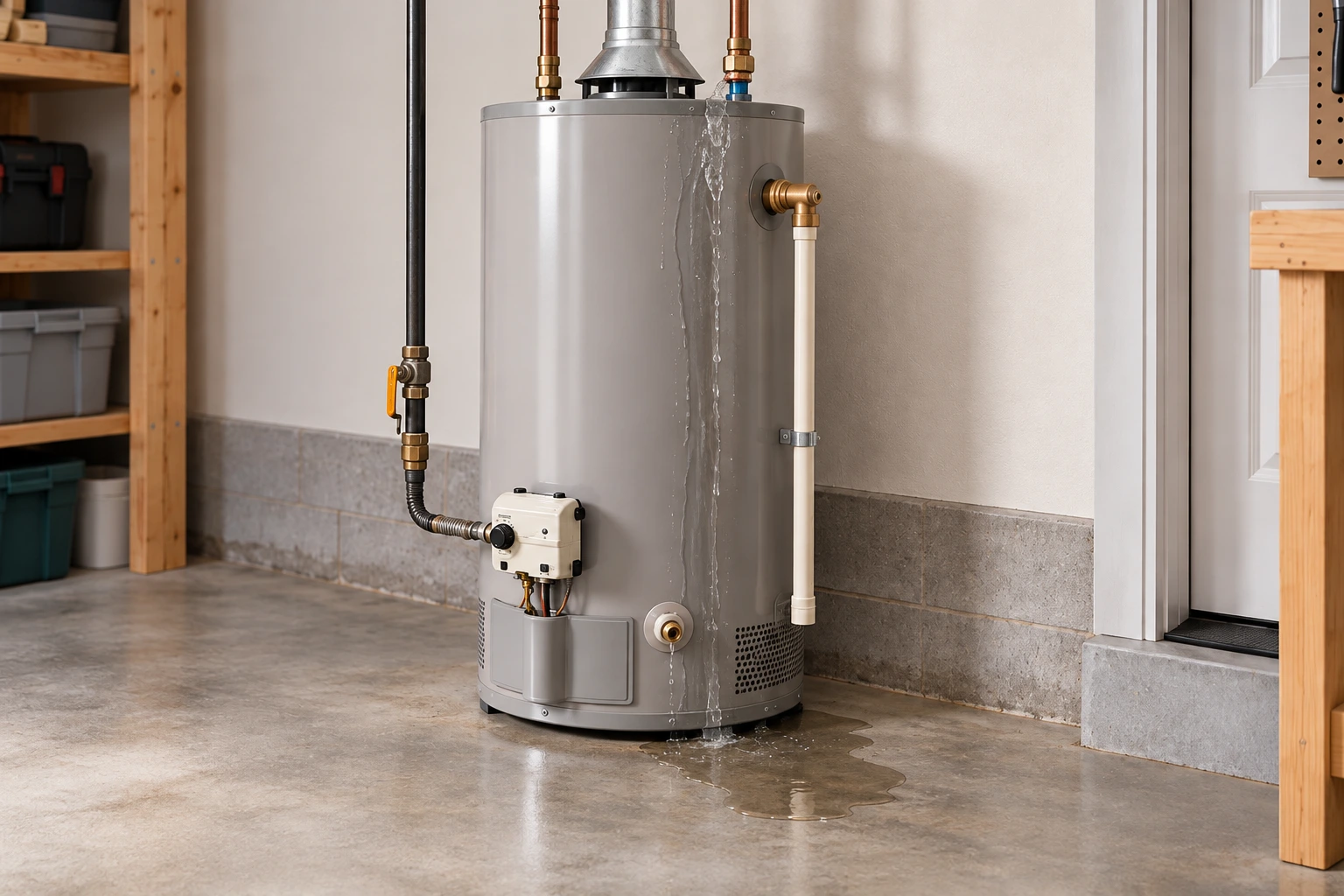
Drying the tank and tracing the first returning wet spot is more reliable than judging the source from the location of the puddle.
What if the tank itself appears to be leaking?
Suspect the storage tank itself only after accessible external sources have been checked and water still appears to be emerging from the heater body or jacket rather than a connection, valve, discharge pipe, electric element area, condensation, or another nearby source.
A suspected tank leak is fundamentally different from a leak at an external serviceable component. Do not try to patch the outside of a pressurized storage tank with sealant, epoxy, tape, or another improvised repair.
If no external source can be found and water continues to emerge from the heater body, have the heater evaluated for possible replacement.
Do not replace the heater based on the puddle alone
A top connection, T&P discharge, drain valve, electric element area, condensation, or nearby water source can all create water at the base. Confirm the source before treating the tank as failed.
Dripping vs. an active water heater leak
The word dripping by itself does not tell you how serious the problem is. The source, flow rate, temperature of the water, and timing matter more.
| What you notice | What to consider | Next move |
|---|---|---|
| A few drops at a plumbing connection | A slow fitting leak may be present. | Dry and trace the exact source. |
| Intermittent T&P discharge | Pressure or thermal expansion may be involved. | Do not block the discharge; investigate why it occurs. |
| Temporary moisture on a gas heater | Condensation may be possible. | Observe whether it stops as operating conditions change. |
| Continuous stream or growing puddle | An active leak is present. | Limit water damage and identify the source promptly. |
| Water near electrical equipment | Electrical shock risk may be present. | Stop normal troubleshooting and address the electrical hazard first. |
| Water apparently emerging from the tank body | The tank may require evaluation. | Arrange professional inspection rather than attempting an exterior patch. |
What not to do when a water heater is leaking
Do not plug the T&P discharge
It is a safety path, not an ordinary leaking pipe that should be sealed shut.
Do not open wet electrical panels
Water around an electric element access panel requires electrical caution before the cover is removed.
Do not patch a suspected tank leak
An improvised exterior seal does not turn a potentially failed pressurized tank into a reliable repair.
Do not assume every puddle means replacement
Trace top connections, valves, condensation, and other sources before condemning the tank.
Should you repair or replace the water heater?
The answer depends mainly on what is actually leaking.
| Source | Typical decision |
|---|---|
| External plumbing connection | Often evaluated as a component or connection repair. |
| Drain valve | May be serviceable once the exact source and valve condition are confirmed. |
| T&P discharge | Find the pressure, temperature, expansion, or valve-related cause; do not simply stop the discharge. |
| Electric element area | May involve a serviceable element or seal, but electrical safety comes first. |
| Confirmed tank leak | Evaluate the heater as a possible replacement rather than an external patching job. |
Heater age can influence whether a repair is worth doing, but age alone does not identify the source. Once you know what is leaking, consider the heater's overall condition, visible corrosion, repair cost, reliability, warranty status, and replacement cost.
When to stop troubleshooting and call a professional
Homeowner-level observation is useful for identifying where water is coming from. It becomes less useful when diagnosis requires opening safety devices, working around energized components, modifying gas equipment, or dismantling pressurized plumbing.
Quick diagnosis checklist
- Look at how much water is present and whether it is getting worse.
- Address immediate water, electrical, or gas hazards first.
- Dry accessible exterior surfaces where it is safe to do so.
- Find the highest location where water first returns.
- Check visible top water connections.
- Determine whether the T&P discharge pipe is the source.
- Inspect the drain-valve area.
- On an electric heater, note whether moisture appears around an element access panel.
- On a gas heater, consider condensation before concluding that the tank has failed.
- If accessible external sources are ruled out and water appears to come from the tank itself, arrange professional evaluation.
Frequently asked questions
Is it normal for water to drip from a water heater?
Do not assume every drip is normal. Temporary condensation can occur on some gas-fired heaters, while dripping from a T&P discharge pipe can be related to pressure or thermal expansion. Continuous, unexplained, or increasing dripping should be investigated.
Why is my water heater leaking only sometimes?
An intermittent leak can be related to when the heater is operating. Condensation may appear under certain gas-heater operating conditions, while thermal expansion can affect pressure as stored water is heated. A slow plumbing connection may also leak inconsistently. Trace the exact source rather than using timing alone as the diagnosis.
Can I still use hot water if the water heater is leaking?
Do not continue normal use of a heater with a significant or unexplained active leak until you know where the water is coming from. Water near electrical equipment, substantial T&P discharge, gas-related concerns, or rapidly increasing leakage deserve more urgent attention than a small, clearly identified external seep.
Is a leaking water heater dangerous?
It can be. Water can damage the home, hot discharge water can cause burns, water around energized electrical equipment can create an electrical hazard, and the T&P relief system must remain functional because it protects against excessive temperature and pressure.
Should I shut off the water to a leaking water heater?
If there is an active leak and the heater's cold-water shutoff is clearly identified and safely accessible, shutting off the incoming water can help reduce additional leakage. Do not enter standing water or touch wet electrical equipment to reach a valve.
Should I drain the water heater if it is leaking?
Not automatically. Draining is not necessary just to identify every leak, and the correct shutdown and draining procedure varies by heater type and model. If the repair requires draining, follow the manufacturer's instructions or have a qualified technician perform the work.
Does water at the bottom mean the tank is leaking?
No. Water from top connections, a relief valve, drain valve, electric element area, condensation, or another nearby source can travel downward and collect at the base. Trace the water to its highest visible source before concluding that the tank itself has failed.
Can a leaking water heater be repaired?
Some leaks involve serviceable external components or connections. A confirmed leak from the storage tank itself is a different situation and should be evaluated as a possible replacement case. The diagnosis comes before the repair decision.