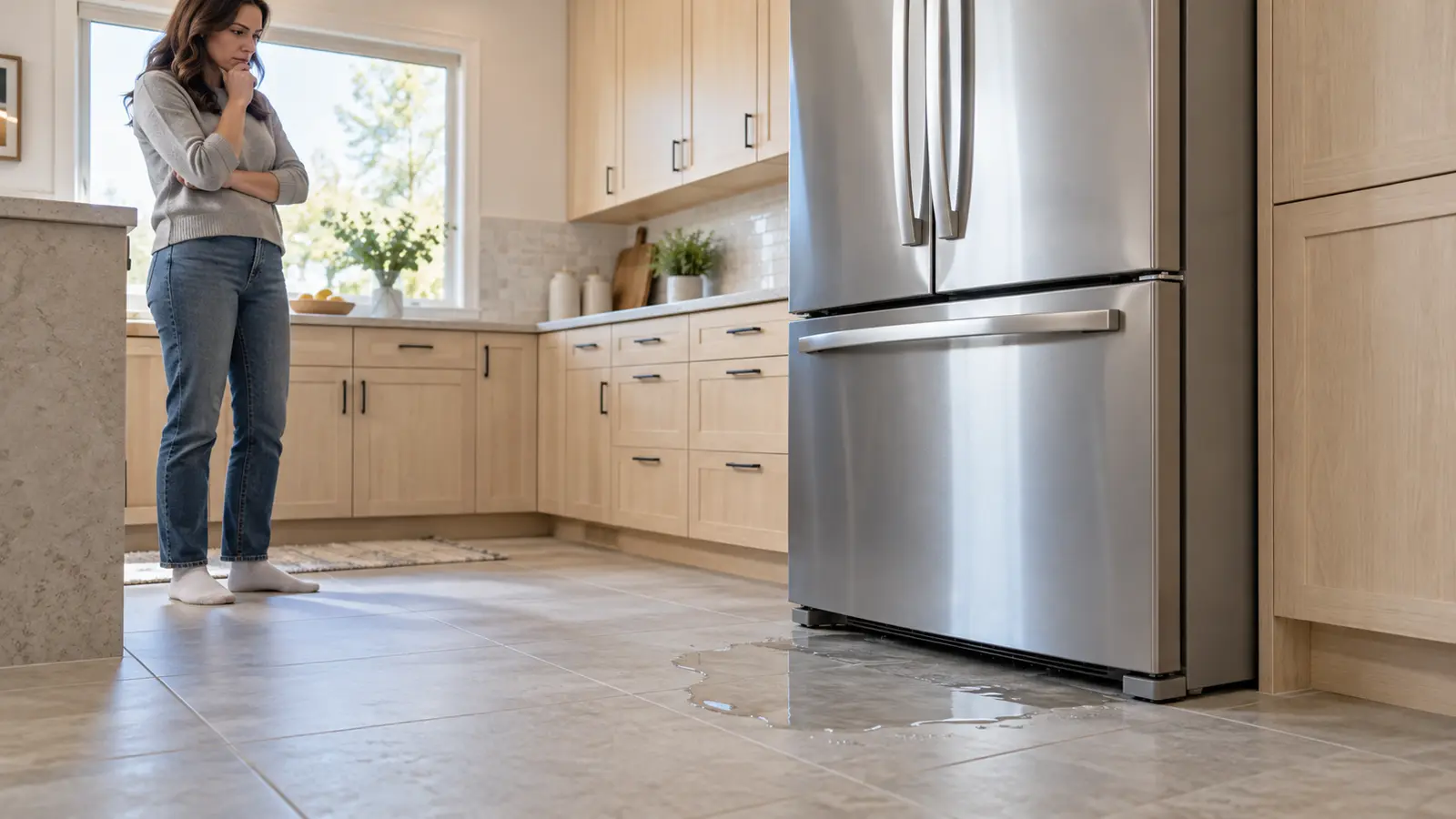
A refrigerator leaking water does not always have a failed cooling system. The source may be a spilled container, condensation, a blocked defrost drain, a water filter, or a supply line feeding the dispenser or ice maker. Start with where the water appears—inside the fresh-food section, on the freezer floor, behind the appliance, or at the dispenser—before deciding what to check.
First: protect yourself, the floor, and nearby electrical equipment
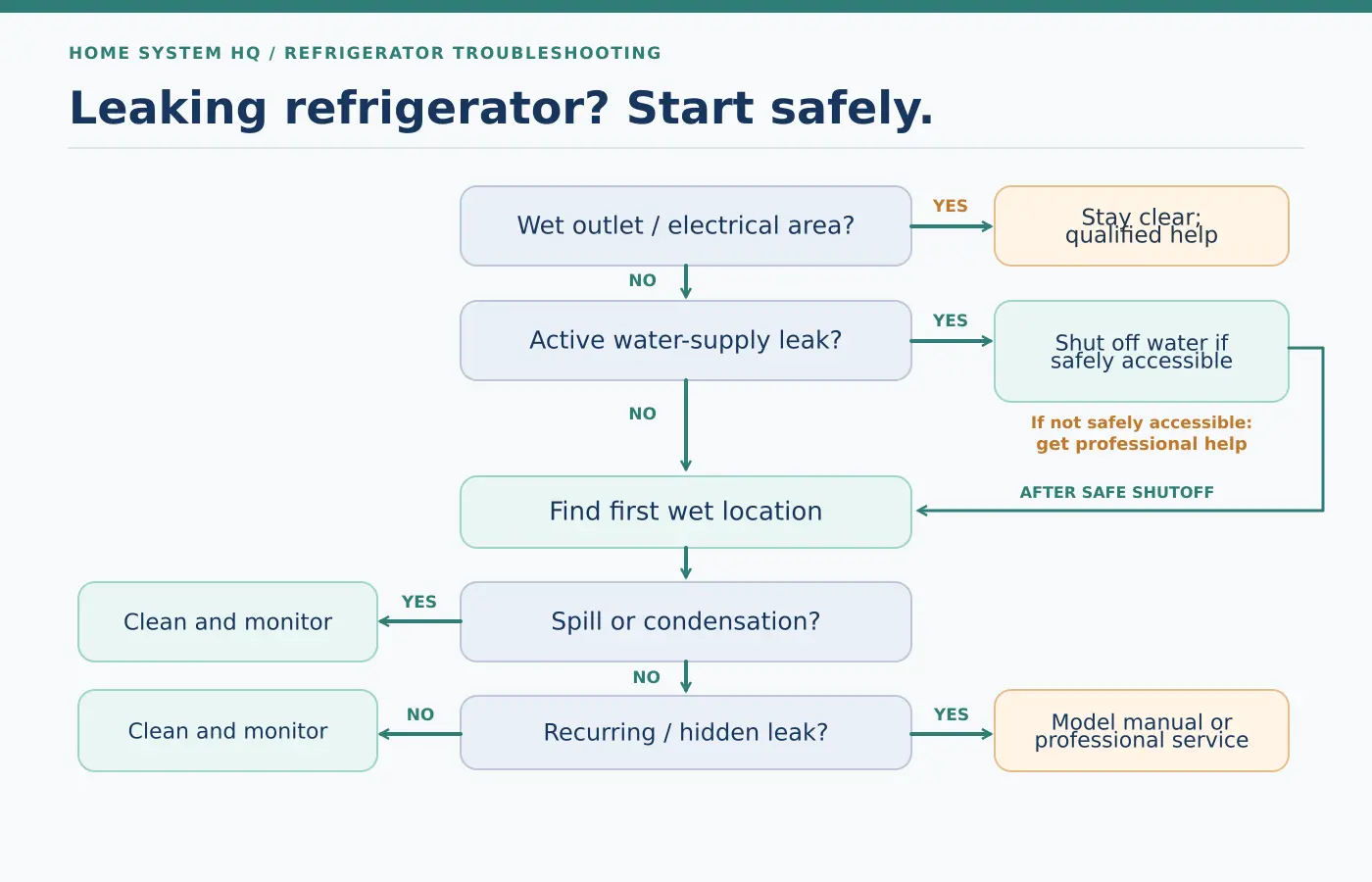
If water is spreading, keep people away from the wet area. If the refrigerator has an ice maker or dispenser and you can safely reach its separate household water shutoff, turn that supply off. Switch the ice maker off according to its manual.
Do not touch a wet outlet, plug, power cord, or appliance controls while standing in water. If electricity or a receptacle may be wet, stay clear and have the circuit made safe by a qualified professional. Do not restart water-damaged electrical equipment simply because it looks dry. If a plug and surrounding area are completely dry and safely accessible, follow the owner's manual before unplugging for permitted cleaning. Never pull a heavy refrigerator away from the wall alone or stretch the water line.
Why is my refrigerator leaking water?
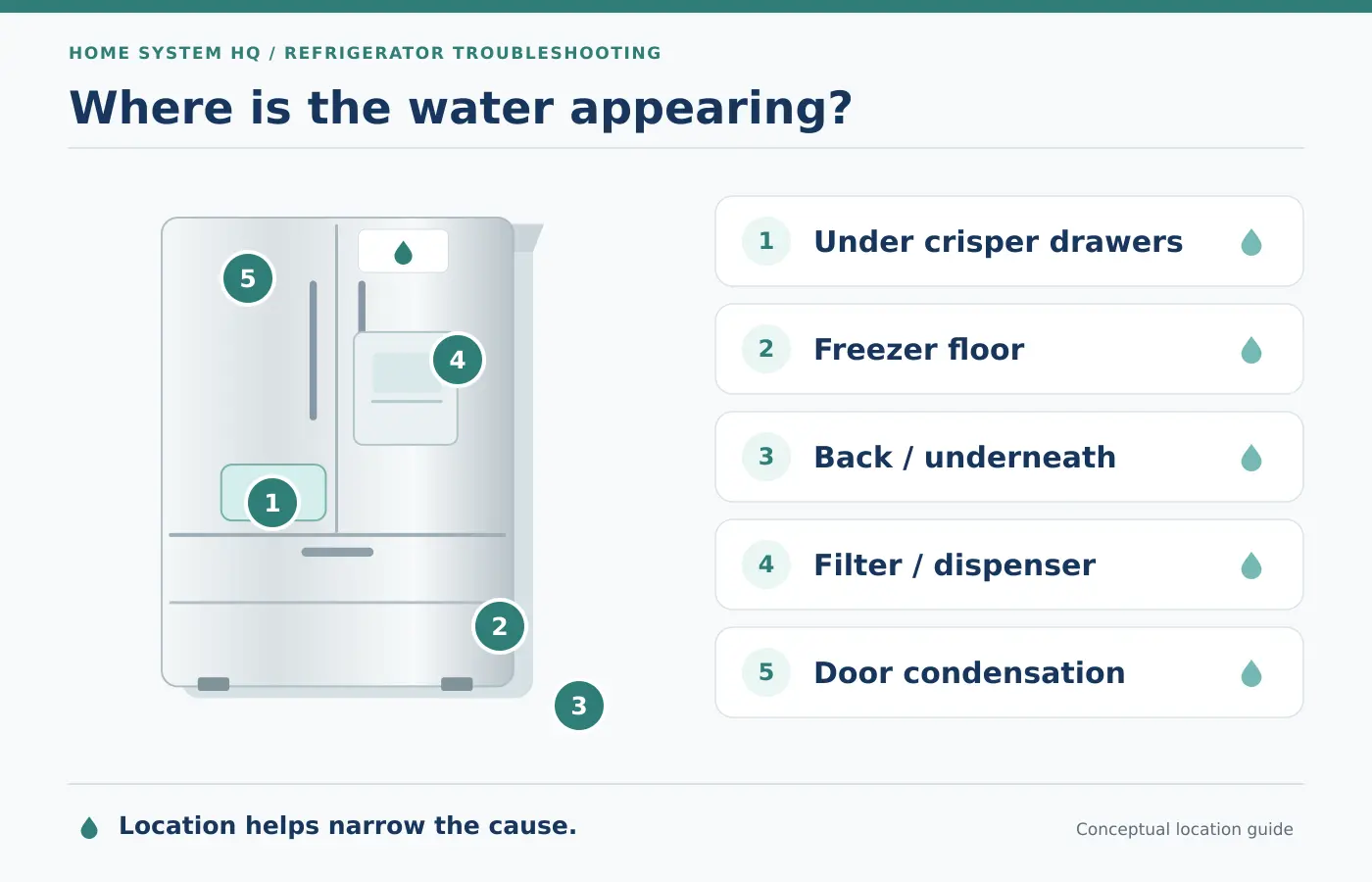
Five useful clues are the location, timing, amount, recent changes, and whether the fridge is still cooling. A puddle after replacing a filter points in a different direction from a sheet of ice below a freezer drawer. Water that appears only after dispensing may come from the water system. Repeated water below crisper drawers can indicate a defrost-drain problem, depending on the model. The location is a diagnostic clue, not proof of a single cause.
| Where you see water | Common possibilities | Safe first check |
|---|---|---|
| Under the vegetable/crisper drawers | Spill, condensation, blocked defrost drainage, or a filter-area leak | Dry the compartment, inspect food containers and accessible filter area, and see whether the water returns |
| Ice or water on the freezer floor | Defrost water not draining; melting ice; a door left open | Check door closure and photograph any recurring ice pattern for the model's service team |
| Behind or beneath the refrigerator | Household supply tubing, connection, water valve, drain-pan issue, or a nearby sink/plumbing leak | Trace visible wetness without moving the appliance into an unsafe position |
| At the dispenser or ice maker | Trapped air after filter replacement, ice-chute residue, filter/housing damage, or a water-line problem | Note whether drips follow dispensing and consult the model's specific instructions |
| On door edges or shelves | Condensation, poor door closure, damaged gasket, an open food container | Inspect the seal for debris and make sure containers and shelves do not block the door |
What to do first: a safe five-step check
- Contain the water. Use towels on a dry, safe part of the floor, keeping clear of potentially energized areas. Do not reach beneath an appliance where electrical parts or water may be present.
- If an active supply-line leak is possible, stop the incoming water. Use only an accessible household shutoff that you can reach without standing in water or moving a heavy appliance. If it is inaccessible or will not close, contact a plumber or building maintenance.
- Record exactly where the moisture starts. Check visible shelves, the bottom of the fresh-food compartment, the freezer floor, the dispenser, and the surrounding floor. A photo taken before wiping can help a technician.
- Look for a recent trigger. A newly installed filter, recently moved refrigerator, power interruption, open door, or newly connected ice maker can help focus the diagnosis.
- Dry accessible surfaces and monitor. If the appliance is otherwise safe and working, observe whether water returns and in which location. Do not repeatedly restore water to a visibly leaking line just to test it.
If you rent, notify the landlord or property manager promptly, especially where water may damage flooring, cabinetry, or a neighboring unit. Document what you saw without attempting unauthorized plumbing or appliance repairs.
Water leaking inside the refrigerator or under crisper drawers
1. Rule out spilled food and excess condensation
A loosely capped drink, a wet produce bag, or condensation from warm humid air may create a puddle without a failed part. Check containers, wipe accessible shelves and drawers, and confirm the doors close fully. A refrigerator packed so tightly that a container or shelf pushes against the door can also interfere with a complete seal. If the water does not return, the cause may have been a simple spill or temporary moisture.
2. Consider the defrost drain when water keeps returning
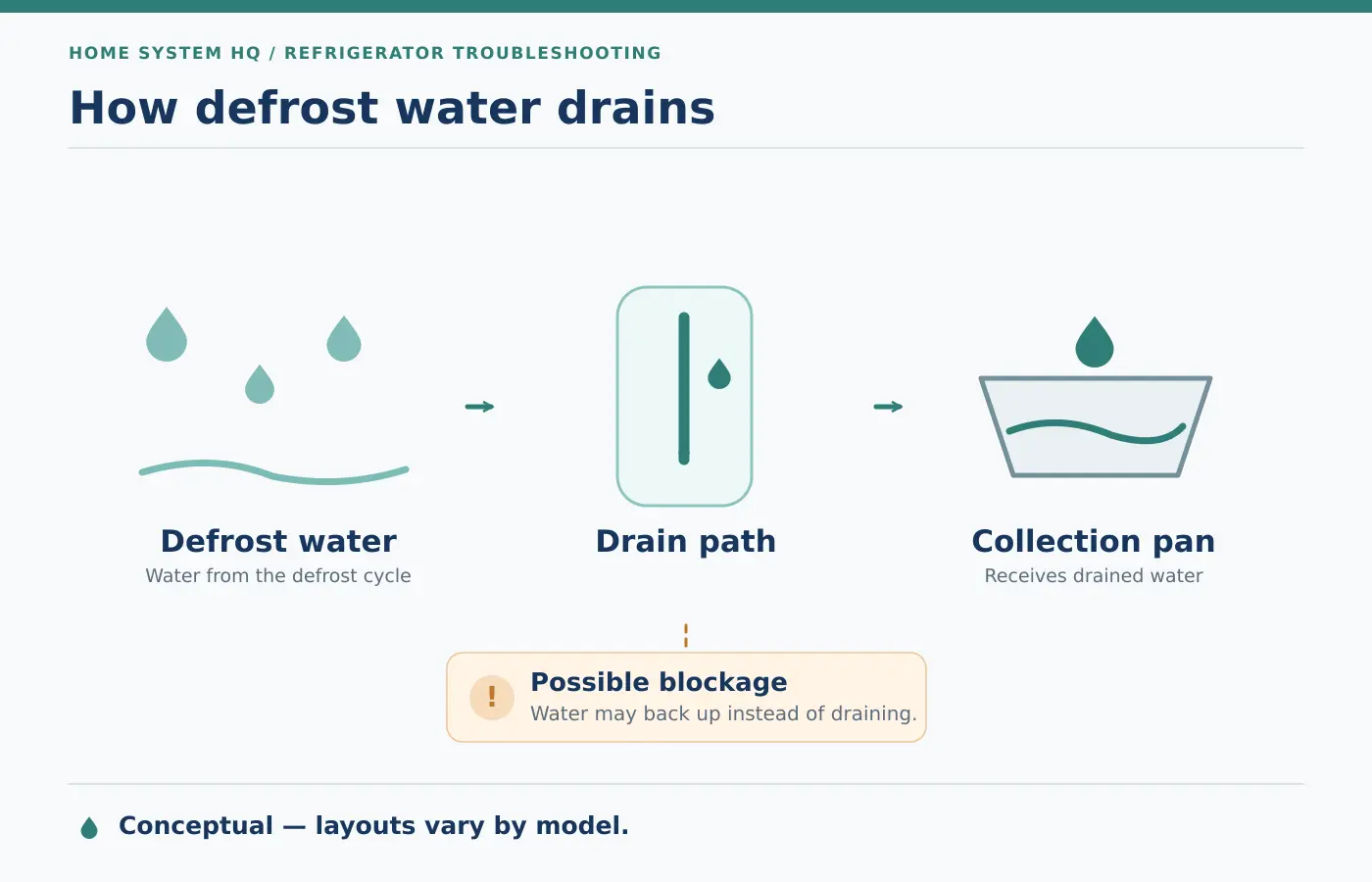
Many frost-free refrigerators periodically melt frost from an evaporator. Defrost water is intended to flow through a drain pathway to a collection pan below the appliance, where it normally evaporates. If that pathway freezes or becomes obstructed, the water may instead collect under produce drawers, along the inside rear wall, or on the freezer floor. The exact symptom depends on the refrigerator layout.
Check for a repeating pattern: you clean up the puddle, then the same area becomes wet again, sometimes with a layer of ice. That is a useful reason to consult your model's owner information or arrange service. Do not assume that the drain is visible or homeowner-accessible. Some designs require removal of interior panels or evaporator covers; manufacturer guidance for certain models recommends professional service.
Water underneath or behind the refrigerator
3. Check the household water line and reachable connections
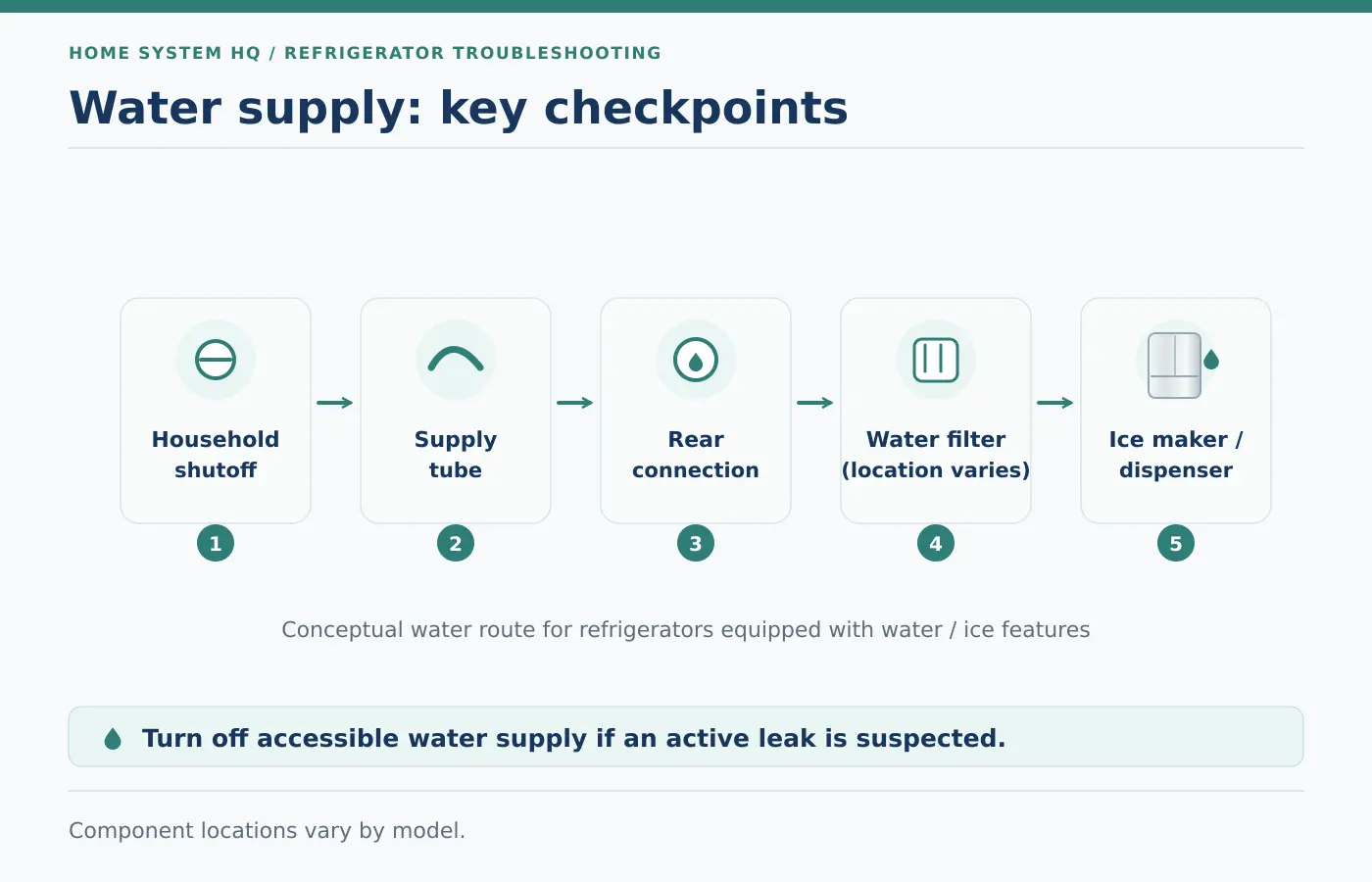
A refrigerator with a dispenser or ice maker commonly receives water through tubing connected to the home's plumbing. A cracked tube, loose fitting, or leaking valve can leave water on the floor even while the refrigerator cools normally. If the leak is active, turn off the refrigerator's dedicated water supply if safe to do so. Look for visible wetness near reachable tubing and the household connection without removing panels or placing hands behind a powered wet appliance.
Notice whether the refrigerator was just installed, moved, or had its doors removed: a compressed tube or poorly seated connector may show up after those events. A damaged water valve, concealed line, or leaking fitting that you cannot inspect safely belongs with a qualified appliance technician or plumber. Do not tighten pressurized connections, remove line couplers, or reconnect tubing unless the exact product manual authorizes the task and the system is properly isolated.
4. Distinguish the drain pan from a continuous plumbing leak
Defrost water may normally collect in a pan beneath many refrigerators and evaporate over time. A damaged or displaced pan can allow water onto the floor. The pan's location and whether it is user-accessible vary by model; do not reach behind panels or through a compartment with electrical or moving components. A puddle that grows continuously while the ice maker's water supply is open is more concerning for a supply-side leak than a few droplets associated with normal condensation.
Also consider a source outside the refrigerator. Water from a nearby sink, dishwasher supply hose, ice-maker connection behind cabinetry, or a sloping floor can migrate underneath the fridge. Look for the first visible wet location rather than assuming the appliance produced the water.
Water leaking near the filter, dispenser, or ice maker
5. Check the filter after a replacement
If a puddle started immediately after a water filter change, note the filter's location and whether the surrounding compartment is wet. A filter that is incorrect for the model, not fully seated, cracked, or fitted with a damaged seal can leak. Manufacturers differ in filter locking mechanisms and bypass designs. Use the correct approved filter and follow your model's instructions before handling it. A visibly damaged filter housing is a service problem, not something to patch with tape or sealant.
6. Check what happens when you dispense water or ice
A few residual drips after dispensing may be normal on some models. A steady stream, drips long after use, water pooling around the ice chute, or leakage triggered by ice-maker cycles deserves investigation. After a new filter or installation, trapped air can cause temporary dripping on certain refrigerators, and some manufacturers provide model-specific steps to purge it. Use those steps only if the dispenser is otherwise sound and there is no active supply leak. Do not keep cycling a malfunctioning dispenser to see whether a large leak stops.
Ice that melts in the bucket or chute may imitate a water-line leak. Check that the ice bucket, access door, and chute are seated as designed and free of obvious loose ice. If a dispenser turns on by itself, the ice-maker supply overflows, or the leak persists, stop water use and request service. A valve or internal tubing failure is not a generic homeowner repair.
Water or moisture around the refrigerator doors
Humid room air can condense on cold interior surfaces when the door is frequently opened, left ajar, or unable to seal. Check that the refrigerator is not blocked by a tall container, mispositioned drawer, or overloaded shelf. Wipe visible gasket surfaces with a soft cloth as allowed by the manual and check for tears, folds, or trapped debris. If a seal is torn or the door visibly fails to close, arrange the appropriate adjustment or repair.
Proper leveling can help some refrigerator doors close and can affect drainage. However, not every refrigerator should be perfectly level front-to-back; some models specify a slight rearward tilt. Follow the model's installation instructions rather than adjusting legs by guesswork, especially if the appliance is heavy or wedged in a cabinet.
Can a refrigerator leak water and still cool normally?
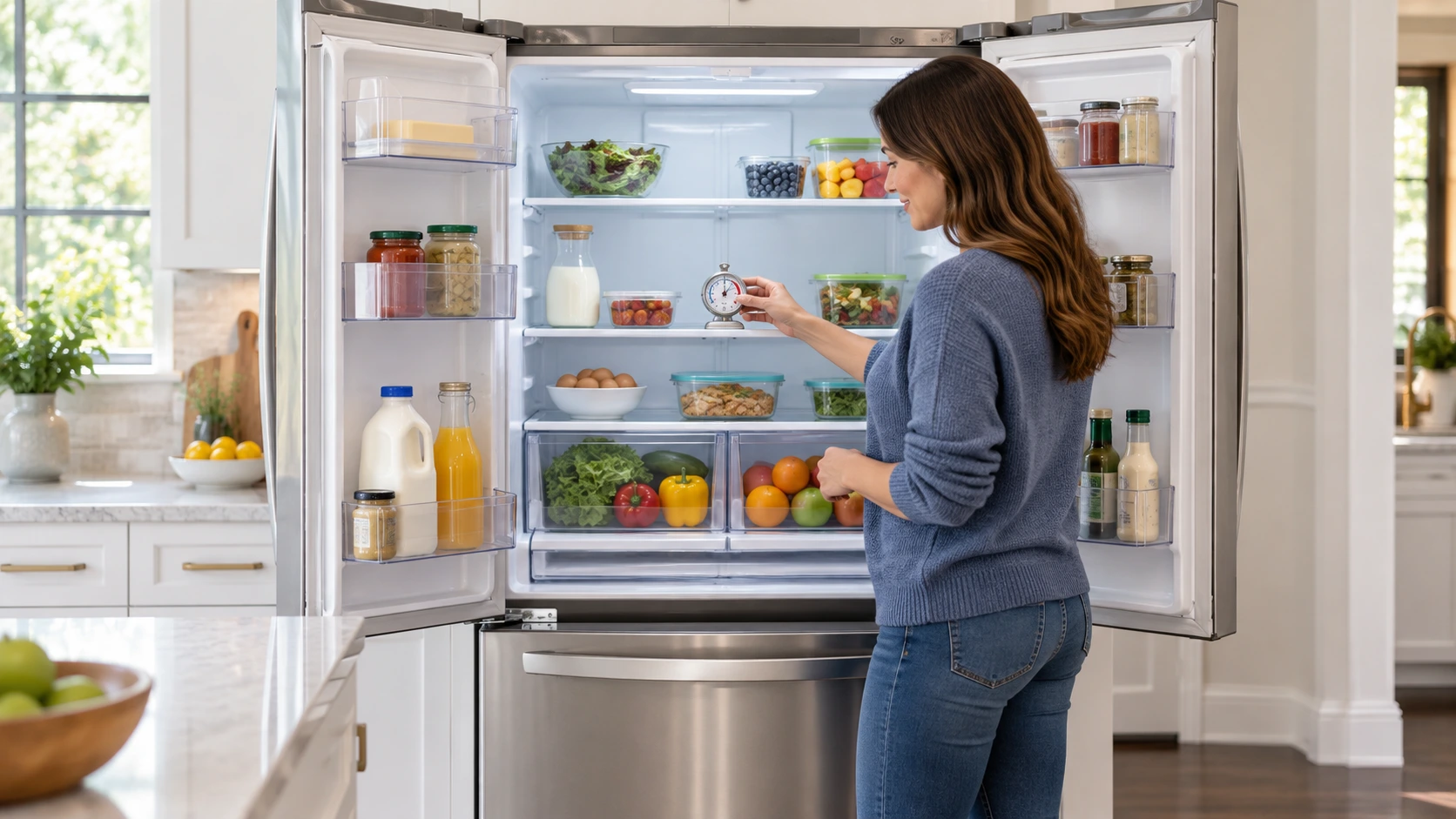
Yes. A household water line, filter, ice maker, or spill can cause a leak while the cooling system continues to operate. But water accompanied by unusually warm compartments, rapidly melting frozen food, repeated heavy frost, or a door that will not close may indicate a broader temperature-control or airflow issue. Check temperatures using an appliance thermometer rather than assuming the food is safe because the light turns on.
If the refrigerator is not maintaining safe temperatures, see our separate guide to a refrigerator that is not cooling. That article covers the cooling symptom in depth; this guide focuses on locating and stopping the water leak.
When should you stop and call a professional?
- Water is close to electrical outlets, cords, exposed wiring, or controls, or the circuit repeatedly trips.
- The leak continues after the household water supply is safely shut off, or you cannot locate or operate the shutoff.
- You see a cracked inlet line, filter housing, valve, or hidden connection; the leak occurs inside a panel that is not user-accessible.
- Water repeatedly collects under drawers or ice repeatedly builds on the freezer floor and reaching the drain would require disassembly.
- The refrigerator is unstable, too heavy to move safely, or water may be affecting flooring, walls, cabinetry, or another apartment.
- Food temperatures are unsafe or there is evidence of a larger cooling problem.
An appliance technician handles refrigerator components and internal water-system faults. A plumber handles a failed household supply or shutoff. An electrician should assess any possibly water-damaged electrical parts or wiring. Never puncture, cut, heat, or open a sealed refrigeration circuit.
Food safety if the refrigerator must be switched off
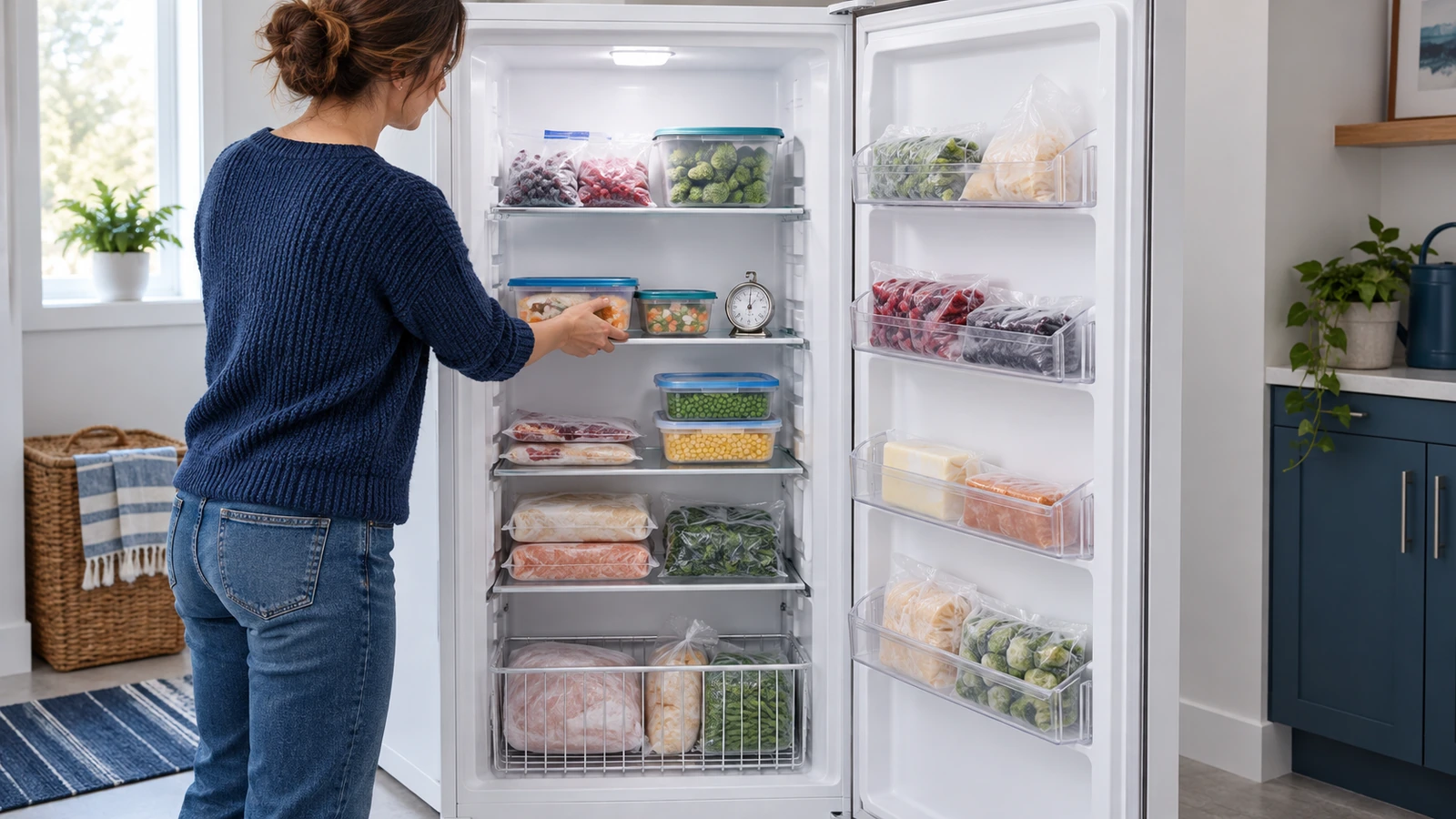
If safe repairs or a model-approved thaw require a power interruption, plan for the food first. The U.S. government advises keeping refrigerator and freezer doors closed as much as possible during an interruption. A closed refrigerator generally keeps food safely cold for about four hours; a full freezer can hold safe temperatures for roughly 48 hours and a half-full freezer for about 24 hours when doors stay closed. These are general outage estimates, not permission to leave an open refrigerator defrosting for those periods.
Use an appliance thermometer: the refrigerator target is 40°F (4°C) or colder, and the freezer is 0°F (-18°C) or colder. Transfer perishable food to a properly chilled backup appliance or an iced cooler if an extended shutdown is expected. Do not taste food to judge its safety. Follow FoodSafety.gov's item-by-item guidance when deciding what to discard after a loss of refrigeration.
How to reduce the chance of another leak
- Keep door gaskets clean and unobstructed, and make sure drawers and food containers do not stop the door from closing.
- Use the correct water filter, follow the manufacturer's replacement schedule and locking procedure, and inspect for leaks immediately after a change.
- Look for visible moisture at accessible supply tubing and shutoff connections, especially after installation or moving the appliance.
- Do not push the refrigerator against the wall so tightly that tubing is pinched; keep required ventilation clear according to the installation manual.
- Clean spills promptly and note repeated water patterns rather than concealing recurring puddles under towels.
- Have recurring drain, ice-maker, or internal valve problems evaluated instead of repeatedly thawing or resetting the appliance.
Frequently asked questions
Why is my refrigerator leaking water onto the floor?
First check whether the water begins behind the appliance, under the door, or at the dispenser. Supply tubing, a connection, an ice-maker system, defrost drainage, a drain pan, or water from another nearby fixture can all produce a puddle. Stop an active water supply leak before investigating further.
Why is there water under the crisper drawers?
A spill or condensation can be simple to resolve. If the water returns repeatedly in the same spot, a blocked or frozen defrost drain is a possible explanation, though the exact layout varies. Some models require technician access to clear the drain safely.
Can a clogged defrost drain cause ice in the freezer?
Yes. Defrost water that cannot follow its designed drain path may collect and refreeze on the freezer floor. Do not chip at the ice or remove interior panels unless the model-specific instructions explicitly permit the work.
Why did the leak start after changing the water filter?
The filter may not be installed as intended, may be the wrong model, or may have a damaged seal or housing. Check the manufacturer's installation procedure and isolate an active water leak. Do not force the filter or use improvised sealing materials.
Is a little water dripping from the dispenser normal?
Some models may release a few residual drops shortly after dispensing. Persistent dripping, a stream of water, a wet dispenser housing, or recurring pooled water is different and warrants troubleshooting using that model's support instructions.
Should I unplug a leaking refrigerator?
If the plug, socket, and floor are dry and you can reach them safely, the owner's manual may direct you to unplug before approved cleaning or service preparation. Do not touch a wet plug or outlet or stand in water to unplug the refrigerator. If you suspect wet electrical equipment, keep away and call a qualified professional to make the area safe.
Bottom line
A refrigerator leak is easiest to diagnose when you identify the first wet location and whether the water is coming from the ice-maker supply, filter/dispenser, defrost drainage, condensation, or an outside plumbing source. Tackle spills and accessible door issues first, isolate an active water-supply leak safely, and leave hidden drain work, damaged valves, energized areas, and sealed-system repairs to professionals.
Manufacturer and safety references
These are primary manufacturer and U.S. safety references used to check the general guidance above. Exact maintenance procedures depend on your refrigerator's model and owner manual.
- GE Appliances: Refrigerator — Water Leaking Onto the Floor
- GE Appliances: Top Freezer Refrigerator — Drain Tube
- Whirlpool: Leaking at the Bottom
- Samsung: Water Leaks in a Refrigerator
- LG: Troubleshooting Leaks Inside a Refrigerator
- Frigidaire: Refrigerator Water Leaks
- Electrical Safety Foundation International: Water-Damaged Electrical Equipment
- FoodSafety.gov: Food Safety During a Power Outage