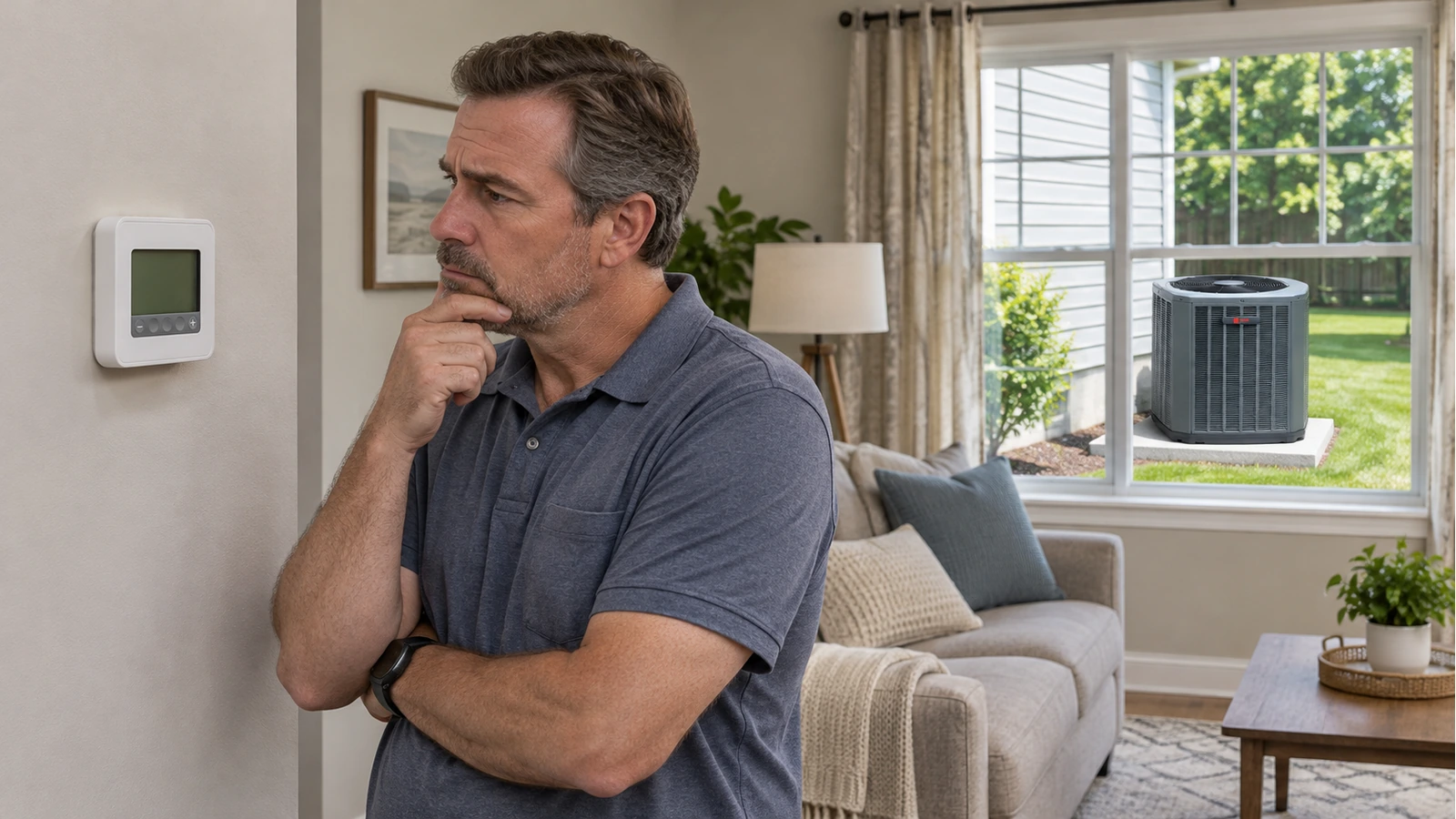
If your AC condenser is not turning on, the indoor blower may still circulate air while the outdoor unit stays silent. That does not automatically mean the compressor has failed. A thermostat that is not calling for cooling, a normal restart delay, a power interruption, a protective shutdown, or a fault inside the outdoor equipment can produce similar symptoms.
This guide focuses on the outdoor unit of a typical U.S. split-system central air conditioner. It explains how to observe the symptoms safely, why the condenser might not start, and when a qualified HVAC technician is needed. It is not a guide to opening electrical cabinets, testing capacitors, or servicing the refrigerant circuit. Heat pumps, inverter-driven systems, and ductless mini-splits may behave differently; follow the instructions for your exact equipment.
Stop if there is any sign of an electrical or mechanical hazard.
Stay clear of the unit if you notice smoke, sparks, a burning smell, loud electrical arcing, damaged wiring, flooding, or water near electrical equipment. If it is safe to use the thermostat from indoors, set cooling to Off. Do not approach hazardous equipment to operate a disconnect or breaker. Arrange appropriate professional help; leave the area and contact emergency services for an active fire or immediate danger.
Why Is My AC Condenser Not Turning On?
First confirm that the thermostat is actually requesting cooling, allow any normal compressor-protection delay, and identify what the indoor and outdoor units are doing. Many central systems have separate indoor and outdoor electrical circuits. The inside fan can operate even when the outside equipment lacks power or has been shut down by a control or safety device.
If the outdoor unit remains off after the normal delay, possible explanations include a tripped breaker, a failed contactor or capacitor, a fan or compressor problem, a control-circuit fault, or a system-specific lockout. The visible symptom cannot distinguish these faults reliably. You can gather useful information without touching the cabinet; electrical tests and internal repairs require professional service.
Inside fan runs; outside stays off
Air movement indoors is not proof that the cooling cycle or outdoor unit is operating.
Outside unit hums or clicks
Stop repeated start attempts. The sound does not identify a particular failed part.
Neither unit starts
Use the broader AC not turning on checklist for a whole-system no-start problem.
Make Sure the Outdoor AC Unit Is Actually Supposed to Be Running
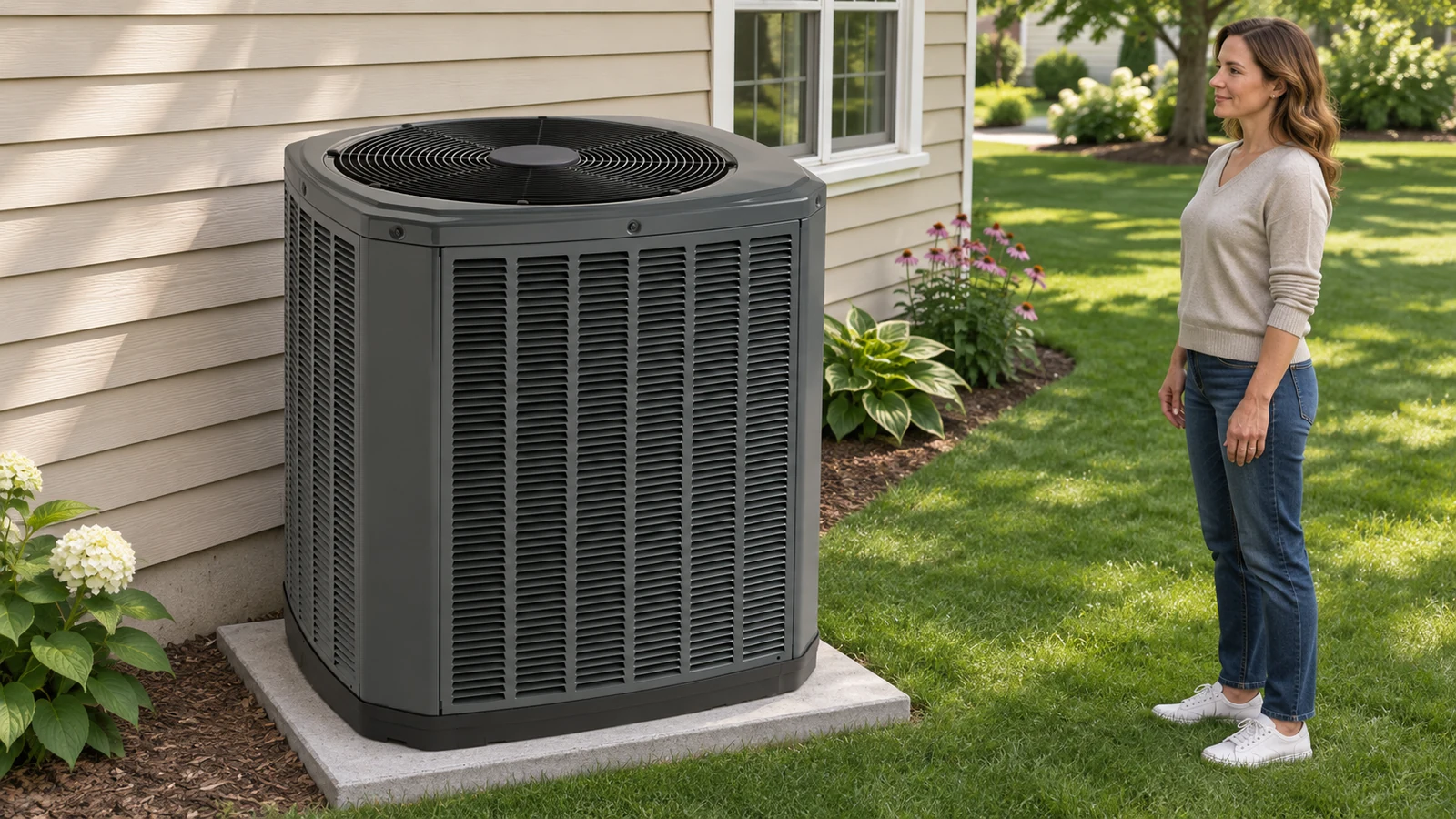
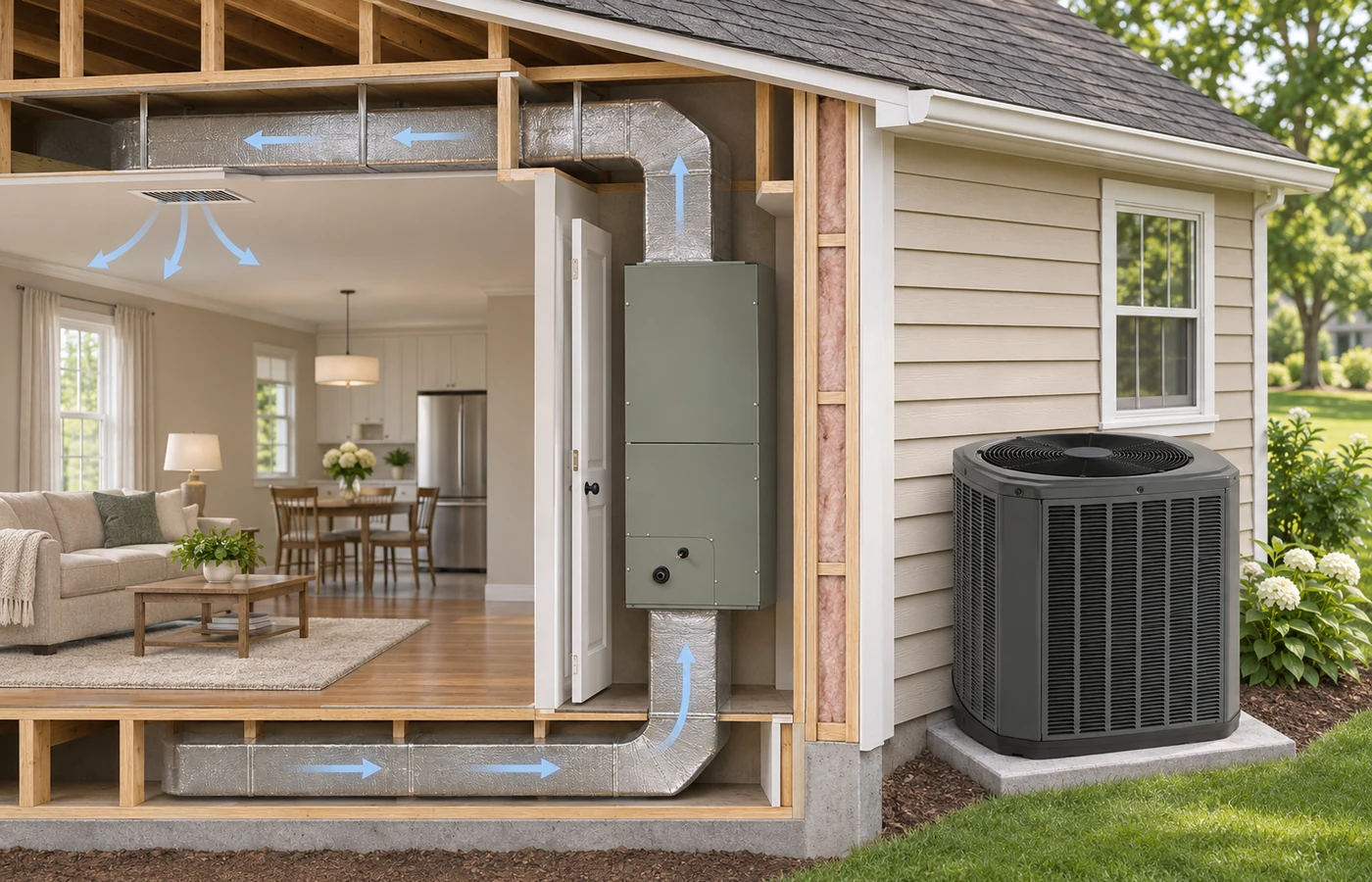
The indoor blower, outdoor condenser fan, and compressor do different jobs. The indoor blower moves household air across the indoor evaporator coil. In a conventional split-system air conditioner, the outdoor equipment contains the compressor and condenser coil and rejects heat outdoors. The thermostat and equipment controls determine when cooling should begin.
A fan setting of On can circulate room-temperature air without calling for cooling. If the thermostat has already reached its temperature target, the outdoor unit may correctly remain off. Many systems also impose a short delay after a setting change or power interruption. Some variable-speed units are unusually quiet or adjust fan behavior, so silence or a momentarily still fan is not enough to prove failure.
| What you observe | Possible interpretation | Safe next step |
|---|---|---|
| Thermostat is satisfied; outdoor unit is off | The system may not currently need cooling. | Check the displayed room temperature, setpoint, and cooling mode. |
| Indoor blower runs; outdoor unit is silent | The blower may be in Fan On mode, or the outdoor unit may lack a cooling command or power. | Set Fan to Auto, confirm Cool, and note what happens after the normal delay. |
| Outdoor cabinet hums or clicks but does not start | A motor-start, power, or control issue is possible; sound alone cannot diagnose it. | Set cooling Off and arrange HVAC service. |
| Outdoor fan runs, but the house stays warm | The fan alone does not prove the compressor is cooling correctly. | Stop if operation is abnormal; see the AC not cooling guide and arrange diagnosis. |
| Both indoor and outdoor equipment are unresponsive | A broader power, thermostat, control, or protective-shutdown issue may exist. | Use the whole-system no-start guide. |
Five Safe Checks Before Calling an HVAC Technician
These checks are designed to be performed from normal homeowner-accessible locations. They do not require a screwdriver, electrical meter, refrigerant gauges, or removing equipment panels. Skip any check that would require approaching wet, damaged, unstable, or energized equipment.
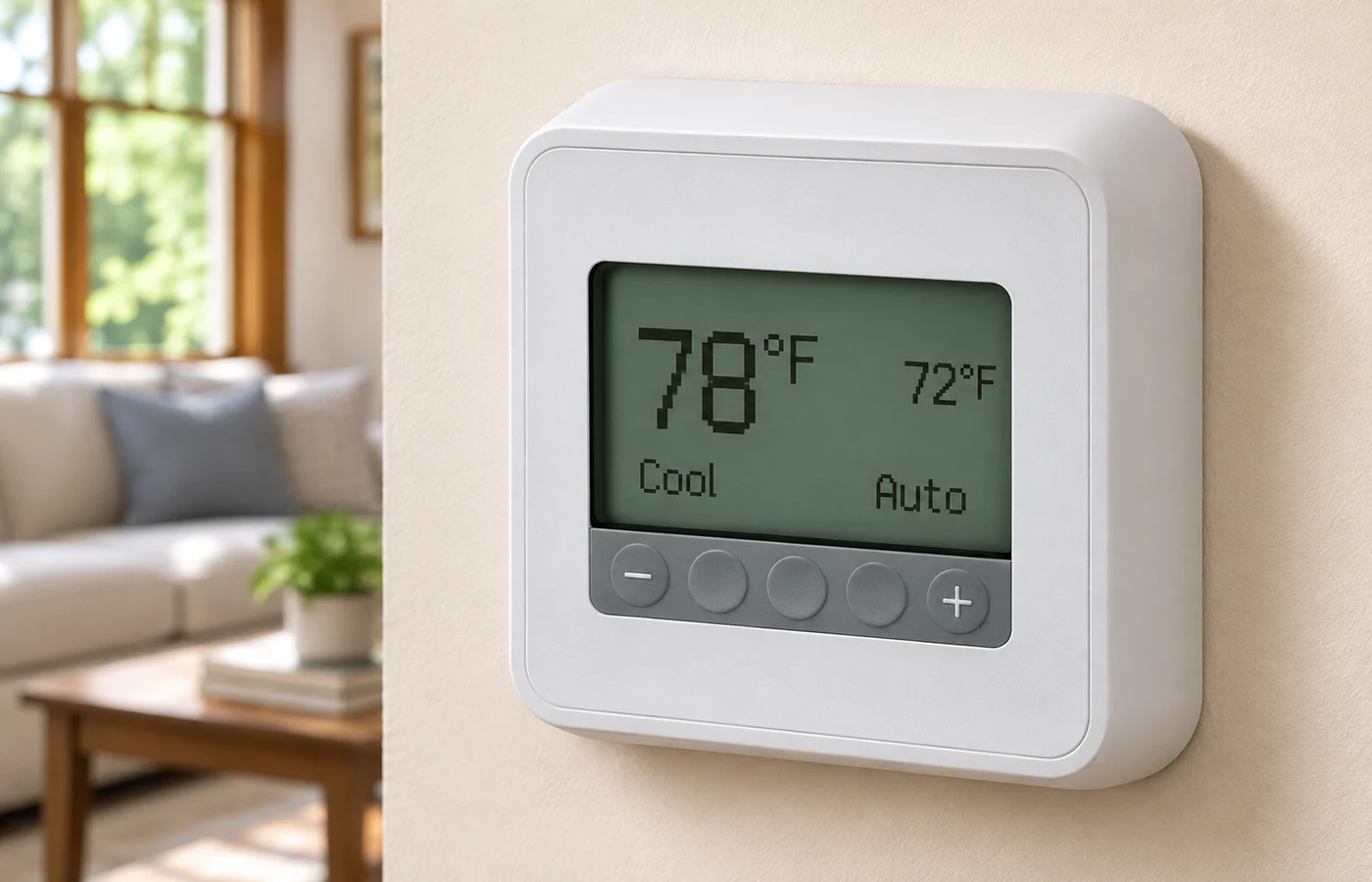
- Confirm a cooling call at the thermostat. Select Cool and set the target below the current indoor temperature. Choose Auto for the fan so the indoor blower does not mask whether the cooling system has started. Check active schedules, vacation settings, alerts, and error messages. Replace batteries only if your thermostat uses homeowner-replaceable batteries and its manual explains how.
- Allow the documented restart delay. A thermostat may display a flashing cooling indicator or a delay message while compressor protection is active. Wait the period described in your equipment manual rather than repeatedly switching modes or cycling electrical power. If you hear repeated failed starting attempts, stop instead of waiting through additional cycles.
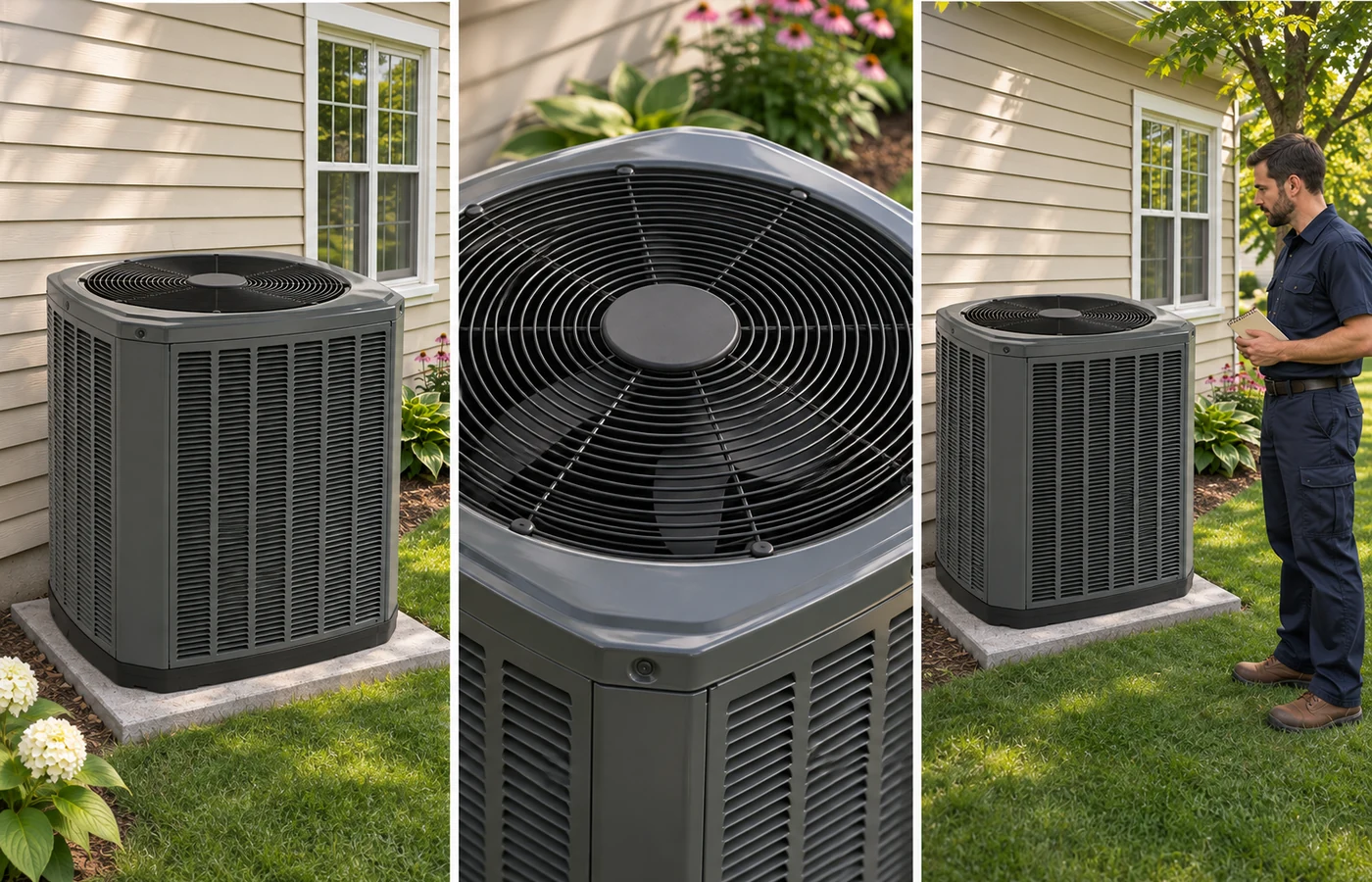
- Compare the indoor and outdoor response. Without touching the outdoor cabinet, note whether indoor airflow starts, whether the outside fan visibly moves, and whether the unit is silent or making an unusual sound. You do not have to stand next to the condenser to collect this information. Do not reach through the grille or try to start the fan manually.
- Look at visible power indicators, without resetting anything. If your home's breaker panel is dry, undamaged, and safely accessible, you may visually check the labels and switch positions for the indoor and outdoor AC circuits through the normal panel door. Central AC equipment commonly uses more than one circuit. If a breaker is tripped, leave it alone and request professional assessment. Do not open the panel's inner cover, pull an outdoor disconnect, replace a fuse, or test a wire.
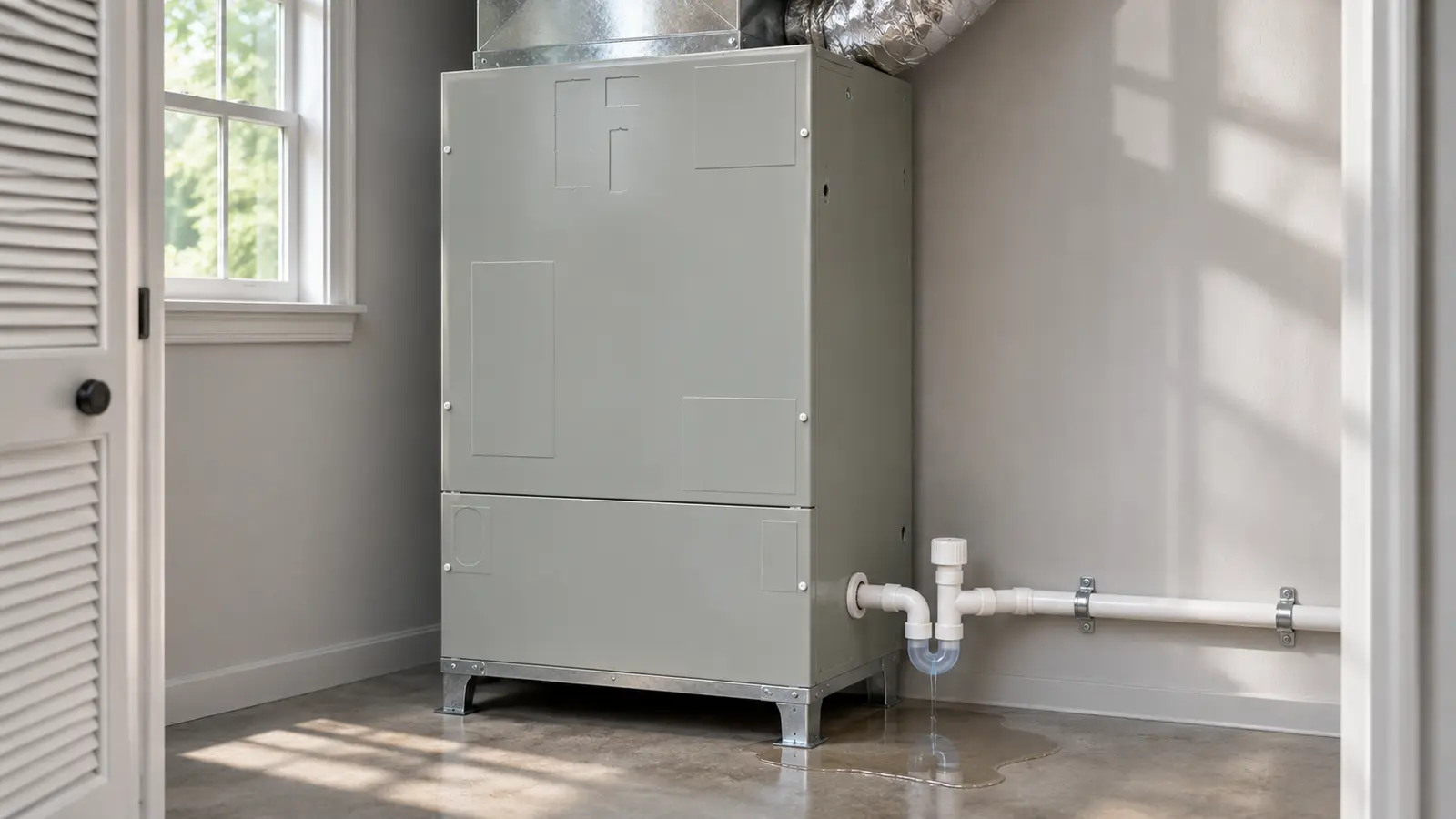
- Check the surroundings and obvious protective-shutdown clues. From outside the equipment, look for loose leaves or vegetation crowding the condenser, storm damage, or an obstructed fan grille. Remove loose debris from the surrounding ground only when the equipment is off and the area is safe; do not reach into the unit or clean internal coils. Indoors, note any visible overflow-pan water or warning that might be associated with an optional condensate safety switch. Do not bypass or manipulate that switch.
Why no breaker-reset step? Manufacturer advice differs. This guide uses a conservative rule consistent with the published Home System HQ no-start checklist: a tripped AC breaker is evidence of a possible electrical problem, not an invitation to keep restarting the equipment. A qualified professional should determine why it tripped.
Common Reasons an AC Condenser Won't Turn On
Several distinct problems can stop the outdoor unit. The descriptions below explain what a qualified technician may investigate; they are not instructions for opening equipment or identifying a failed component from a sound alone.
1. No Cooling Command or a Control Delay
If the thermostat is not requesting cooling, the condenser normally should not start. This can result from the wrong mode, a setpoint above room temperature, a schedule, or a temporary control delay. A thermostat display that reads Cool does not necessarily confirm that the cooling signal reached the outdoor equipment. Damaged low-voltage wiring, a thermostat defect, or an equipment control issue can interrupt the command even when the screen appears normal.
For homeowners, the useful distinction is whether the cooling request and normal delay have been checked. Testing thermostat terminals, control boards, or low-voltage circuits is technician work. If the indoor blower runs continuously because Fan is set to On, switch to Auto before interpreting the outdoor response.
2. Outdoor Power Loss, a Tripped Breaker, or a Disconnect Problem
The outdoor condenser often has a dedicated circuit separate from the indoor furnace or air handler. A tripped breaker, a blown fuse, a disconnected or damaged outdoor power supply, or another electrical problem can keep it off while the indoor blower still works. A storm or recent service visit can be relevant background, but neither proves the cause.
You may report a clearly visible breaker position or damage observed from a safe location. Do not operate an unfamiliar outdoor disconnect, remove a pullout, inspect a fuse compartment, or open the electrical cabinet. An electrician or HVAC technician can determine whether the issue is in the supply circuit or the equipment itself.
3. A Failed Capacitor or Contactor
On many conventional single-stage outdoor units, capacitors support motor operation and contactors control power to major components. A failed part may prevent the fan, compressor, or both from starting. Humming, clicking, or an unsuccessful start can occur, but these noises are shared by several other faults; they cannot confirm a bad capacitor or contactor.
Capacitors can retain a dangerous electrical charge even after power is disconnected. Never remove an access panel, touch terminals, use a meter inside the condenser, purchase a replacement based only on a search result, or push a fan blade to see whether the motor catches. A trained technician should identify the actual failed part and check associated components before recommending repair.
4. Outdoor Fan Motor or Fan-Control Trouble
The condenser fan moves outdoor air across the coil to help reject heat. If the system is supposed to be cooling but the outdoor fan does not operate, a fan motor, motor capacitor on applicable models, control, wiring, or protection device may be involved. Physical obstructions can also matter. However, not every modern system runs the fan at an obvious constant speed, so a stationary fan in a brief observation is not conclusive.
If the condenser makes an abnormal noise, seems to be overheating, or repeatedly attempts to start without normal fan movement, turn cooling Off from a safe location and call for service. Do not probe the fan grille or attempt to free or spin the blades.
5. Compressor, Overload Protection, or Refrigerant-Side Fault
A compressor can fail to start because of a motor or electrical problem, an internal protective device, abnormal operating conditions, or a control that prevents operation. A pressure-related protective shutdown may occur on systems equipped for it. Refrigerant quantity is not something you can determine by looking at the outdoor fan, and low refrigerant is not automatically the explanation for a silent condenser.
Only an appropriately trained professional should measure electrical performance, assess refrigerant-side conditions, investigate leaks, or service the sealed system. U.S. EPA Section 608 certification requirements apply to work that may release regulated refrigerants. A contractor should establish the cause before suggesting refrigerant charging or compressor replacement.
6. Condensate Safety Switch or Other System Lockout
Some split systems include a float switch that responds to water backing up in the indoor condensate pan or drain. Depending on the wiring and model, it may stop a cooling call, the outdoor unit, or more of the system. Other controls may inhibit startup following a detected fault. These are system-dependent possibilities, not universal features of every condenser.
If you see indoor overflow water, staining, or a fault indication, document it without opening cabinets. Set cooling Off if safe and arrange service. Do not bridge a float switch, force a control reset, or pour chemical or boiling-water solutions into unfamiliar drains.
7. Obstructed Outdoor Airflow or Weather-Related Damage
Leaves, heavy vegetation, dirt on the coil, or a poorly ventilated installation can reduce outdoor airflow. This typically causes poor performance or abnormal operating conditions rather than proving an immediate electrical no-start; however, some equipment can shut down to protect itself. Severe weather may also damage wiring or control equipment.
Keep the ground and vegetation around the unit reasonably clear according to the manufacturer's clearance guidance, without putting hands or tools through the grille. Coil access, detailed washing, electrical inspection, and assessment of storm damage belong to qualified service personnel when they cannot be performed safely under the specific owner's manual.
What Do Different Outdoor AC Symptoms Mean?
Rather than guessing a replacement part, use the pattern of operation to give the technician a more useful description. These are possibilities, not diagnoses.
| Symptom | What could be involved | What to do |
|---|---|---|
| Completely silent after a genuine cooling request and normal delay | Outdoor power, thermostat/control signal, safety lockout, or equipment fault | Record indoor and outdoor behavior; request diagnosis if unresolved. |
| Buzzing or humming but no successful startup | Motor-start component, compressor, fan motor, or electrical fault | Turn cooling Off; do not continue testing starts or touch the cabinet. |
| Repeated clicking without normal operation | Control or switching problem, unsuccessful motor start, or protective response | Stop repeated operation; tell the technician how often the clicks occur. |
| Top fan not spinning while cooling appears to be requested | No power or cooling command, motor or control trouble, or model-specific fan behavior | Observe only from outside; no manual fan-spin test. |
| Fan spins but supply air stays warm | Compressor or cooling-performance issue, or another system problem | Do not infer the compressor is healthy; request service and consult the cooling-performance guide. |
| Starts, then stops repeatedly | Protective controls, overheating, electrical supply, or mechanical trouble | Stop attempts and have the system assessed. |
Record the sequence: Did the thermostat show a cooling request? Did the indoor blower start? Was the outdoor unit ever running? Did a noise occur once or repeatedly? Did the problem begin after a power outage, storm, recent maintenance, or a long cooling cycle? These observations are usually more useful than telling a contractor that the capacitor is definitely bad.
What You Should Not Do to a Condenser That Won't Start
- Do not remove condenser access panels, pull the outdoor disconnect, open fuse holders, or inspect exposed wiring.
- Do not reset a tripped AC breaker as an experiment or repeatedly cycle power to force a restart.
- Do not spin the outdoor fan with a stick, tool, or your hand, even if it seems motionless.
- Do not test, discharge, or replace capacitors, contactors, fan motors, compressors, or control boards yourself.
- Do not bypass float switches, pressure controls, thermal protectors, or other safety devices.
- Do not attach refrigerant gauges, add refrigerant, or open the sealed refrigerant circuit.
These restrictions matter because an apparently idle outdoor cabinet can contain hazardous voltage, stored capacitor energy, and parts that start unexpectedly. If the unit is wet, damaged, or making alarming sounds, do not approach it to perform additional checks. Safety takes priority over collecting more information.
When Should You Call an HVAC Technician?
Schedule professional diagnosis when the outdoor condenser does not respond after the thermostat setting and normal delay have been checked, or when the indoor blower runs without cooling and the outdoor unit remains off. Request prompt assistance for repeated humming, clicking, failed starts, an apparent tripped breaker, a damaged disconnect, visible water near electrical equipment, or any burning smell. An active fire requires emergency response rather than routine service.
A qualified HVAC technician may verify the cooling command, inspect electrical supply and protection devices, evaluate contactors and capacitors, test motors and compressor operation, and interpret equipment fault codes. Refrigerant-side work must follow applicable certification and safety rules. These are descriptions of a professional service visit, not at-home instructions.
What to tell the HVAC company
- Brand and model, if readable from an external label without approaching a hazard
- Thermostat mode, setpoint, room temperature, and any displayed message
- Whether the indoor blower runs and whether the outdoor fan appears to move
- Whether the outdoor unit is silent, humming, clicking, or cycling repeatedly
- Any visible breaker trip, drain overflow warning, storm damage, ice, or water
- When the problem began, including recent outages, installation, or service
Will the Outdoor AC Condenser Need Repair or Replacement?
Not necessarily. A thermostat setting or ordinary control delay is very different from a failed motor or compressor. A properly diagnosed capacitor or contactor problem on a conventional system may be repairable without replacing the condenser. More serious failures can make a major repair or replacement worth considering, especially if other parts of the system are aging or incompatible.
Ask for a written explanation of the fault, which components were actually tested, whether parts and labor are covered by warranty, and whether the proposed work is compatible with the rest of your system. Compare an itemized repair quote with appropriate replacement options rather than applying a universal online price table. Equipment design, refrigerant type, local labor, warranty terms, and required installation work can all affect the choice.
If someone recommends replacing the outdoor unit solely because the fan is not spinning or a hum is audible, ask how the underlying failure was established. A symptom is not a repair estimate, and neither a suspected capacitor nor a suspected compressor should be treated as confirmed without testing.
How to Reduce Future Outdoor Condenser Startup Problems
No maintenance plan prevents every electrical or mechanical failure. Still, a few habits can support safer, more reliable operation: follow the manufacturer's air-filter schedule, keep the area surrounding the condenser clear of overgrowth and loose debris, pay attention to thermostat alerts, and schedule a professional cooling-system inspection before the hot season. ENERGY STAR recommends annual pre-season equipment checks by a contractor.
During a maintenance visit, ask the contractor to inspect electrical connections and starting components, verify safe controls and condensate drainage where applicable, and assess outdoor airflow and coil condition. These are professional inspection tasks. A homeowner does not need to open the condenser to obtain the benefit of preventive maintenance.
Frequently Asked Questions
Why is my AC condenser not turning on when the inside fan is running?
The indoor blower can circulate air independently of the outdoor cooling equipment, especially if the fan is set to On. Check for a genuine cooling request and normal delay. If the outdoor unit remains off, outdoor power, controls, safety switches, or internal components may require professional diagnosis.
Why is my outside AC unit humming but not starting?
Humming may accompany an unsuccessful start involving a motor, capacitor on applicable systems, contactor, or other electrical problem. The sound alone cannot identify a bad part. Set cooling Off if safe and ask a technician to diagnose the system; never try to spin the fan manually.
Why is the outdoor AC fan not spinning?
The condenser may not be receiving a cooling request or power, a delay or protection mode may be active, or a fan motor or control component may have failed. Some modern units adjust fan operation by design. Do not insert a tool through the grille or assume the fan motor is bad based on a single observation.
Can a bad capacitor stop an AC condenser from turning on?
Yes, on systems that use that type of capacitor, a failure can interfere with starting or running a fan or compressor. Other electrical and control faults can look the same. Capacitors are dangerous to test or replace without training because they may store energy even when equipment is switched off.
Why is my thermostat on Cool but my outside AC unit stays off?
A Cool display does not guarantee the outdoor equipment is receiving a command. Check whether the setpoint is below the room temperature, whether a schedule is overriding the setting, and whether the model is in a normal delay. If the problem persists, have a technician assess controls and power rather than opening the thermostat or condenser wiring.
Does an outdoor AC condenser have a reset button?
There is no universal reset button or safe reset sequence for all central outdoor units. Some products have model-specific user controls or fault-clearing procedures, and many do not. Follow the exact owner's manual; do not search inside the cabinet for a button or cycle breakers repeatedly.
Can a clogged AC drain stop the outside unit from running?
It can on a system equipped with an overflow safety switch wired to interrupt cooling. Other systems are configured differently. Visible indoor drain-pan water is a clue, not proof. Do not bypass the switch or attempt unfamiliar drain repairs around electrical equipment.
What if the condenser fan runs but the AC does not cool?
The outdoor fan operating does not prove that the compressor or refrigerant cycle is functioning properly. The problem may be related to the compressor, controls, airflow, or other cooling-system conditions. Use the AC not cooling troubleshooting guide for the broader symptom and arrange service if normal cooling does not resume.
Should I leave the indoor blower running while the condenser is off?
For a confirmed outdoor-unit fault, do not keep demanding cooling from an abnormal system. Set cooling Off and follow the manufacturer's guidance or a technician's instructions about any separate fan operation. Running the blower alone generally will not restore mechanical cooling and may simply circulate room-temperature air.
The Bottom Line
If your AC condenser is not turning on, start by checking the thermostat's cooling request and allowing the normal restart delay. Determine whether the indoor fan operates and describe what you can safely observe outside. A silent condenser, a stationary outdoor fan, and humming or clicking can point toward different groups of faults, but none proves a specific component failure.
Keep your checks visual and noninvasive. Leave electrical supply faults, motor-start components, compressors, refrigerant work, and safety-device troubleshooting to qualified professionals. If neither indoor nor outdoor equipment starts, return to our AC not turning on checklist for the wider system-level approach.
Sources and Further Reading
These manufacturer and public-safety resources support the general guidance in this article. Your exact owner's manual and a professional on-site diagnosis take priority when equipment differs.
- Lennox — Outside AC Unit Not Working?
- Trane — AC Not Turning On
- Trane — AC Fan Not Working?
- Carrier — AC Unit Not Turning On
- ENERGY STAR — Maintenance Checklist
- ESFI — Air Conditioner and Fan Safety
- U.S. EPA — Section 608 Technician Certification Requirements
Home System HQ publishes general homeowner education and does not provide HVAC service or diagnose individual systems remotely.