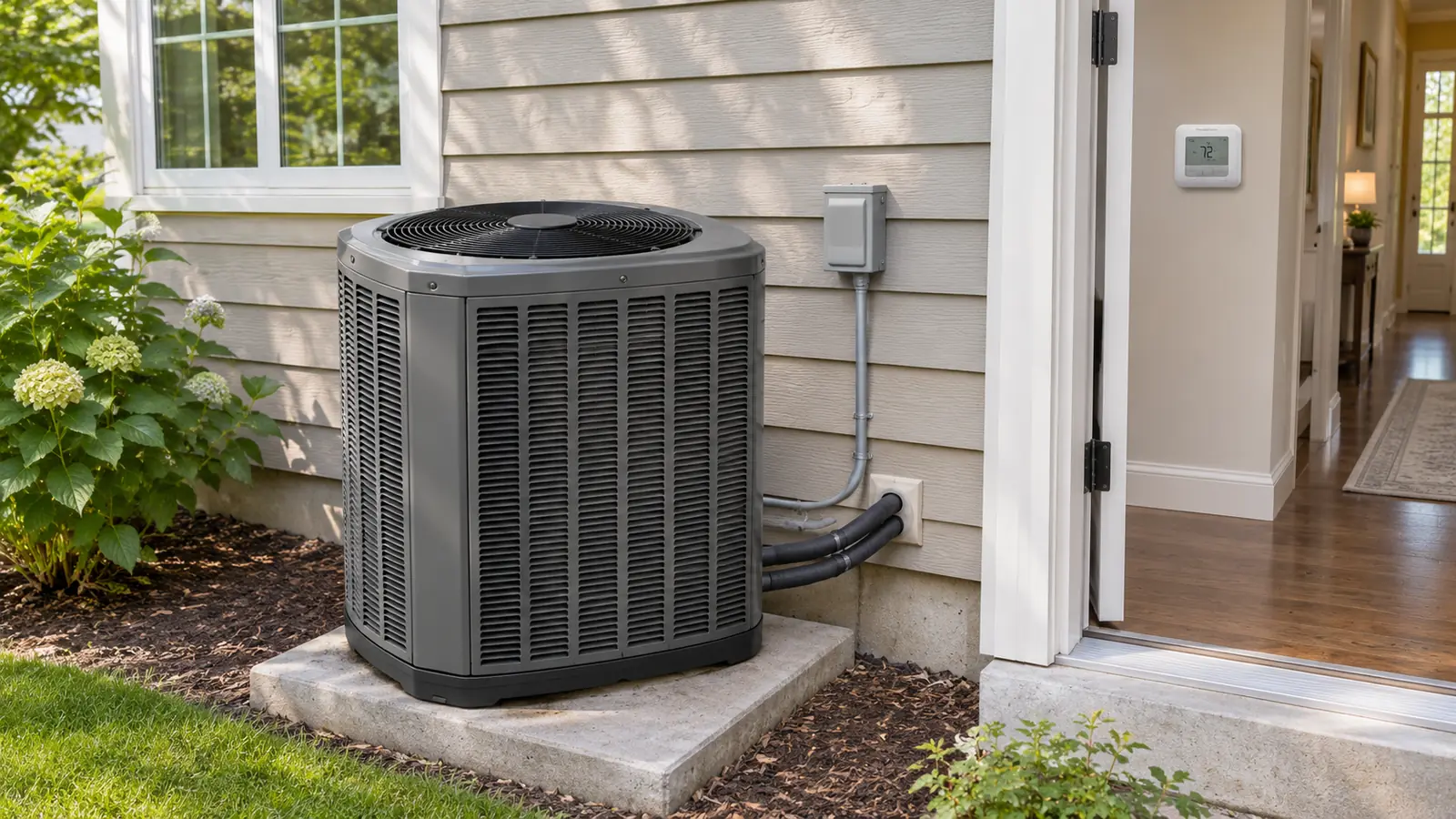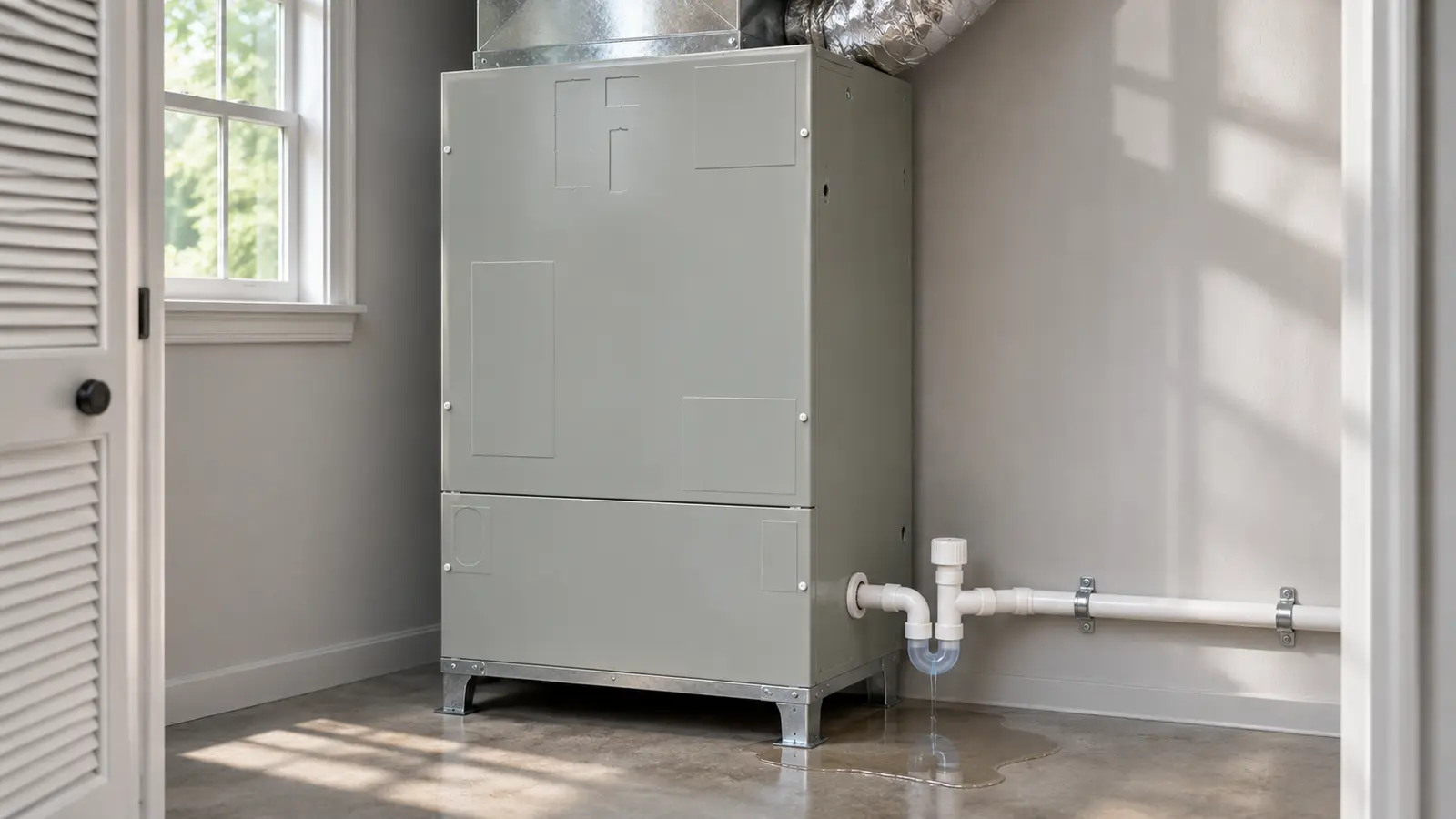
An AC unit leaking water inside your home is usually a drainage or condensation-management problem, not something to ignore. A blocked condensate line, damaged drain pan, frozen evaporator coil, or faulty condensate pump can allow water to escape where it should not. The first priority is to protect your home and avoid electrical hazards, then look for clues that a qualified HVAC technician can use to identify the cause.
If water is actively leaking indoors
Set the thermostat to OFF if you can reach it safely and it is dry. Keep away from wet electrical equipment, outlets, and wiring. Do not restart the system just to see whether the leak returns. If a ceiling is sagging, water is reaching electrical components, or the area is flooded, stay clear and arrange qualified help.
What to Do First When Your AC Is Leaking Water
Water around an indoor air handler, a wet ceiling beneath an attic unit, or a puddle beneath a furnace and cooling coil can cause damage even if the AC still cools the house. Start with these practical steps rather than trying to diagnose electrical or refrigerant components.
- Turn off cooling at a safe, dry thermostat. Setting the system to OFF prevents another normal cooling cycle from producing more condensate. If the thermostat or surrounding area is wet, do not touch it. Do not reach through water to operate breakers or unplug equipment.
- Keep people away from electrical hazards. Water near an outlet, electrical panel, air-handler wiring, or damaged electrical equipment calls for qualified electrical and HVAC evaluation. A device that looks dry afterward is not necessarily safe to re-energize.
- Protect accessible, dry-side areas. If there is no electrical danger, use towels to contain a small floor puddle and move belongings out of the wet area. Take photos of water stains or the visible leak. Do not climb onto a wet ceiling, enter an unsafe attic, or remove sealed equipment panels.
- Note where and when the water appears. Does it drip beneath the indoor cabinet, from a ceiling, near a PVC pipe, or only after the system shuts off? Is cooling weak? Is there visible ice? These observations help narrow the likely cause.
- Arrange service for an active or recurring indoor leak. Even if the puddle disappears, a blocked drain, compromised pan, or melted coil ice may make it return when cooling resumes.
If building materials are wet, dry affected materials promptly when safe. The U.S. EPA recommends drying water-damaged items and areas within 24 to 48 hours where feasible to help prevent mold growth.
Is It Normal for an AC Unit to Leak Water?
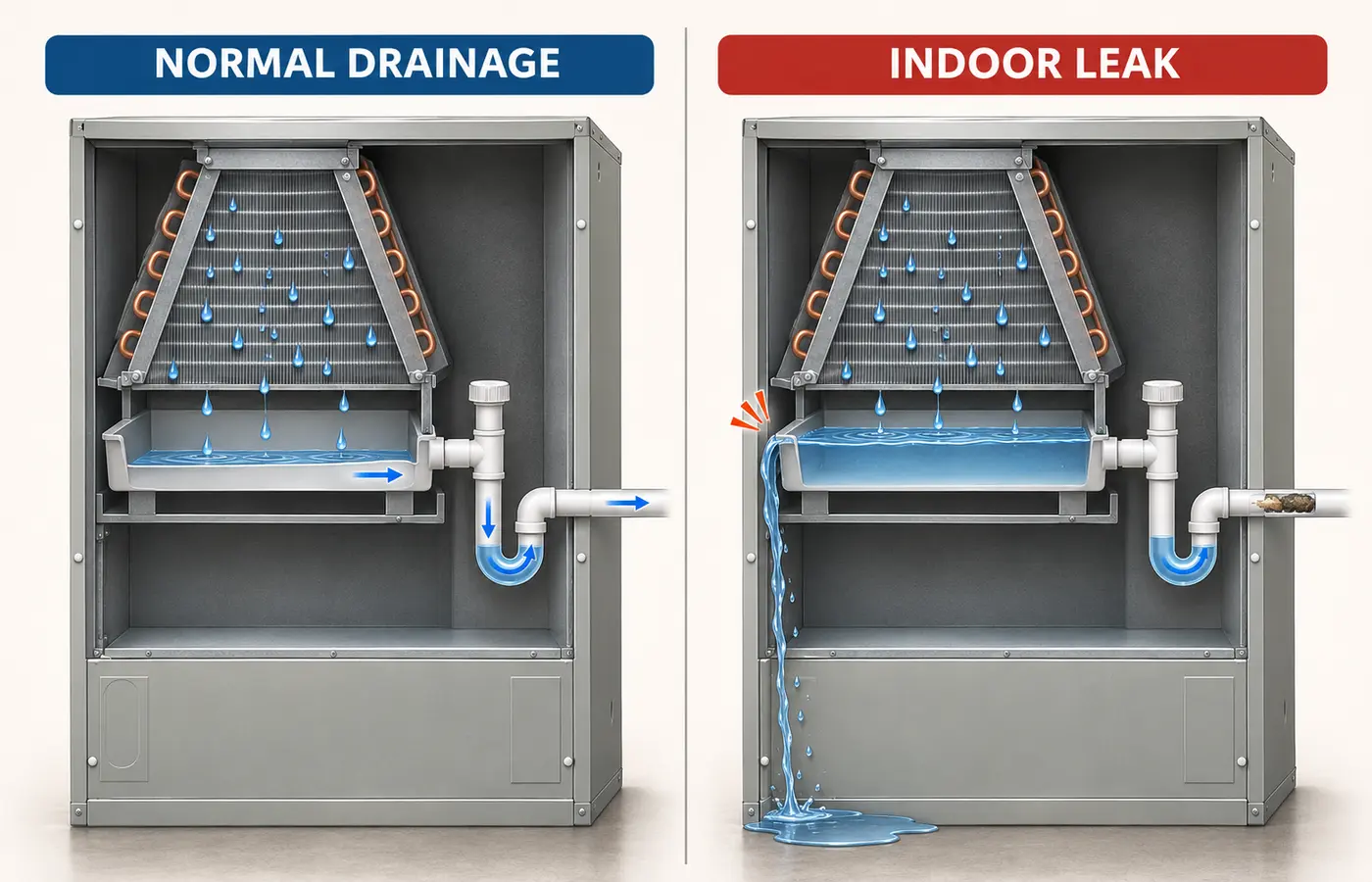
Making condensation is normal; leaking it into your home is not. During cooling, warm, humid indoor air passes over a cold evaporator coil. Moisture condenses onto the coil, drips into the primary condensate pan, and drains through a dedicated line. Some systems use a pump when gravity drainage is not practical.
A small amount of water at the system's designed outdoor condensate discharge can be expected during humid weather. A growing indoor puddle, stains on drywall, water pouring from an emergency drain outlet, or moisture escaping around the indoor cabinet suggests the water is not following its intended route.
| What you see | What it may mean | Best next step |
|---|---|---|
| Water dripping from the intended exterior condensate outlet during cooling | Often normal drainage | Monitor for an unusual change or discharge from an emergency outlet |
| Puddle below an indoor air handler | Drain blockage, cracked pan, ice melt, or other drainage fault | Turn cooling off safely and request diagnosis |
| Water from a high exterior emergency drain above a window or doorway | Possible primary-drain problem or overflow warning, depending on installation | Have the drainage system inspected promptly |
| Wet drywall or ceiling beneath attic equipment | Potential overflow with hidden building damage | Stop cooling safely, keep clear of damaged areas, and arrange urgent service |
| A few droplets on cold piping outdoors | May be normal surface condensation in humid air | Observe whether water is actually escaping indoors |
A quick visual impression cannot tell you which component failed. The same indoor puddle can result from several different faults, so avoid treating water location alone as a confirmed diagnosis.
Where Is the Water Coming From?
The location is often more helpful than the amount. Use the following clues from a safe position, without opening an electrical or refrigerant compartment.
Water around the indoor air handler
A full condensate pan, clogged line, damaged pan, disconnected pipe, or melted ice may be involved. Look for visible puddles and accessible external piping, not internal coil components.
Wet ceiling beneath attic equipment
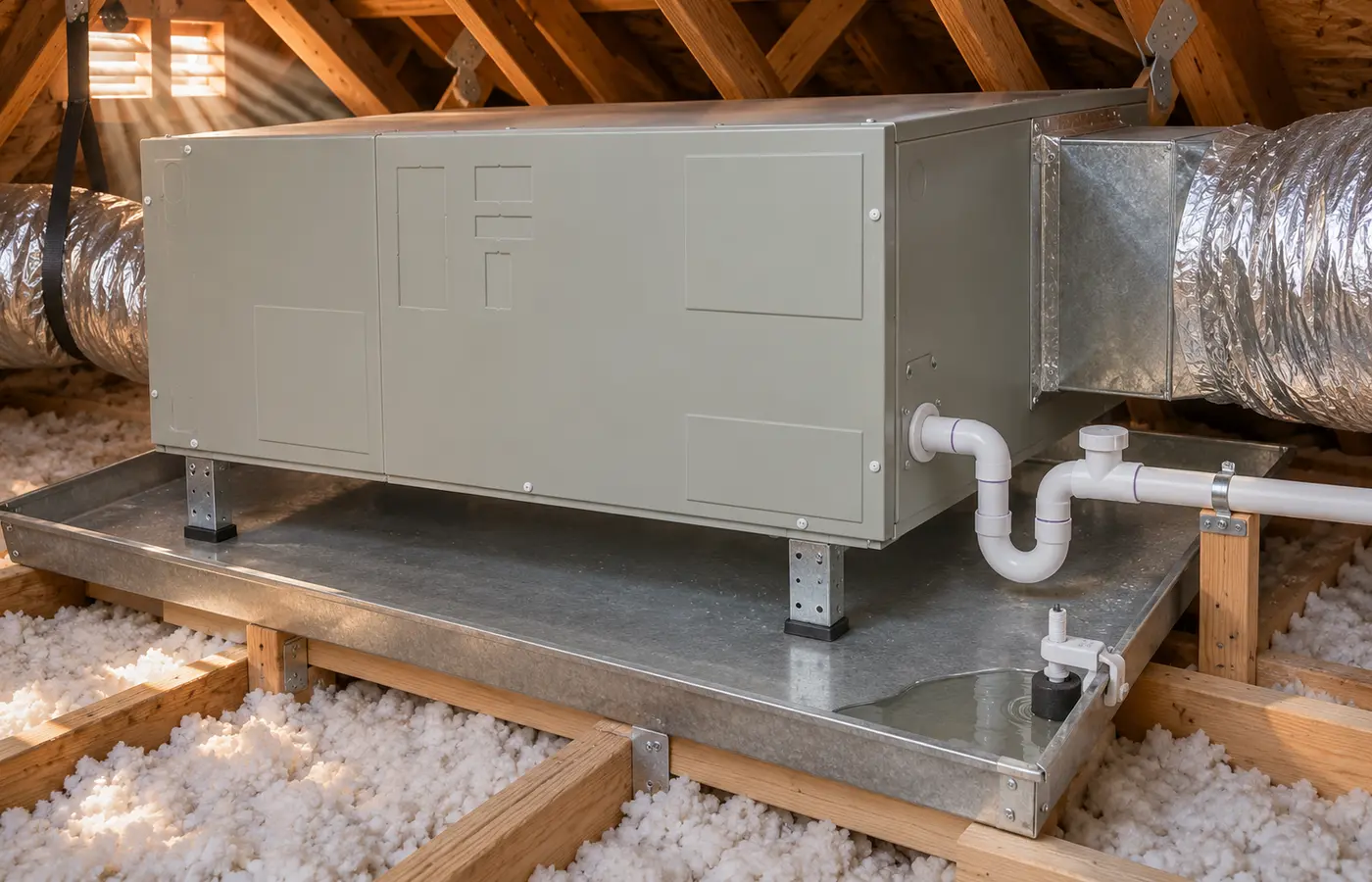
An overflowing primary or auxiliary pan can damage insulation and drywall before a leak becomes visible below. Treat ceiling sagging and nearby electrical fixtures as urgent hazards; do not enter an unsafe attic.
Water appearing after the AC stops
A previously frozen evaporator coil may thaw and release additional water. Residual condensate may also continue to drain. Water escaping into a room is abnormal regardless of the timing.
Water near a vent or insulated pipe
Surface condensation may form where humid air contacts an unusually cold surface. Duct insulation, air leakage, humidity, or nearby condensate piping can contribute. Persistent wet building materials need evaluation.
If the wet area continues growing while the cooling system is off, consider other water sources too: a plumbing leak, roof leak, or exterior rain entry. Not every puddle near HVAC equipment originates in the AC.
Eight Common Causes of an AC Unit Leaking Water
The most useful diagnosis follows the path condensate should take: cold coil, collection pan, drain connection, and discharge point. Manufacturers such as Trane, Bryant, and Carrier consistently identify drainage faults and frozen coils among the principal causes of indoor AC water leaks.
1. Clogged Condensate Drain Line
Dust, debris, and biological buildup can obstruct the small drain pipe that carries water from the indoor coil pan. When water cannot leave quickly enough, the pan may back up and spill. Some systems have an overflow switch that stops cooling when the water level rises; others may continue running and leak into nearby building materials.
Possible clues: standing water in a visible auxiliary pan, water around the indoor unit, a musty odor, an unusual emergency-drain discharge, or a system that has shut off unexpectedly. None of these proves a blockage by itself.
Appropriate response: have the line and pan checked. A technician can confirm the drain route, blockage location, pan condition, and overflow protection before clearing or repairing it.
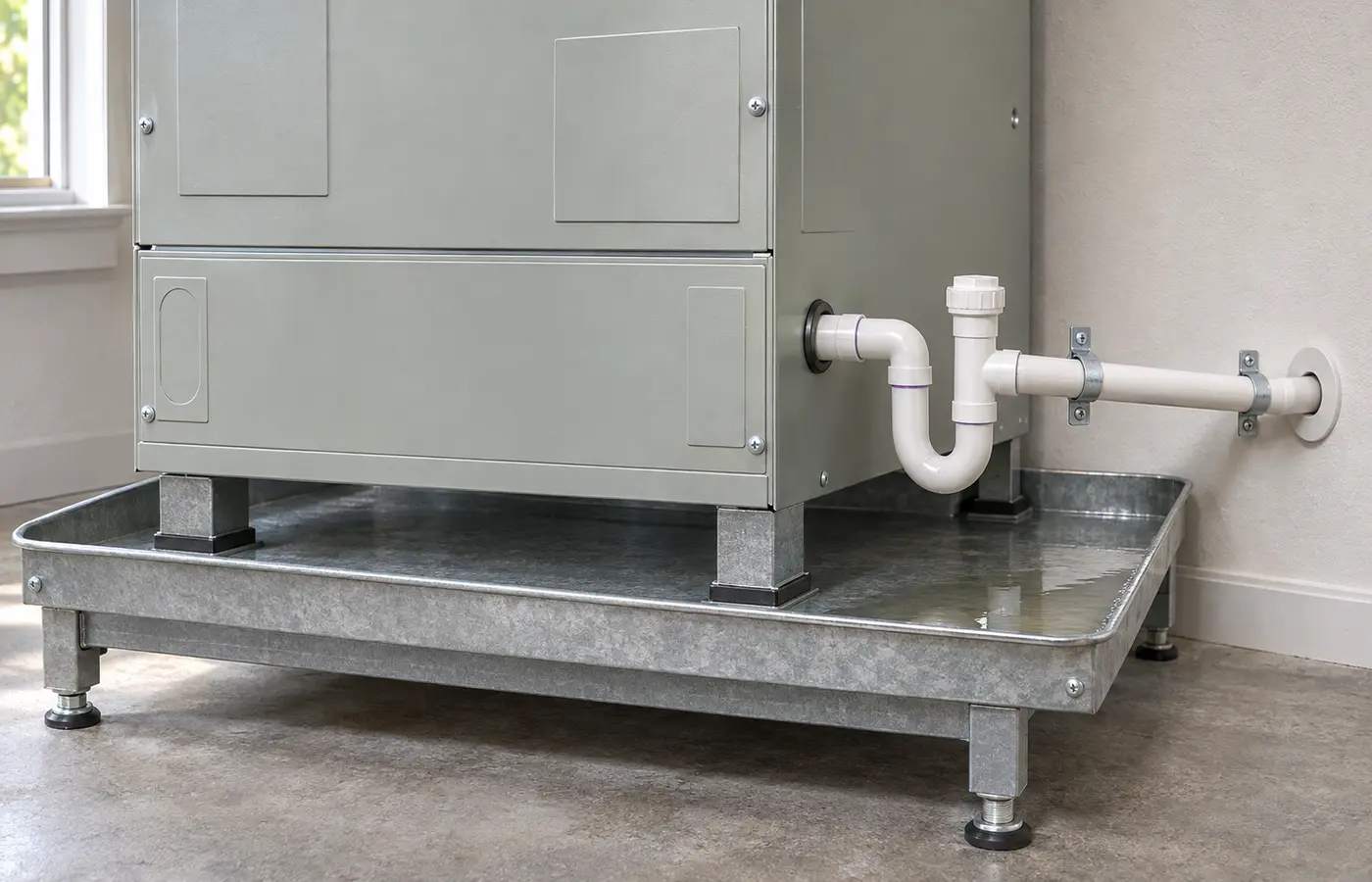
2. Cracked, Corroded, or Overflowing Drain Pan
The primary pan receives moisture from the evaporator coil. Older metal pans can corrode, while other pans can crack or hold debris. Water may escape through a damaged pan even if the drain pipe itself is clear. An auxiliary pan below attic-mounted equipment is intended as backup protection, not the normal place for standing water.
Possible clues: repeated puddles in one spot, visible rust or deformation in an externally accessible pan, or water collecting beneath a unit installed above living space. Repair or replacement can require access to the coil assembly and belongs with a qualified professional.
3. Frozen Evaporator Coil Thawing
An evaporator coil can ice over when airflow is insufficient or another cooling-system problem drives the coil temperature too low. As the ice melts, water may arrive faster than the normal drain arrangement can handle or drip outside the intended collection area. The leak can therefore become more noticeable after cooling stops.
Possible clues: ice visible on accessible refrigerant piping, noticeably weak cooling, restricted airflow, or water following a period of poor performance. Do not scrape ice, open a sealed cabinet, or restart cooling to test whether the problem has cleared. A technician needs to determine why the coil froze.
4. Dirty or Incorrectly Fitted Air Filter
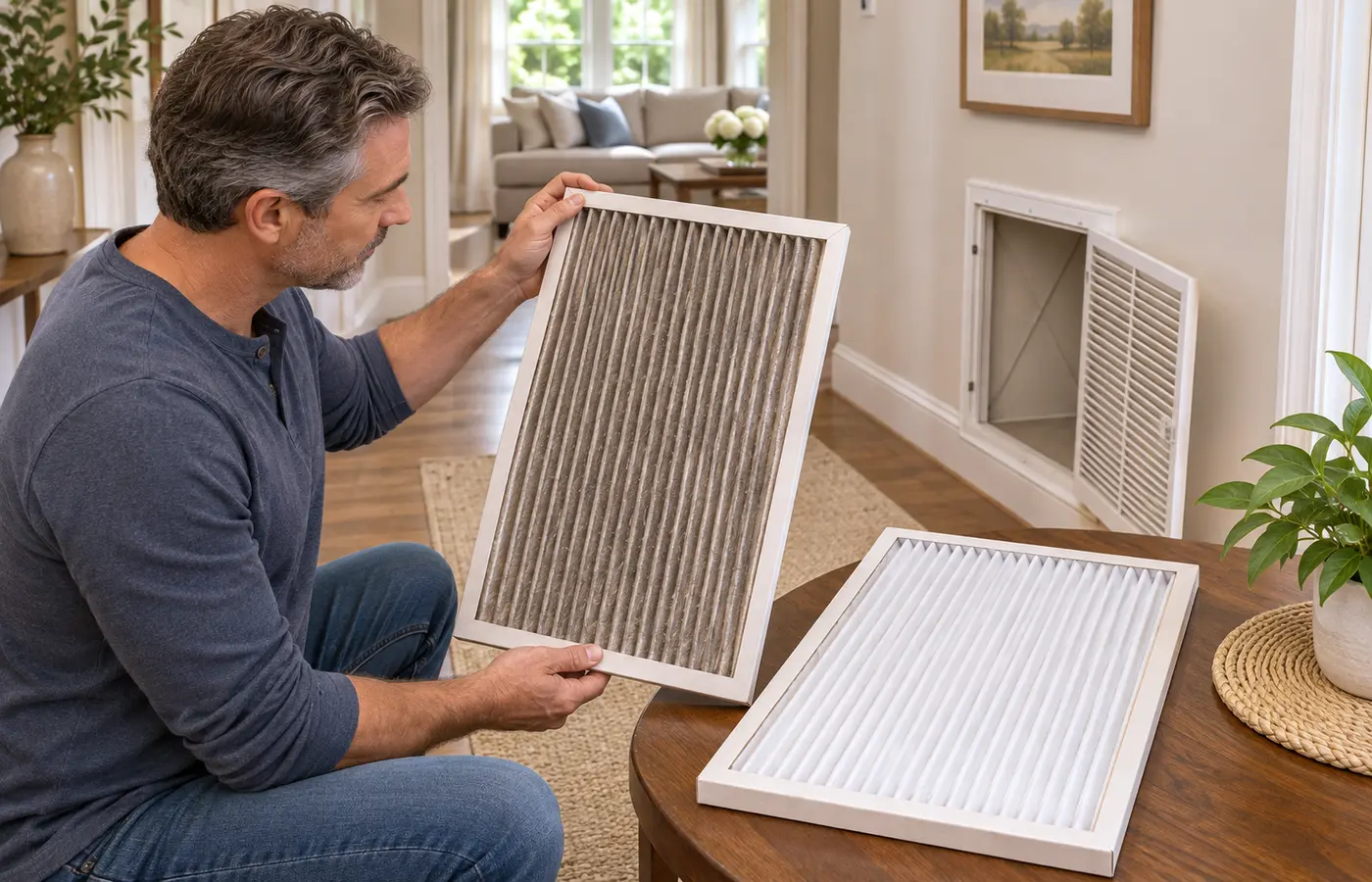
A heavily loaded filter can restrict airflow across the indoor coil. That restriction can contribute to icing and later water leakage. A dirty filter is therefore often an indirect cause, not a pipe that leaks by itself. The correct filter size and orientation also matter because a poorly fitted filter can allow bypass air or reduce expected airflow.
Possible clues: visible dust buildup on a user-accessible filter, reduced airflow at supply vents, or overdue maintenance. If the filter is meant to be changed by the homeowner, use the model's instructions and correct replacement specification. If water or wiring makes access unsafe, leave it alone.
5. Failed Condensate Pump
Not all central AC systems drain by gravity. Installations in basements or other locations without a suitable downward drain route may use a small condensate pump with a reservoir and discharge tube. If its motor, float mechanism, power connection, or outlet line fails, water can accumulate and escape.
Possible clues: water around a visible pump reservoir, repeated overflow, a pump that does not appear to operate, or shutdown related to a high-water safety switch. Keep hands away from wet electrical connections. Pump testing, wiring, line repair, and replacement are professional tasks.
6. Disconnected, Sagging, or Incorrectly Sloped Drain Piping
A condensate line must be routed according to the equipment design and applicable installation requirements. A loose joint may release water before it reaches the outlet; a low spot, inappropriate trap, or insufficient slope may prevent reliable flow. The required trap arrangement depends on the air-handler configuration.
Possible clues: dripping at an exposed joint, water where a pipe meets the cabinet, or repeated backup after prior repairs. Do not assume that adding a slope, removing a trap, or disconnecting a line is a safe homeowner fix. Incorrect changes can worsen drainage.
7. Installation or Leveling Problem
Condensate pans and drainage connections depend on proper installation. An incorrectly positioned indoor unit, unsuitable drain routing, or an installation that does not direct water toward the pan outlet can create persistent moisture problems even with a relatively clean filter and drain line.
Possible clues: leaks beginning soon after installation, equipment relocation, or a major service visit. A professional should verify the manufacturer's positioning and drainage requirements rather than adjusting the unit by guesswork.
8. Excess Humidity or Condensation on Other Cold Surfaces
Humid air can create more condensate during normal cooling. Moisture can also form on cold, uninsulated or poorly insulated surfaces, including ducts and condensate piping. High humidity alone does not prove a failed AC component, but it may expose weaknesses in drainage, insulation, or airflow.
Possible clues: sweating ducts, damp supply grilles, or moisture during unusually humid weather without an obvious pan overflow. A qualified evaluation can distinguish surface condensation from a leaking indoor drain and identify whether humidity or insulation needs attention.
What about low refrigerant?
Incorrect refrigerant charge or a refrigerant-system fault can contribute to evaporator icing and subsequent water escape. However, a puddle of water does not demonstrate a refrigerant leak, and icing is not proof of low charge. Refrigerant measurements, leak detection, opening the sealed circuit, and charging are for appropriately qualified technicians.
Safe AC Water-Leak Checks for Homeowners
These are observations and simple maintenance actions, not a procedure for opening an air handler or restoring a flooded system to service. Follow your equipment's owner manual if its instructions are more restrictive.
Safe when accessible
- Turn cooling off using a dry, safe thermostat.
- Observe where water is escaping.
- Photograph visible piping, stains, and water.
- Inspect or change a designated user-serviceable filter following the manual.
- Dry a small accessible puddle when electrical hazards are absent.
Leave to a professional
- Open sealed electrical or air-handler panels.
- Handle wires, capacitors, breakers in wet areas, or moving parts.
- Bypass or disconnect overflow safety switches.
- Repair a pump, pan, coil, or drain layout.
- Test refrigerant pressures or add refrigerant.
Should You Use a Wet/Dry Vacuum on the AC Drain?
Some manufacturer guidance discusses clearing certain accessible exterior condensate outlets with a wet/dry vacuum. That does not make it a universal step. Drain designs, traps, pump connections, access points, and manufacturer restrictions differ. If you cannot confidently identify a permitted, safe service point from the specific equipment documentation, have an HVAC professional clear and verify the line.
Do not pour bleach, boiling water, or an improvised chemical mixture into the drain. Drain treatment recommendations vary across equipment, and the wrong method can damage components or create exposure hazards. Never mix cleaning chemicals. A technician can advise on an approved maintenance method for your system.
What If the Air Filter Is Dirty?
If the filter is clearly homeowner-accessible, the surrounding area is dry, and the owner manual permits replacement, install the specified size and type with the airflow arrow oriented as directed. A fresh filter may improve airflow, but it cannot establish that a frozen coil has thawed safely or that an overflow has been repaired. Do not turn the AC back on when an unexplained indoor leak persists.
Special Cases: Attic Units, Window ACs, and Mini-Splits
Attic Air Handler or Ceiling Water Stain
An attic-mounted air handler can leak into insulation and ceiling cavities before anyone notices a floor-level puddle. A secondary pan and overflow protection are intended to reduce damage, but they do not guarantee that every failure will stop the leak. Water dripping from a ceiling light or a sagging section of drywall requires extra caution. Keep the area clear, turn cooling off only using a safe dry control, and arrange HVAC and, if needed, building or electrical assessment.
Window Air Conditioner
Window ACs collect and manage condensation differently from central systems. Water at the outdoor rear of some window units may be part of the intended design. Water dripping into the room, soaking the window frame, or reaching the power cord is not something to dismiss. Installation angle, drainage details, and drain plugs vary by model, so consult the exact manufacturer's instructions rather than changing the tilt or removing a plug based on a generic tip.
Ductless Mini-Split or Wall-Mounted Indoor Unit
A mini-split indoor head normally routes condensate through its own drain hose; some configurations use a lift pump. A blocked or displaced hose, drain slope issue, or surface condensation may cause indoor dripping. Do not pull the indoor unit off its mounting plate or open concealed piping. Record the location and ask a qualified installer to check the drainage path.
When to Call an HVAC Technician
Contact a qualified HVAC technician for any active indoor leak that cannot be confidently attributed to normal condensate at an intended outlet. Seek more urgent help when the water is affecting the building or creating other hazards.
- Urgent: water near wiring, an electrical panel, outlets, or ceiling fixtures; a sagging ceiling; or significant attic leakage.
- Prompt service: recurring puddles, visible water in an auxiliary pan, emergency drain discharge, or a suspected failed condensate pump.
- Professional diagnosis: ice on the system, weak cooling, repeated shutdowns, suspected refrigerant trouble, a cracked pan, or a drain line that keeps blocking.
- Additional property assessment: extensive wet drywall, insulation, flooring, or possible mold growth after the original water source is stopped.
What Will a Technician Check?
Depending on the system, an HVAC technician may inspect the primary and auxiliary pans, confirm the drain line and trap configuration, test a condensate pump and overflow control, check air filter and airflow conditions, and look for evidence of a frozen coil. If necessary, they can investigate installation deficiencies and the refrigerant system using appropriate equipment and credentials.
Ask the technician to explain the diagnosed cause, whether the drain is flowing properly after service, whether overflow protection works, and what maintenance applies to your equipment. For ceiling or floor damage, also ask whether another qualified trade should inspect the affected materials.
How to Prevent Future AC Water Leaks
Prevention focuses on reliable drainage, good airflow, and timely detection. These habits reduce avoidable problems but cannot guarantee that a component will never fail.
- Check the user-accessible air filter regularly. ENERGY STAR recommends inspecting, cleaning, or changing central HVAC filters monthly as appropriate. Replace according to filter condition and product instructions; do not assume every filter has the same service interval.
- Schedule a pre-season HVAC check. Ask the contractor to inspect the condensate drain and pan, verify drainage, and assess coils, blower airflow, and system operation as appropriate.
- Pay attention to auxiliary-drain warnings. Unusual water from a high exterior outlet or collection in a visible overflow pan can signal that the primary path needs service.
- Keep a record of recurring leaks. Note dates, cooling performance, visible ice, humidity conditions, and previous repairs so a technician can recognize patterns.
- Address building moisture promptly. Dry safe, accessible wet areas and identify the source; persistent wet materials can require professional drying or remediation.
For homeowner maintenance and contractor checklists, see ENERGY STAR's HVAC maintenance checklist.
Frequently Asked Questions
Why is my AC unit leaking water from the bottom?
Water beneath an indoor unit can come from an overflowing condensate pan, clogged drain line, damaged pan, or meltwater from a frozen coil. A nearby pipe or pump can also leak. The location alone cannot identify the exact failure; if water is escaping indoors, turn cooling off safely and arrange diagnosis.
Can I keep running an AC that is leaking water?
If water is actively leaking inside the house or the indoor equipment is producing an unexplained puddle, do not continue normal cooling operation. More condensate can worsen the damage, and wet electrical equipment presents additional risk. Water discharged normally outdoors is different and does not automatically require shutdown.
Why does my AC leak only after I turn it off?
Condensate can continue moving through the drain for a short time after a cooling cycle. However, a frozen evaporator coil can also release a larger amount of water as ice melts. If that water reaches floors or walls, it is an abnormal leak requiring investigation rather than simply normal post-cycle drainage.
Why is my AC leaking water but still cooling?
Cooling performance and condensate drainage are related but separate functions. A system may still cool adequately while a drain line is partially blocked, a pan is cracked, or a pump is failing. Good cooling is not proof that an indoor water leak is harmless.
Does water coming from the AC mean refrigerant is leaking?
No. The water you see is often condensation from humid air. Refrigerant-related problems can contribute indirectly by causing coil icing and later thawing, but a visible puddle does not tell you the refrigerant charge or identify a sealed-system leak. Refrigerant work requires qualified service.
Is water dripping from an AC pipe outside normal?
Water at the designated condensate outlet during cooling is often normal. Discharge from a separate auxiliary or emergency outlet may instead warn of trouble in the main drainage path. Because exterior pipe locations vary, check the system documentation or ask a technician to identify which outlet you are seeing.
What causes a window AC to leak into the room?
Possible causes include incorrect installation or drainage configuration, a blocked path, a misplaced drain component, or rain intrusion. Window units differ substantially by model. Consult the manufacturer's instructions before changing the tilt, adjusting a drain plug, or moving the unit, especially where the frame and electrical connection could become wet.
Can I fix an AC condensate line myself?
Some systems have clearly documented, user-accessible maintenance points, but many do not. Using a vacuum, drain treatment, or tool on the wrong pipe can make matters worse. Follow the exact manufacturer's instructions when they explicitly permit homeowner care; otherwise, request a professional drain inspection and cleaning.
How much does it cost to fix an AC water leak?
The price depends on the cause, location, accessibility, labor market, and whether the building has water damage. Clearing an accessible drain is a different job from replacing a concealed pan, repairing a pump, correcting drain piping, or diagnosing a frozen coil. Ask for a written diagnosis and itemized estimate rather than relying on a single national repair-price figure.
The Bottom Line
When your AC unit is leaking water, first distinguish normal water leaving the intended condensate outlet from an abnormal indoor leak. Turn cooling off safely when water is escaping into the house, protect people from wet electrical equipment, and note the leak location. The most frequent explanations involve the condensate drain, collection pan, or ice forming and later melting on the indoor coil. Simple visual checks can help, but recurring leakage, freezing, wet ceilings, and equipment repairs need a qualified HVAC technician.
For related symptoms, see AC Not Cooling? Causes and Safe Troubleshooting and AC Not Turning On? Causes and Safe Troubleshooting Checklist.