If your AC is not turning on, start with the thermostat—not the outdoor equipment. A setting, a delay after a power interruption, or a loss of power may explain why the system will not start. Other causes, including an overflow safety switch or a failed electrical component, need a qualified HVAC professional.
This homeowner checklist focuses on a typical U.S. central air-conditioning system with an indoor air handler or furnace and an outdoor unit. It helps you tell the difference between nothing starting, the indoor fan running by itself, and the outdoor unit failing to start. The same general questions can help with other equipment, but mini-splits, heat pumps, and window units have model-specific controls and service procedures.
Stop immediately if you notice an electrical hazard.
If you smell burning, see smoke or sparks, hear loud electrical arcing, encounter standing water near electrical equipment, or find a breaker that has tripped repeatedly, stop trying to start the AC. Keep away from the affected equipment and arrange appropriate professional help. In an active fire or immediate danger, leave the area and call emergency services. Never open electrical cabinets, bypass a safety switch, touch exposed wiring, or handle refrigerant.
What to Check First When Your AC Won't Turn On
The quickest safe starting point is to confirm a cooling call, observe whether either unit responds, and check for obvious power or water problems without opening equipment. If the system still will not start after the simple checks, do not assume it needs an expensive new compressor; several different faults can produce the same symptom.
- Set the thermostat to Cool, with a target temperature below the current indoor temperature. Set the fan to Auto to make the result easier to interpret.
- Check the thermostat display or error message. Replace batteries only if your model uses replaceable batteries, following its manual.
- Allow several minutes for a built-in compressor protection delay, particularly after changing settings or restoring power.
- Observe whether the indoor blower starts, the outdoor unit starts, both start, or neither starts.
- Visually inspect the clearly labeled AC breakers and any accessible, ordinary indoor service switch. Do not open the electrical panel beyond its normal breaker door or reset a breaker that has tripped.
- Check a user-accessible air filter and look for visible standing water near the indoor drain pan, without opening service cabinets.
- If the AC still will not turn on, or you find a hazard, stop and contact a qualified HVAC professional.
These checks do not identify every failure. Follow your specific system's owner's manual whenever its instructions differ.
First, Identify What Is Actually Not Turning On
Central AC has an indoor part that moves air through the home and an outdoor part that helps move heat outside. They can fail to respond independently. Stand where you can safely hear the indoor blower and observe the outdoor cabinet without touching it. If either unit is noisy, damaged, or near standing water, do not approach it.
| What you notice | What it may mean | Safest next step |
|---|---|---|
| No indoor airflow; outdoor unit silent | No cooling call, missing power, a control problem, or a protective shutdown | Check thermostat settings, display, and visible power status; then call for diagnosis if unresolved |
| Indoor fan runs; outdoor unit stays silent | The fan may be running independently while cooling or outdoor-unit power is unavailable | Confirm Cool/Auto and note the outdoor symptom for a technician |
| Outdoor unit hums or clicks but does not start | An electrical or motor-start problem is possible, but the sound is not a diagnosis | Turn cooling Off; do not touch the fan, capacitor, contactor, or wiring |
| AC starts, then quickly stops | A control delay, protection device, or equipment fault may be involved | Note the timing or error code; request service if it repeats |
| Both units run, but the home stays warm | This is primarily a cooling-performance problem rather than a no-start problem | Use our AC not cooling troubleshooting guide |
A fan setting of On can keep the indoor blower circulating air even when the cooling cycle is not running. That alone does not prove the outdoor compressor has failed. Likewise, some modern outdoor systems are intentionally quiet; judge the situation by several observations rather than sound alone.
Seven Safe Homeowner Checks, in Order
1. Check the Thermostat's Cooling Request
Set the operating mode to Cool. Choose a temperature below the current room reading so the system has a reason to start. Use Auto for the fan rather than On; otherwise, air may move even when the AC is not actively cooling. Check for an active schedule, vacation mode, lockout, or hold that may override the expected setting.
If the screen is blank, see whether the thermostat uses replaceable batteries. Replace only the batteries described in its manual. A hardwired thermostat with a blank display can have an underlying power, transformer, control-board, or wiring problem. Do not remove it from the wall to test wiring or jump thermostat terminals.
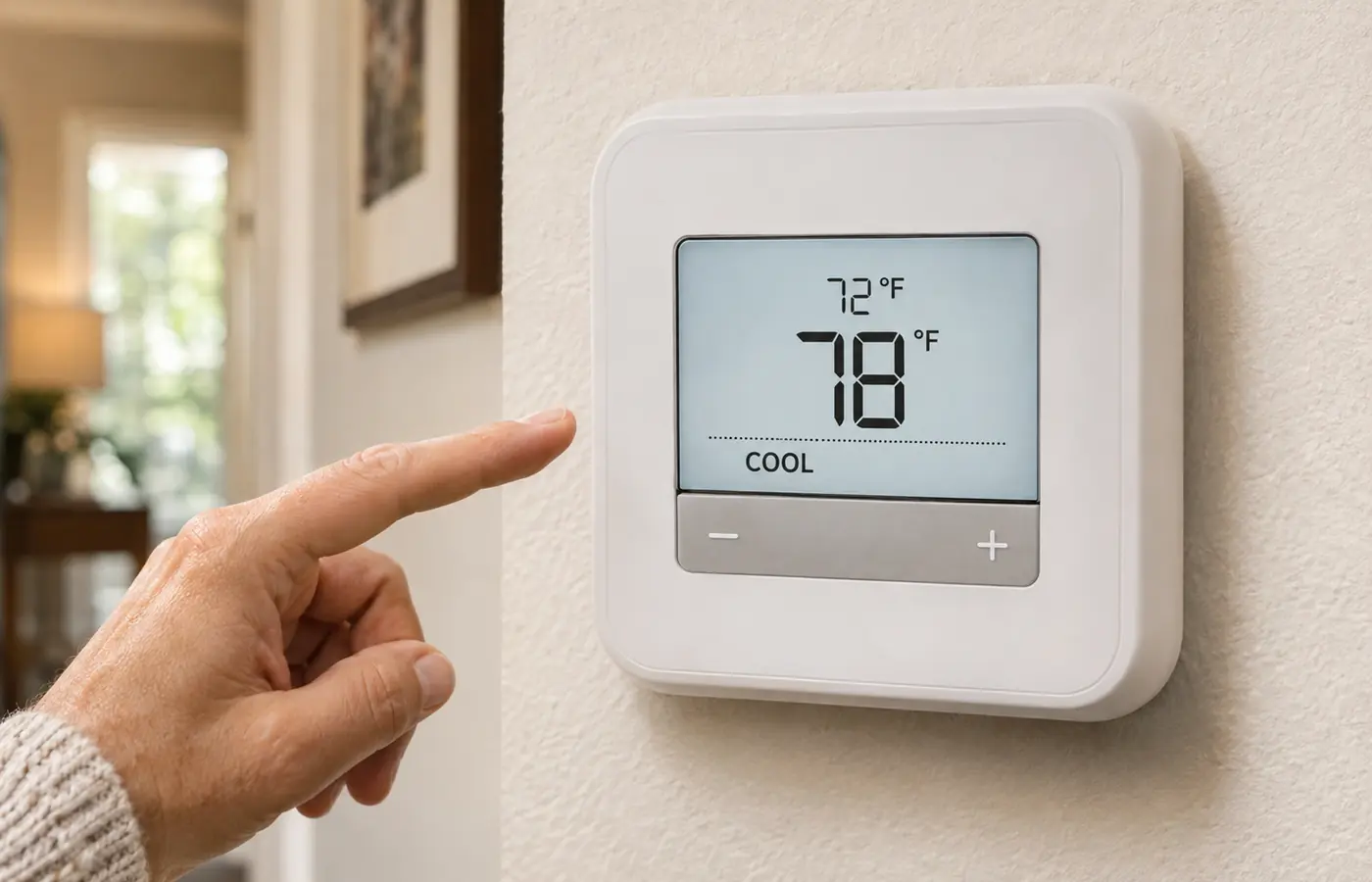
What this check tells you: If the AC begins running after correcting a setting, the problem may have been a control setting rather than equipment failure. If nothing responds, continue without attempting any electrical tests.
2. Allow for a Normal Restart Delay
Many thermostat and equipment controls delay compressor operation for several minutes to protect it against rapid restarts. This can happen after an outage, a thermostat change, or a brief power interruption. Check the equipment manual for the expected delay and any messages such as a flashing cooling indicator.
Wait without repeatedly toggling the thermostat or cycling power. If the system remains inactive beyond the normal delay, move on to observing its power status and other symptoms. A compressor repeatedly trying and failing to start is different from a normal silent delay and needs professional attention.
3. Check Visible Power Status—Do Not Troubleshoot Live Electricity
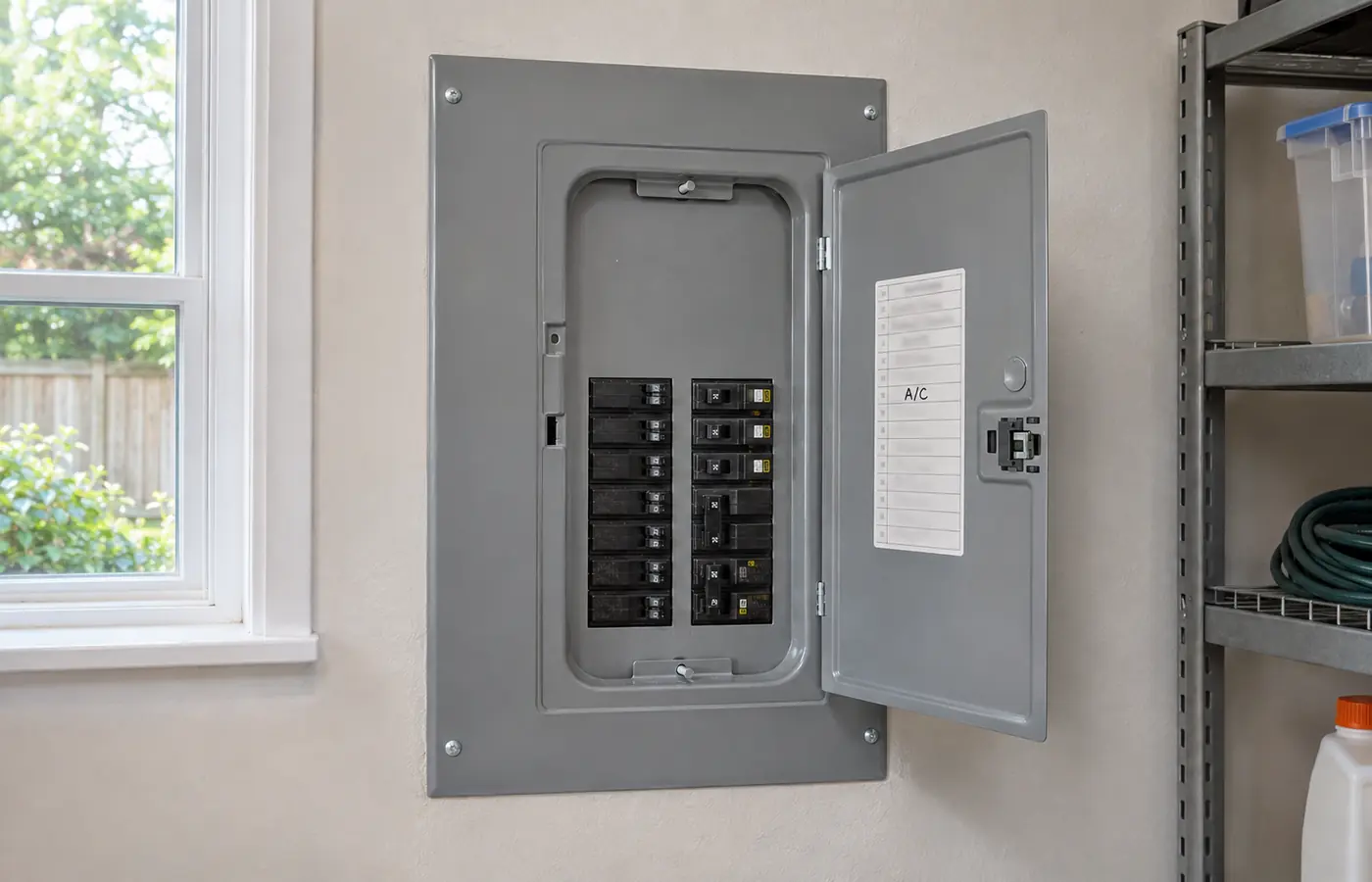
Check whether the rest of the house has electricity and whether there was a recent local outage. At the home's breaker panel, you may look at the labeled breakers for the air handler/furnace and outdoor AC. Many central systems have separate circuits, so one component can have power while the other does not.
If an AC breaker is tripped, leave it off and contact a qualified technician or electrician. A tripped breaker is a protective device, and the reason may not be obvious. Manufacturer advice differs: some sources describe a single reset, while Trane specifically advises professional assessment before flipping an AC breaker. This guide follows the more conservative approach. Never keep resetting a breaker that trips, try a larger breaker/fuse, or take a dead-front cover off a panel.
Some indoor furnaces and air handlers have a plainly identified nearby service switch resembling a wall switch. If you know this switch and it was intentionally turned off, refer to your equipment's instructions. Do not manipulate unfamiliar disconnects or open outdoor electrical boxes to look for fuses.
4. Inspect a User-Accessible Air Filter
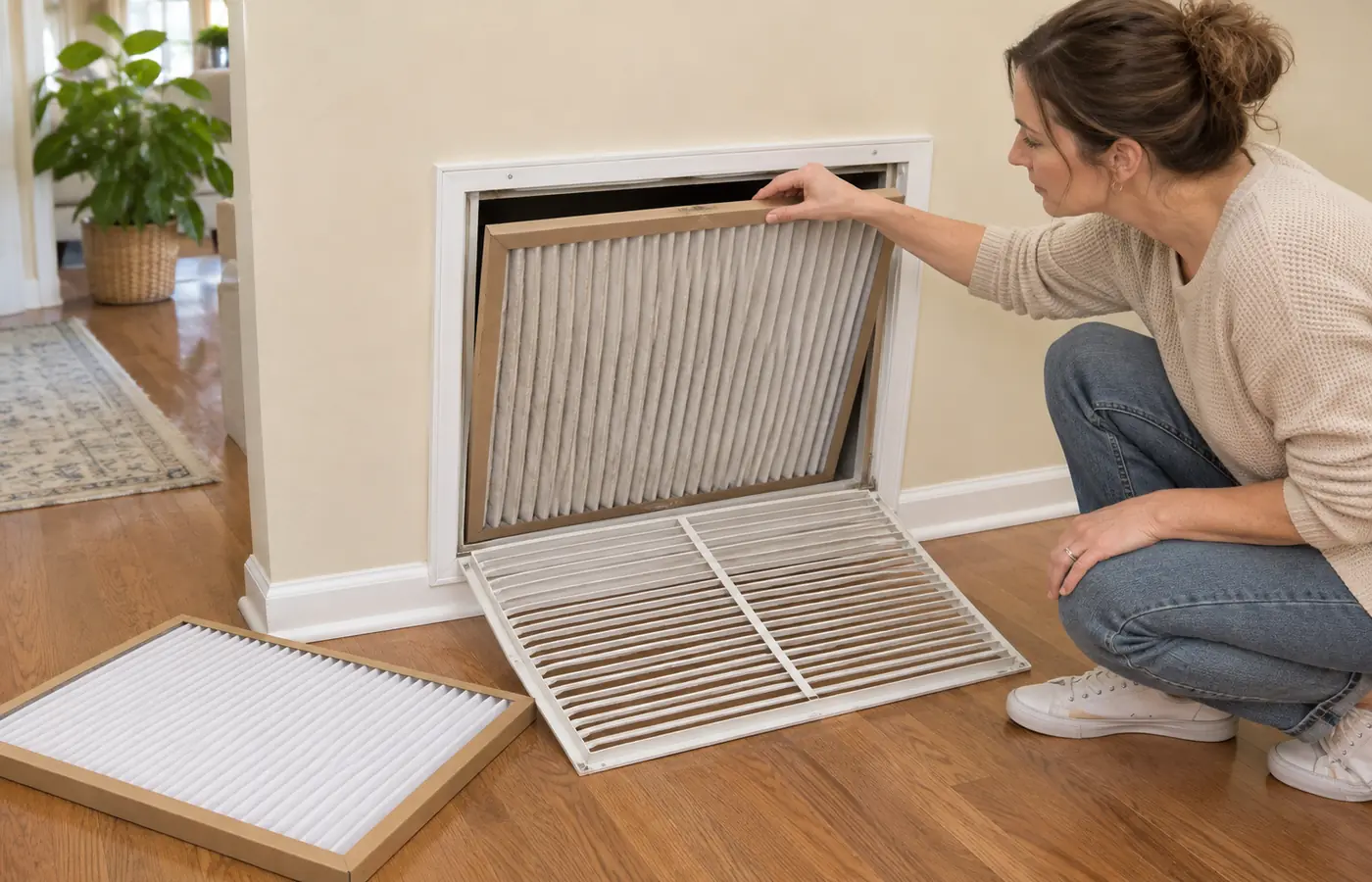
A clogged filter restricts airflow and can contribute to frozen indoor coils or certain equipment protection events. However, a dirty filter is not proof that it caused a complete no-start. Find the filter only where the system was designed to give homeowners access—for example, a return grille or dedicated filter slot—and follow the manufacturer's directions before handling it.
Replace a disposable filter with the correct size and approved type, or clean a reusable filter as instructed. Do not open the blower cabinet or electrical access panel to reach a hidden filter. ENERGY STAR advises checking filters monthly during heavy use and replacing them when dirty; the equipment instructions and actual conditions determine the replacement interval.
5. Look for Condensate Overflow Clues
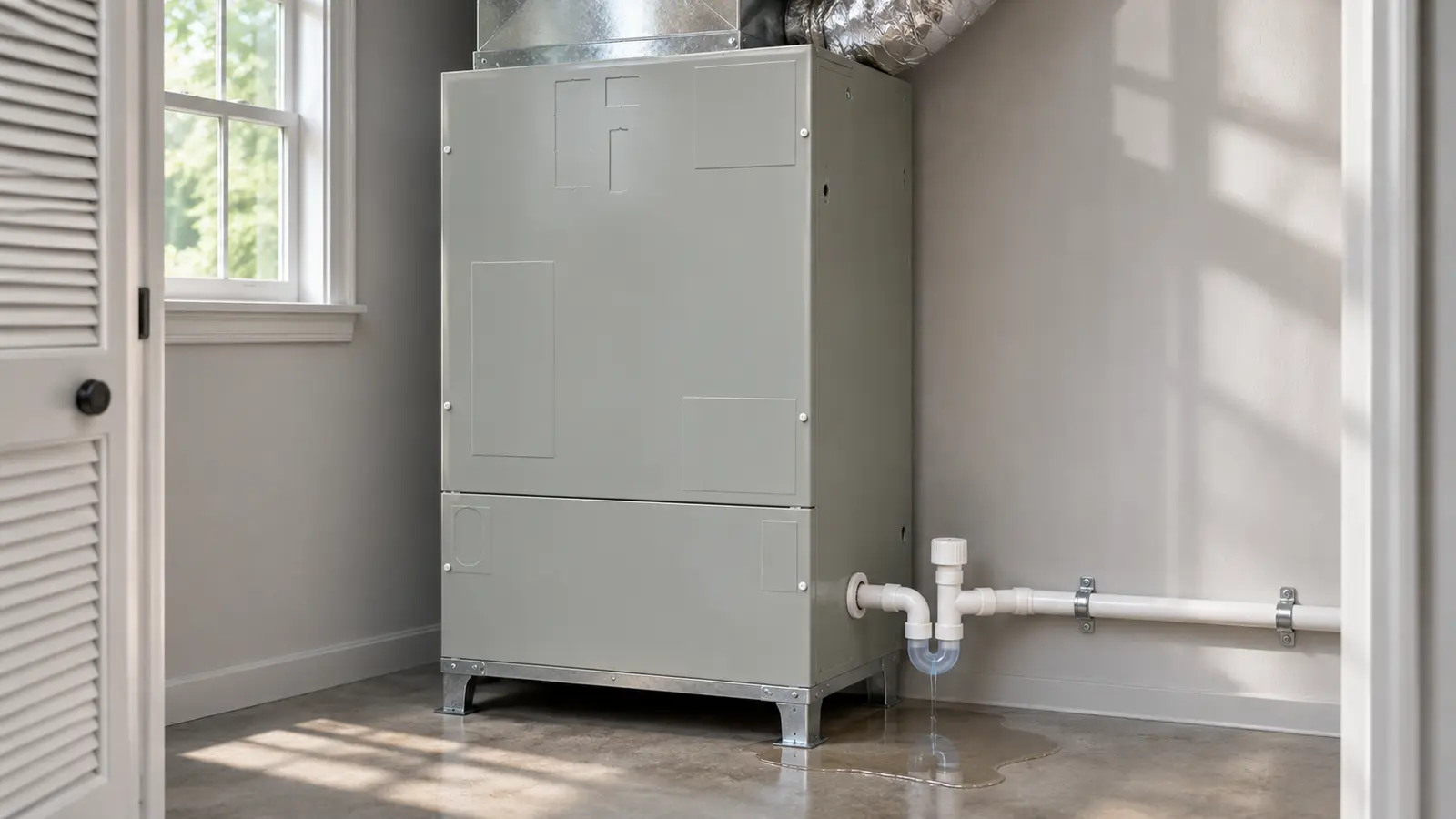
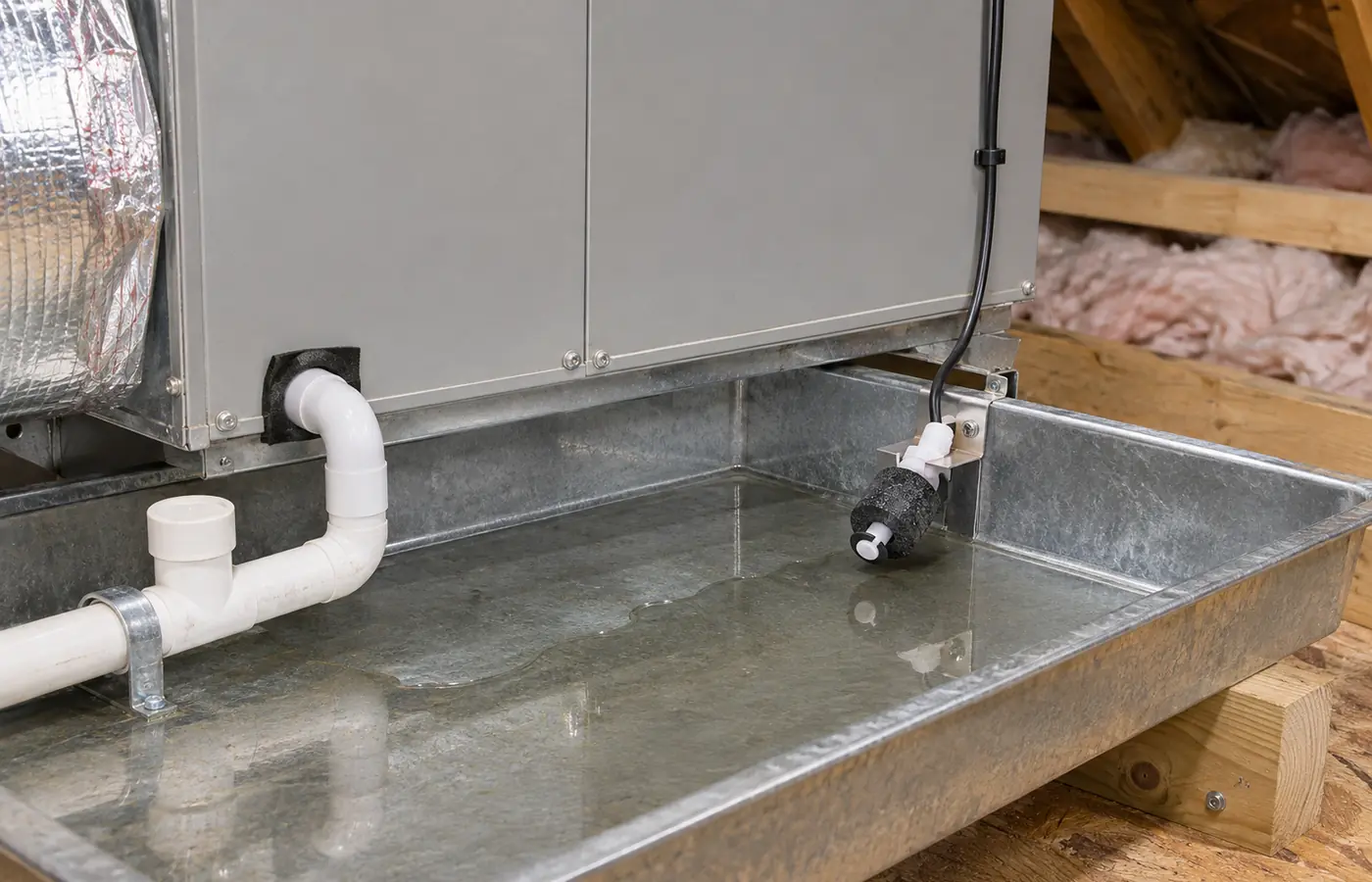
Air conditioning removes moisture from indoor air, and the water normally drains away. Some systems include a condensate float or overflow switch that stops cooling when water backs up. Depending on the wiring, the entire system or only part of it may stop responding.
Without removing equipment panels, look for obvious water near an accessible auxiliary drain pan or a visible overflow warning. If there is standing water, staining, or an active leak, turn cooling Off and arrange professional service. Never lift, wedge, disconnect, or bypass a float switch. Removing the visible water without correcting the blockage may allow the problem to return and can lead to damage.
6. Observe the Outdoor Unit Without Opening It
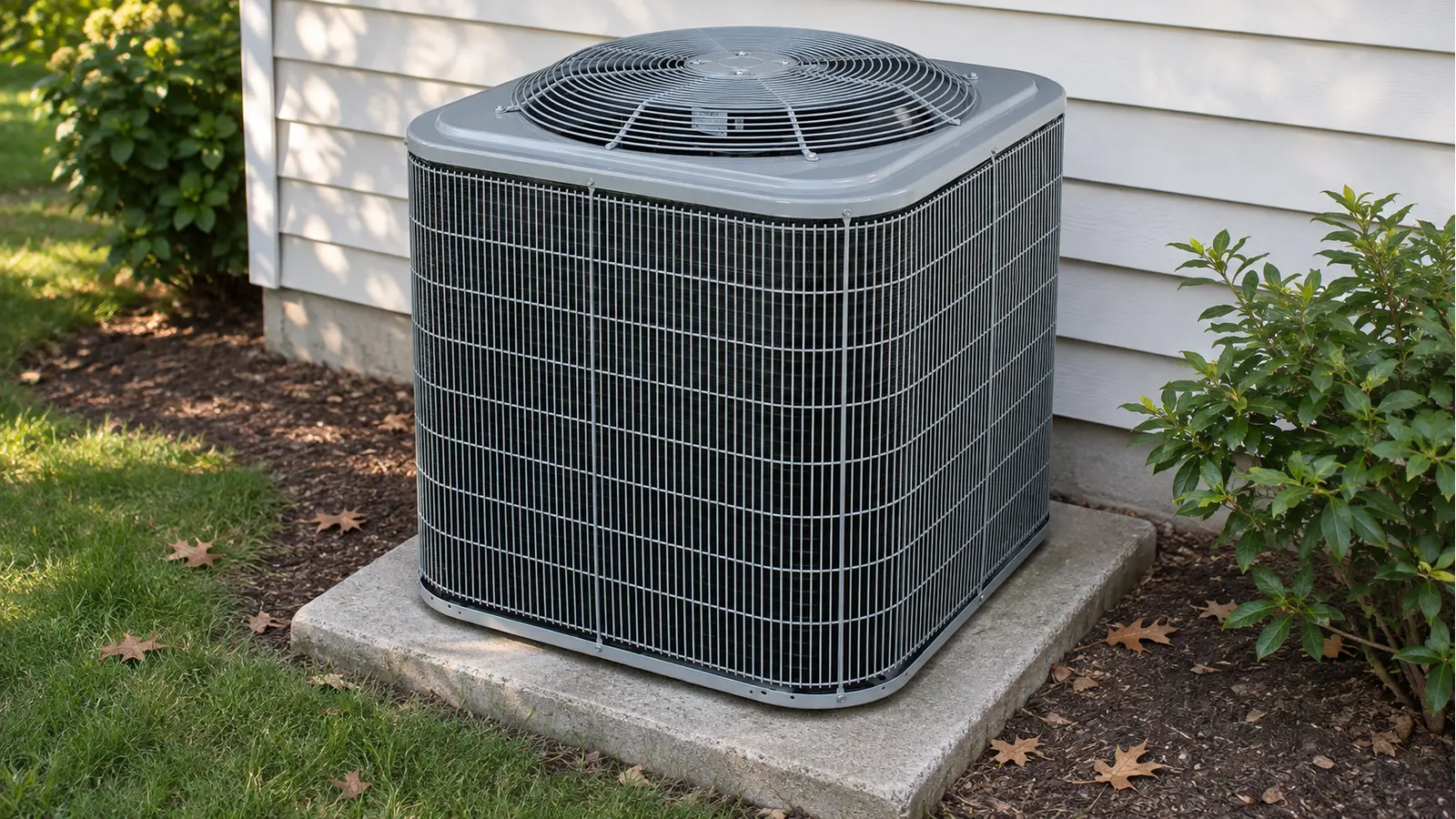
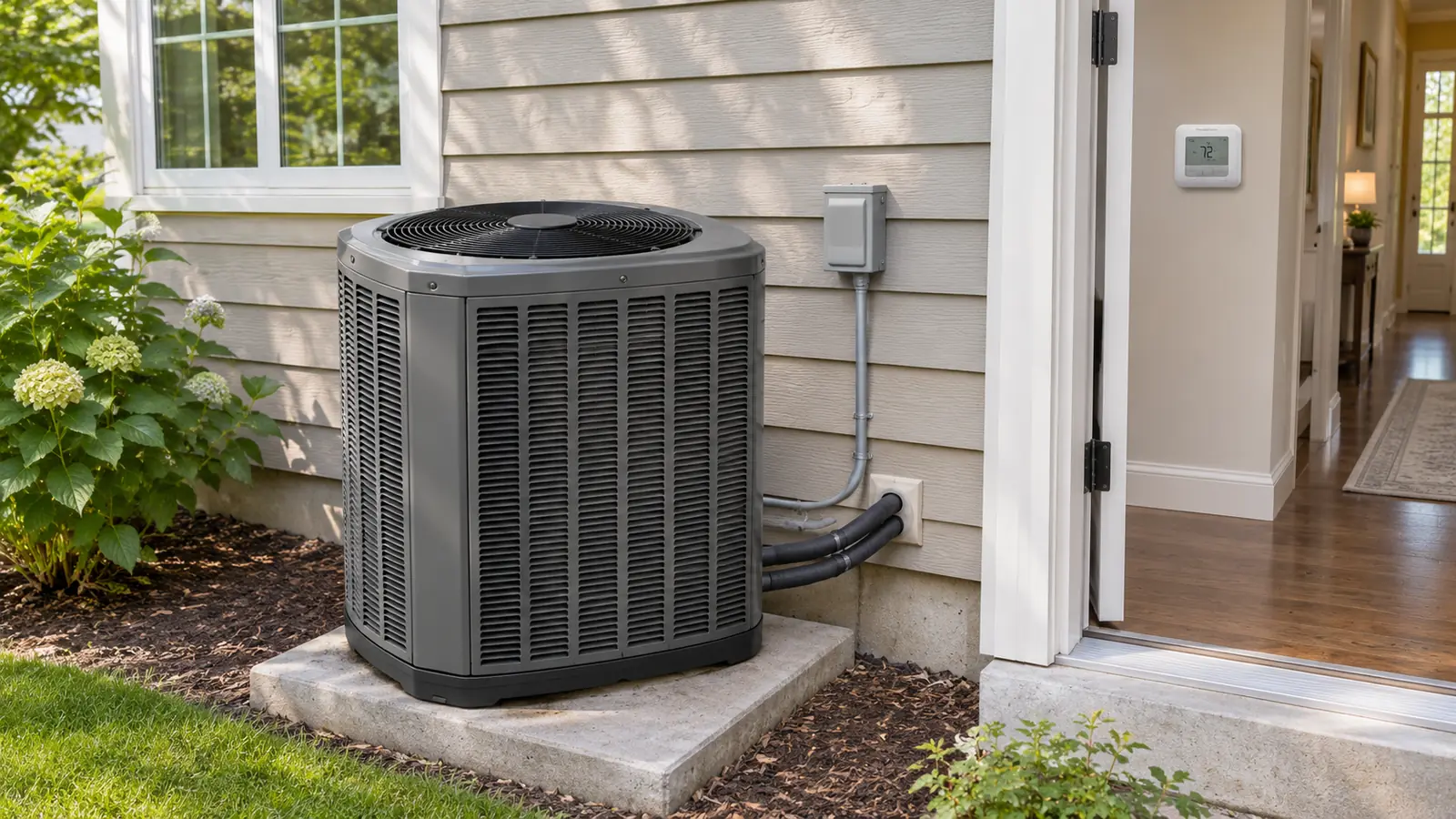
From a safe location, observe whether the outdoor fan is moving, the unit is silent, or you hear unusual buzzing, clicking, grinding, or repeated attempts to start. Keep children and pets clear. If the outdoor unit is running while the indoor system is not, or the indoor blower runs while the outdoor unit is idle, note which symptom applies.
Remove loose leaves or vegetation around the exterior only when the equipment is off and the work can be done without reaching into the fan grille or cabinet. Do not reach into the unit, push-start a fan blade, open access covers, remove a disconnect, or test a capacitor. A humming sound can suggest a starting problem but cannot establish which component failed.
7. Record What Happened, Then Call if the System Still Will Not Start
Record the thermostat setting, whether the display is blank, whether the indoor blower operates, whether the outdoor unit operates, any error code, any visible water, and whether the problem began after a storm or service visit. If there is no normal operation after the safe checks and expected restart delay, a qualified HVAC technician can diagnose the control and power circuits without guessing or replacing parts unnecessarily.
Why Is My AC Not Turning On? Common Causes Explained
Several different faults can look like the same problem from inside the house. These are possible causes, not a remote diagnosis:
Incorrect Thermostat Settings or a Failed Thermostat
The system may not receive a request for cooling because the mode, setpoint, schedule, or thermostat is wrong. Dead batteries are relevant only for models that use them. A hardwired display can also go blank because of a control-power problem, which requires trained diagnosis.
Loss of Power to the Indoor or Outdoor Equipment
A breaker, fuse, service switch, utility outage, or electrical fault may interrupt power. Central systems often have more than one electrical feed. A breaker that trips is not simply an inconvenience; it may indicate a fault needing attention before power is restored.
Condensate Drain Blockage or Float-Switch Shutdown
On systems equipped with overflow protection, rising water can open a safety control and interrupt operation. Not every air conditioner has the same switch arrangement, and not every switch stops both the indoor and outdoor components. Visible water provides a clue, not proof of a specific electrical failure.
Airflow Restriction and a Frozen Indoor Coil
Restricted airflow can contribute to evaporator-coil icing. Some equipment may enter a protective shutdown; other systems continue to run but cool poorly. If you see ice on accessible refrigerant tubing or suspect freezing, turn cooling Off and contact a professional to identify the underlying airflow, control, or refrigerant issue. Avoid scraping or heating coils.
Failed Capacitor, Contactor, Motor, or Control Board
Outdoor compressor and fan operation depends on electrical and control components. A failed capacitor, contactor, motor, transformer, or control board can prevent starting. Clicking, humming, and silence may help a technician narrow the investigation, but these sounds are not reliable enough to identify a part by themselves. Capacitors may retain dangerous energy even after the disconnect is off.
Refrigerant or Compressor Protection Problems
Some systems shut down in response to abnormal refrigerant pressure or temperature conditions. Low refrigerant is not automatically proof of a leak; an incorrect charge or other system problem can also be involved. Refrigerant testing, leak repair, charging, compressor work, and any service that opens the sealed circuit belong with appropriately trained and, where required, EPA Section 608-certified personnel.
What If the AC Won't Turn On in a Specific Situation?
Thermostat Says Cool, but Nothing Happens
First allow for a short compressor-protection delay and confirm that the thermostat is actually requesting a lower temperature than the current room reading. If the display works but neither indoor nor outdoor equipment starts, the problem can still involve an electrical supply, a protective switch, a control board, or wiring. Do not jump thermostat wires to force a call.
Indoor Blower Runs, but Outside AC Unit Won't Turn On
Check that the thermostat is set to Cool and the fan is on Auto. A continuously running indoor blower does not mean the outdoor unit is getting power or a cooling command. If the outdoor unit stays silent or hums without starting, turn cooling Off and request service. If the indoor and outdoor units behave differently, describe that distinction to the technician so the diagnosis can focus on the correct part of the system.
AC Won't Start After a Power Outage
Confirm that utility power has returned, then check the thermostat for changed settings or a delay message. Allow the model-specific restart delay. If the breaker is tripped, do not repeatedly restore power. If there are burning smells, unusual electrical sounds, a damaged disconnect, or widespread household electrical problems after the outage, stop and contact an electrician or other appropriate professional.
AC Clicks or Hums but Doesn't Start
A clicking or humming outdoor unit may be attempting to start. Potential causes include a capacitor, contactor, motor, or another electrical problem. The safe response is not to open the condenser or try to spin the fan. Set cooling Off and report the sound and how long it lasts when requesting service.
Window AC or Mini-Split Won't Start
Room air conditioners and ductless mini-splits have their own displays, remotes, plug/power requirements, error codes, and model-specific protection delays. Follow the appliance manual for user-level checks, verify any accessible power connection without touching damaged cords, and stop if the equipment shows a fault. Do not apply central-AC disconnect or thermostat instructions blindly to a different system type.
When Should You Stop Troubleshooting and Call a Professional?
Arrange professional help when your AC will not respond after the safe settings and visual checks; the breaker trips; water has backed up; the outdoor unit buzzes or clicks without starting; the thermostat stays blank despite the model's documented battery check; or you suspect refrigerant or electrical damage.
An HVAC professional may check the low-voltage cooling command, incoming power, protective switches, control board, motor and starting components, and refrigerant-side performance as appropriate. These are technician procedures, not homeowner instructions. For suspected problems in the home's wiring or breaker panel, an electrician may also be needed.
Details to share when requesting AC service
- Equipment brand and model, if visible on an exterior label
- What the thermostat displays and your Cool/Auto settings
- Whether the indoor blower or outdoor unit responds
- Whether you hear clicking, humming, or a repeated start attempt
- Any visible overflow water, ice, error code, or tripped breaker
- Recent outages, maintenance visits, filter changes, or unusual events
Will It Need Repair or Replacement?
Not every AC that refuses to start needs replacement. A setting mistake is very different from an electrical control failure or compressor damage. The right decision depends on an actual diagnosis, the age and condition of the system, warranty coverage, local service costs, and the cost and availability of parts. Ask for a written diagnosis and an itemized quote before agreeing to a major repair.
Be cautious with repair-price tables that appear exact or universal: labor markets, system designs, refrigerants, and warranties vary substantially. Use a written, location-specific quote rather than treating a generic online price table as a guaranteed cost. If a major component has failed, ask the contractor to explain repair and replacement alternatives using your specific equipment.
How to Reduce the Chance of Another No-Start Problem
Routine maintenance cannot prevent every breakdown, but it can reveal airflow, drainage, electrical, and control issues before they cause a shutdown. ENERGY STAR recommends checking filters regularly and arranging a professional pre-season cooling-system checkup. Keep the outdoor unit's surrounding area free of vegetation and loose debris without reaching inside the cabinet.
During a scheduled visit, ask the contractor about condensate drainage and overflow protection, electrical and starting components, control operation, and whether the system has any unresolved fault codes. Do not buy or replace a capacitor, contactor, fuse, or other internal part simply because an internet checklist lists it as a common cause.
Frequently Asked Questions
Why is my AC not turning on even though the thermostat is on?
A powered thermostat does not guarantee that the cooling command reaches the equipment. Check Cool mode, target temperature, any delay or error indication, and visible power status. If there is no response, a professional may need to diagnose power, controls, or a safety switch.
Can a dirty air filter stop an AC from turning on?
It can contribute to airflow restriction, freezing, or a protective shutdown in some systems. More often, a dirty filter causes poor airflow or cooling performance. Do not assume filter replacement alone will solve an electrical no-start issue.
Why won't my AC turn on after a storm?
Possible explanations include interrupted power, changed thermostat settings, a protection delay, or an electrical fault. Confirm the household power situation and allow the normal restart delay. A tripped breaker or signs of damage are reasons to seek professional help.
Does the AC have a reset button?
Some products have model-specific reset or fault-clearing procedures; many central systems do not have a universal homeowner reset button. Do not search inside a cabinet for one or repeatedly cycle electrical power. Refer to the exact owner's manual.
Is a humming outdoor AC unit a bad capacitor?
A failed capacitor is one possibility, but a motor, contactor, compressor, or control problem can cause similar symptoms. Do not diagnose or replace a high-voltage component based on sound alone.
Can a clogged condensate drain stop the AC?
Yes, if the system has an overflow safety switch that interrupts operation. A drain blockage does not affect every model in the same way. Do not bypass the switch or open equipment panels to clear the drain.
What if the outside unit won't turn on but the indoor fan works?
The blower may operate independently of the cooling cycle. Confirm thermostat Cool/Auto settings and report the separate indoor/outdoor observations. This can be an outdoor power, control, or component issue that requires a technician.
Should I keep trying to restart an AC that will not turn on?
No. Repeated restarts can hide fault clues or stress failing equipment. Allow any normal restart delay once, use the safe checklist, and stop if the system remains unresponsive or makes unusual sounds.
The Bottom Line
When an AC is not turning on, begin with thermostat settings and safe observations—not electrical repairs. Identify whether neither unit starts, only the indoor blower runs, or the outdoor equipment attempts to start. A filter issue, delayed restart, or float-switch event can sometimes explain the symptom, but only a proper diagnosis can distinguish those causes from a hazardous electrical or compressor fault.
If the air conditioner does run but cannot cool the home, continue with our AC Not Cooling? Causes and Safe Troubleshooting guide instead. If your AC remains off after the safe checks, have a qualified professional inspect it.
Sources and Further Reading
Manufacturer and public-safety guidance informs the technical boundaries above. Equipment-specific instructions in your own manual take priority.
- Trane — AC Not Turning On
- Carrier — AC Unit Not Turning On: Reasons Why and What to Do
- Lennox — AC Compressor Not Turning On
- ENERGY STAR — Maintenance Checklist
- Electrical Safety Foundation International — Understanding Your Home Electrical System
- U.S. EPA — Section 608 Technician Certification Requirements
This guide provides general homeowner information, not an on-site diagnosis. Home System HQ is an independent information publisher and does not provide HVAC repair services.