A toilet that gurgles or bubbles may be reacting to air moving through the drainage system, a partial restriction, or a venting problem. The sound matters most when you connect it to what was draining at the time and whether water is rising, other fixtures are slowing down, or sewage is backing up. You can make a few useful observations without opening a pipe or risking an overflow.
Before you troubleshoot
If toilet water is rising toward the rim, sewage is backing up, or several fixtures are affected, stop flushing and limit other water use. Keep people and pets away from wastewater and contact a qualified plumber, sewer professional, or septic service provider as appropriate. Do not run extra fixtures just to reproduce the sound.
Why Is My Toilet Gurgling? The Short Answer
Toilets connect to a network of drainpipes that moves wastewater away from the home. The plumbing system also needs a way for air to move so pressure changes do not disturb water seals in fixtures. A gurgle can happen when draining water and moving air interact in a restricted or improperly vented part of that network. The International Plumbing Code addresses venting as a way to protect trap seals from pressure differences, but hearing a gurgle does not identify which component is at fault.
A hidden partial blockage, restricted drainage venting, or a septic problem (where relevant) can produce overlapping symptoms. These are possibilities, not diagnoses from sound alone.
First distinguish bowl bubbling from tank noise
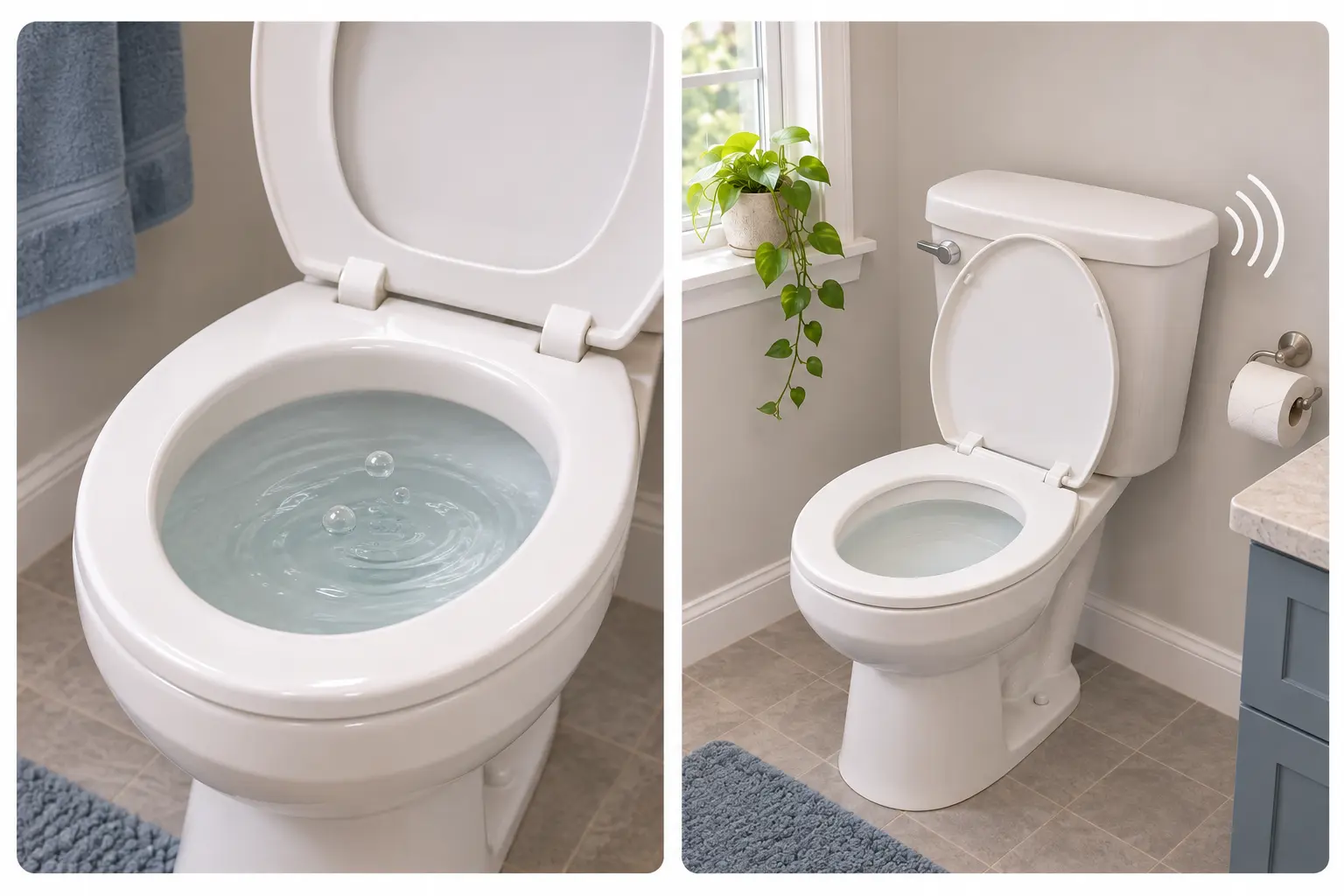
Bubbles or gulps in the bowl
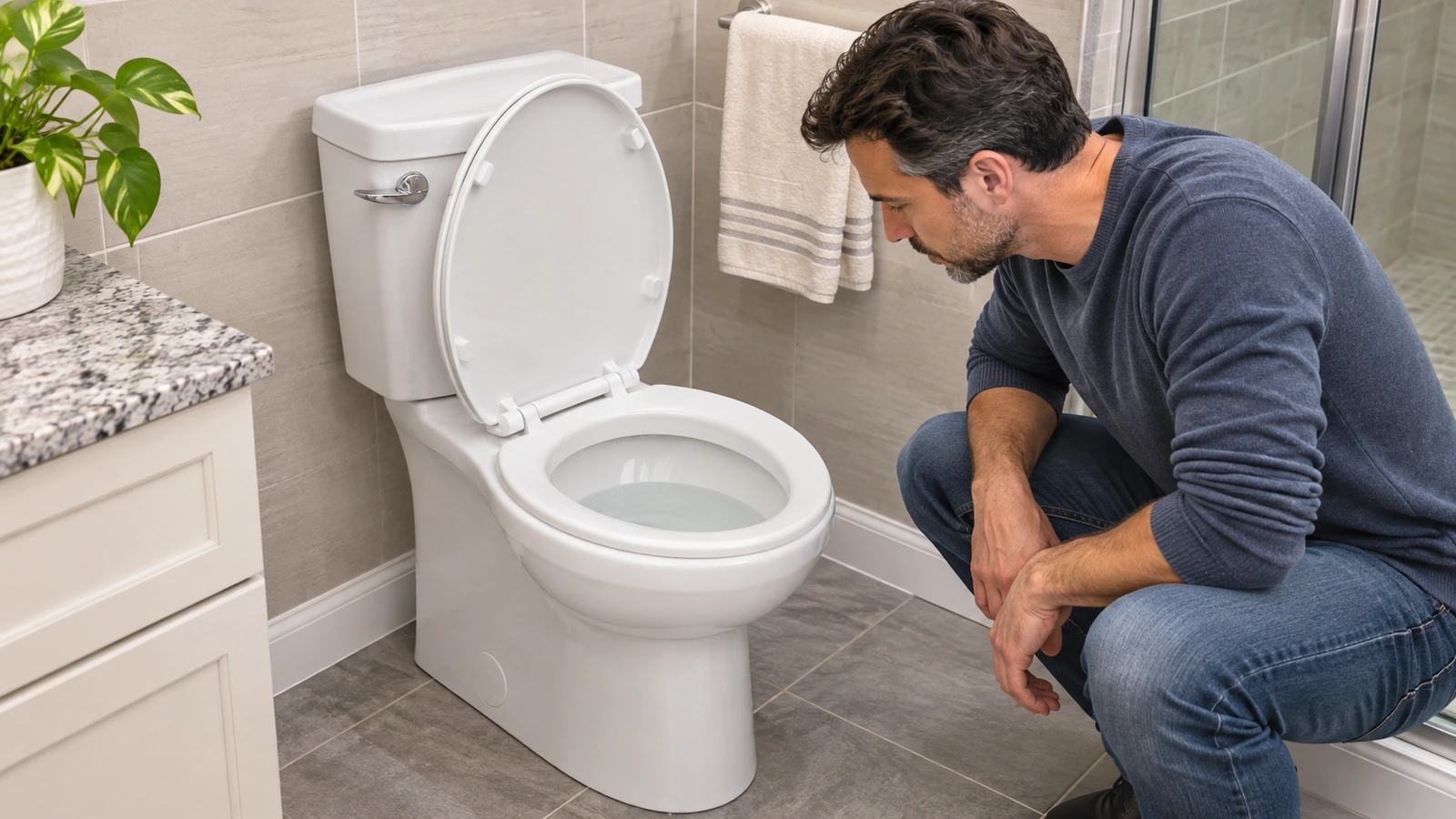
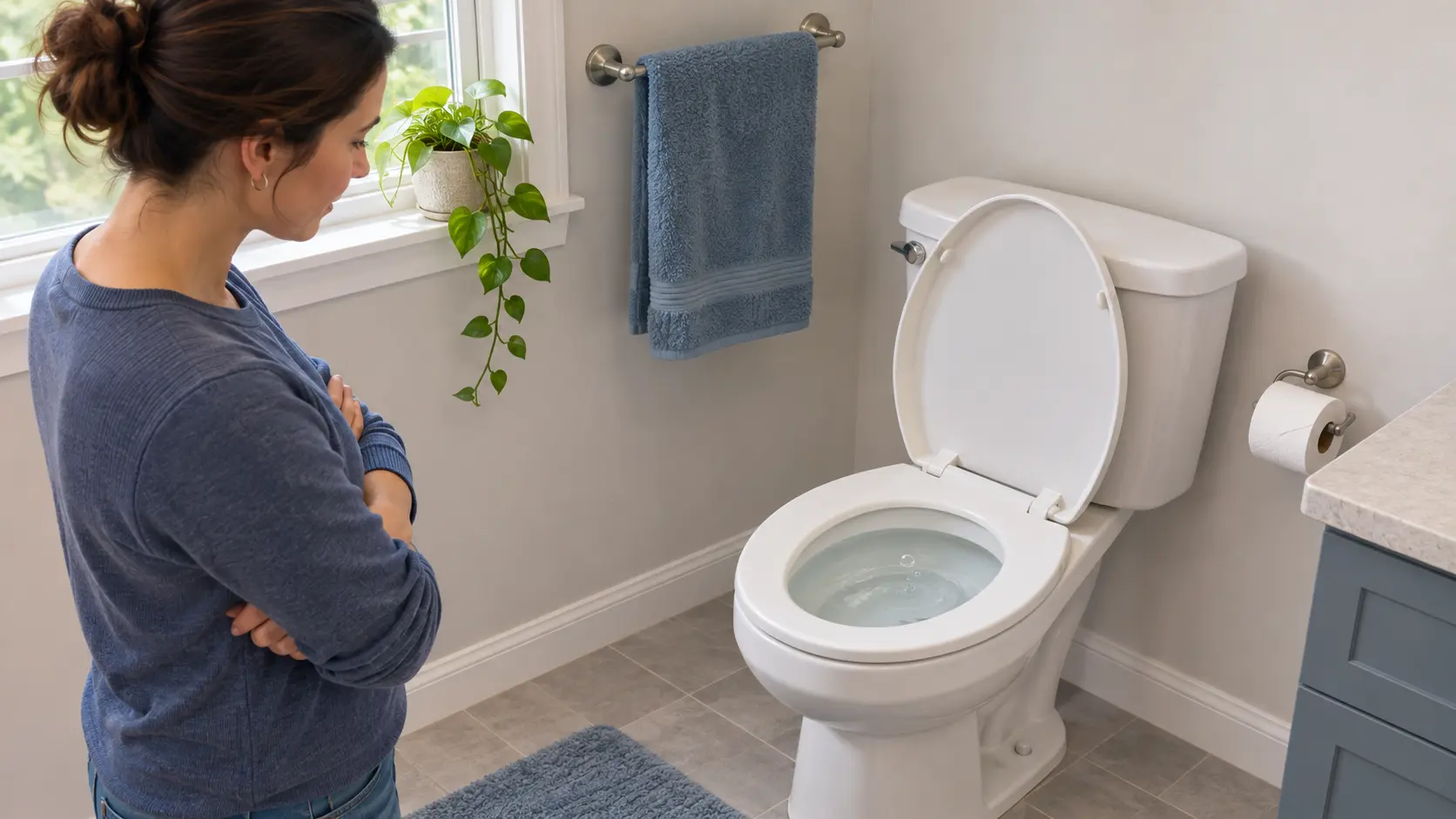
You see the standing water ripple, bubble, or change level, or hear a hollow gulp from the bowl or a nearby drain. That points toward a drainage-and-airflow symptom worth tracking.
Hissing or trickling after a flush
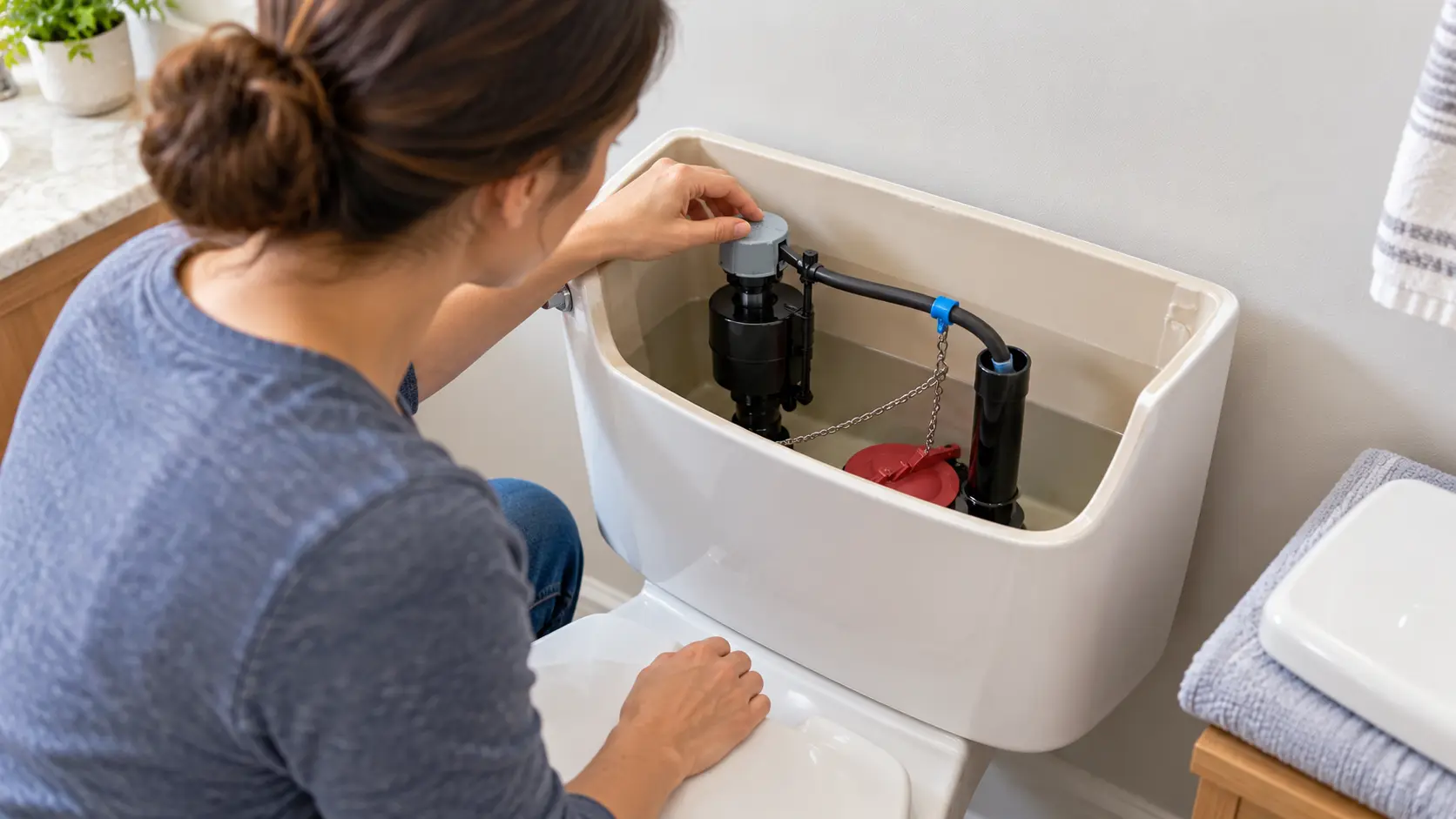
Sound mainly from the tank while it refills may be part of the normal refill cycle. Continuous or recurring tank noise is a different troubleshooting problem and does not, by itself, establish a blocked drain.
First, Check for Warning Signs Before Using More Water
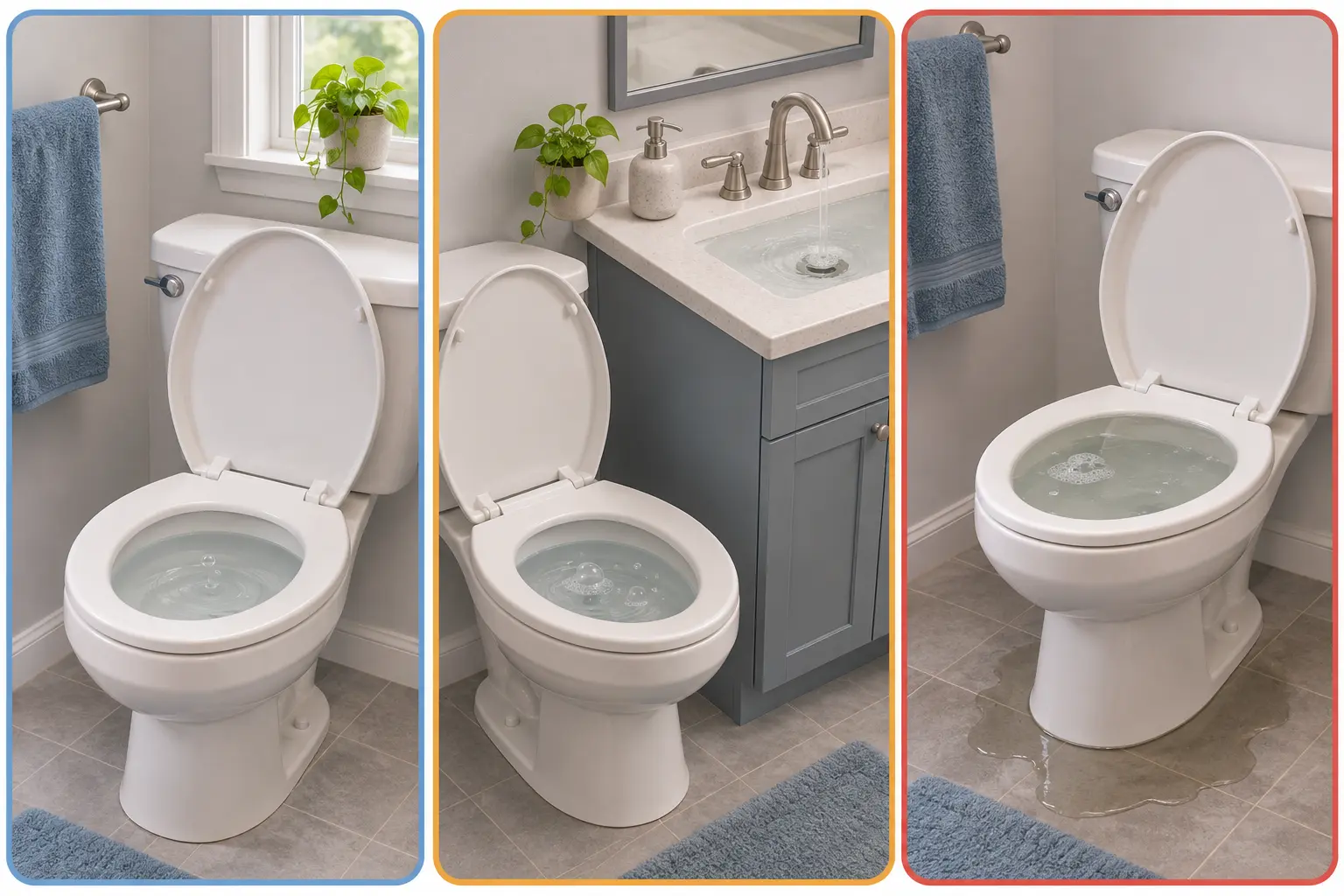
Not every isolated noise means an emergency. A brief sound followed by normal drainage, normal bowl level, and no other symptoms is different from repeated bubbling accompanied by a slow drain or sewage backup. A useful first decision is whether the plumbing is safe to keep using at all.
Stop water use
Bowl approaching the rim; wastewater coming out of a toilet, shower, or floor drain; sewage visible indoors. Do not flush again or deliberately run a sink, shower, or washer to test it.
Arrange prompt service
Recurring gurgles with multiple slow drains, sewage odors, changing bowl level, or sounds linked to other fixtures. Reduce water use until the cause is assessed.
Observe without testing
A single short noise with otherwise normal operation and no warning signs. Note when it happened and watch for recurrence during ordinary household use.
When Does the Toilet Gurgle? Match the Pattern
Timing helps determine what to report to a professional. It does not prove the location of a clog. The same gurgle can result from different pipe layouts, shared branches, venting arrangements, and drainage conditions.
| When you hear it | What it may suggest | What to do safely |
|---|---|---|
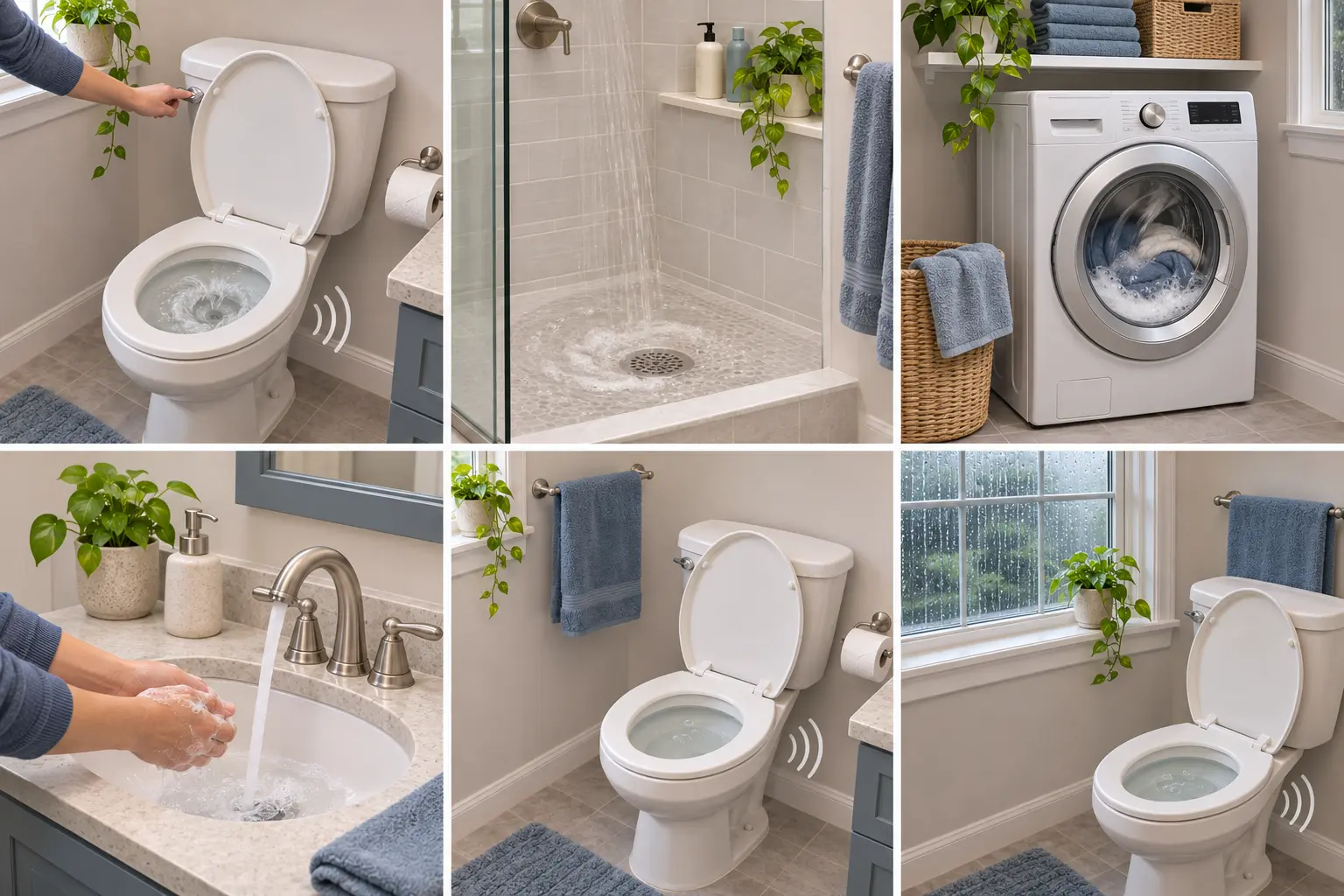
| Immediately after this toilet flushes | Air and water moving through the toilet trapway or connected drain; a possible local or downstream restriction. | Notice whether the bowl clears normally. Stop if the level rises or the flush becomes weak. |
| When a shower or tub drains | Pressure changes in piping shared by bathroom fixtures, sometimes with a branch restriction or venting concern. | Note if the shower is already draining slowly; avoid repeating the event as a test. |
| When the washing machine discharges | A high-volume discharge interacting with shared drainage, a restriction, or venting. | If bubbling recurs, pause laundry use and arrange an assessment, especially if multiple fixtures are involved. |
| When another toilet or sink drains | Potential interaction along a shared drain or through the venting system. | Record which fixture was in use and whether others show slow drainage or odors. |
| When nothing is visibly running | Drainage elsewhere in the home, delayed water movement, or a sound that may actually originate in the tank. | Check which area makes the noise and note whether bowl water visibly bubbles. |
| After heavy rain | Possible effects on a public sewer, site drainage, or a private septic system; not all rain-related gurgles share one cause. | Check for existing backups or wet areas from a safe distance. Limit water use if the drainage system is struggling. |
Gurgling right after flushing
A toilet flush sends a rapid volume of water through the bowl and its trapway. Some water and air movement is normal, but repeated gulping, visible bubbling after the flush, or a noticeably slower clear can indicate a developing restriction or pressure problem. Watch the outcome of an ordinary flush only if it is already happening and there are no backup signs; never perform repeated flushes to locate a fault.
If the bowl rises instead of emptying, the priority changes from noise investigation to preventing an overflow. Our toilet-won't-flush troubleshooting guide covers that separate symptom, including the limits of tank-side checks.
Gurgling when the shower or bathtub drains
Bathroom fixtures often connect into common drain piping. As shower or tub water drains, the toilet may become an audible point where pressure changes show up. A slow shower, a toilet bowl that bubbles when the tub empties, or odors from a nearby fixture make a shared drainage issue worth investigating. This pattern does not prove that the roof vent is blocked.
Gurgling when the washing machine drains
A washer can discharge water quickly. If a toilet regularly bubbles at the same time, a shared drain may not be handling that discharge as expected, or airflow may be affected. The exact cause depends on the installation. If the toilet or a floor drain begins to back up, stop the washer cycle if you can do so safely and do not start another load while waiting for service.
Gurgling when another sink or toilet is used
If the noise accompanies drainage from another fixture, note which one. Repeated symptoms across rooms merit an evaluation of shared drainage or venting.
Gurgling without an obvious trigger
Sometimes an unseen fixture is draining, or the sound originates in the refilling tank. Note whether bowl water visibly moves before assigning a cause.
Gurgling after heavy rain
Heavy rain can coincide with sewer surcharge or saturated ground that affects some septic systems. The U.S. Centers for Disease Control and Prevention notes that saturated soil may prevent an onsite wastewater system from operating properly during flooding. However, rain timing alone does not establish septic failure, a blocked sewer, or a temporary problem that will disappear on its own.
The Main Causes of Toilet Gurgling and Bubbling
Most homeowner explanations fall into a few broad groups. The right repair depends on which group is actually involved, how the home's pipes are arranged, and whether wastewater is moving normally.
1. A partial restriction near the toilet
Waste and paper travel through a curved, concealed toilet trapway before entering the branch drain. A developing obstruction may still allow water to pass, so the toilet may appear to work while water movement becomes less predictable. Visible bubbling, repeated slow clearing, or a bowl that rises and then drains can fit this pattern. No visible object in the bowl does not rule out a hidden restriction.
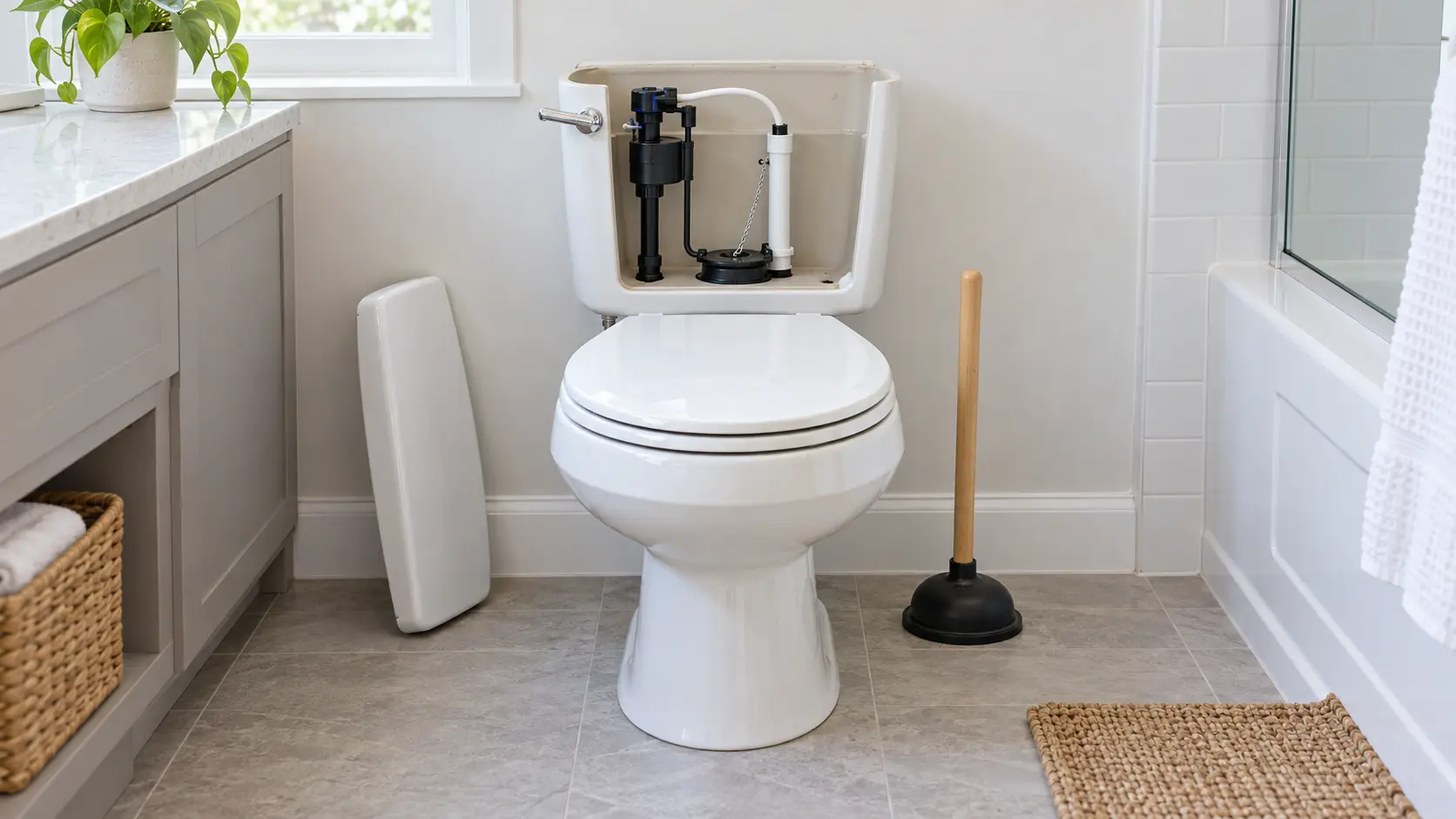
If there is only a clearly localized toilet clog, other fixtures are behaving normally, and there is no sewage backup, a manufacturer-approved toilet plunger may be appropriate for someone comfortable using it. Follow the toilet maker's care instructions and avoid forceful methods. If the issue is primarily gurgling from several fixtures, do not assume plunging this toilet will fix it.
2. A shared branch drain or main sewer restriction
Several fixtures can connect to one branch and eventually the building drain or sewer lateral. A partial restriction in a shared line can affect more than one fixture. For example, the toilet may bubble during a shower, and a nearby tub may drain slowly. The combination of repeated gurgles, multiple slow drains, and water backing up into a lower fixture deserves faster attention than sound by itself.
Possible underlying problems include accumulated debris, root intrusion, damaged piping, or an obstruction farther down the system. You cannot confirm any of these from a gurgle. A drain professional may select appropriate inspection methods based on site conditions instead of asking a homeowner to open a cleanout.
3. Venting and air-pressure problems
Drainage venting allows air movement within the plumbing system and helps protect fixture water seals. If air movement is restricted or the system is not functioning as designed, pressure differences can disturb standing water in fixtures and contribute to gulping or bubbling. Venting may be implicated in a toilet that makes noise when another fixture drains, but a gurgle is not a vent-blockage diagnosis.
Vent layouts and permitted methods vary by building, jurisdiction, and installation. Roof access, vent clearing, and alterations to plumbing vents should be left to qualified professionals. A blocked drain can create symptoms similar to a venting issue, so replacing parts or climbing onto the roof without a diagnosis can miss the real problem and introduce risk.
4. Septic system trouble, if the home uses septic
For properties with onsite wastewater treatment, repeated plumbing gurgles can be one sign of a system that needs attention. The U.S. Environmental Protection Agency also lists slow drains, sewage backup, unusual damp spots, and sewage odors among potential signs of septic malfunction. A gurgle alone does not mean the tank is full or that pumping is automatically the right repair.
If multiple fixtures are slow or a drainfield area looks wet, reduce water use, avoid contaminated areas, and contact a septic professional. Never open septic access points yourself.
5. Recurring pipe or installation problems
Recurring issues may involve pipe condition or configuration beyond the toilet. A professional can assess whether the problem is local, shared, or farther downstream; replacing the toilet is not an automatic solution.
Why Does the Toilet Gurgle if It Isn't Visibly Clogged?
The phrase not clogged often means no visible paper or solid waste is blocking the bowl and water is still going down. That observation is helpful, but it cannot show what is happening inside the trapway, branch drain, sewer, or vent system. A partially restricted line can carry some water while producing unusual sounds, and a pressure problem can disturb bowl water without a visible object.
Look at the whole pattern rather than using one symptom as proof. Does the flush clear at its usual speed? Does the bowl briefly rise? Does a shower make it bubble? Are several drains slow? Those observations help a professional decide where to begin, while leaving room for more than one explanation.
Important distinction: If the main complaint is a toilet that will not flush or whose bowl rises, use our separate no-flush troubleshooting guidance linked above. This article focuses on gurgling or bubbling as the primary symptom, including cases where the toilet still flushes.
Safe Checks a Homeowner Can Make Without Opening Drain Lines
The most useful homeowner checks are observations, not experiments. You do not need to disconnect a pipe, open a sewer cleanout, pour chemicals into a toilet, or use extra water to identify patterns.
- Locate the sound. During normal use, listen for whether it comes from standing water in the bowl, a nearby sink or shower drain, or the tank after flushing. Visible bowl bubbles are different from routine tank refilling.
- Note the trigger. Was someone using the shower, emptying a bathtub, running a washer, or flushing another toilet? Write down what happened naturally; do not repeat it to confirm a theory.
- Check existing drainage behavior. Think about whether the bowl cleared normally on the last ordinary flush, whether another fixture has recently drained slowly, and whether water levels are changing without an obvious reason.
- Look for additional warning signs. Without touching wastewater, notice sewage odor, damp areas near a septic drainfield, a floor drain that has backed up, or several fixtures acting up together.
- Identify the wastewater system. If you know whether the house uses a municipal sewer or a private septic system, include that information when contacting a professional. If you are unsure, review property records rather than opening any buried equipment.
- Choose the next step based on risk. A one-time noise with normal drainage may simply be monitored. Repeating noises, slow drains, or uncertain plumbing behavior merit a call. Any active backup or rising bowl means stop using water and seek help.
A note on your phone is enough: fixture involved, time of sound, visible bowl movement, other slow drains, odor, rainfall, and whether the home is on septic. This short record is often more useful than a guess that the vent or sewer is blocked.
What Not to Do With a Gurgling Toilet
Trying to force a diagnosis can make a partial blockage overflow or expose someone to wastewater. Avoid these shortcuts:
- Do not flush repeatedly when the bowl rises, clears slowly, or threatens to spill. More water can turn a developing restriction into an overflow.
- Do not run a washer, shower, or bathtub solely as a test when a shared-drain problem is suspected. Those fixtures can send substantial water into a compromised line.
- Do not pour aggressive drain cleaners into the toilet or combine bleach, acids, or other cleaning products. Chemical exposure and splash hazards are serious, and chemicals do not reliably diagnose a vent or sewer defect.
- Do not climb onto the roof to inspect or clear a vent. Access, pipe condition, and appropriate testing belong to a qualified professional.
- Do not open a sewer cleanout or septic tank lid to investigate a noise. Wastewater, pressure, gases, and confined-space hazards can be involved.
- Do not assume replacing the toilet will solve it. If several fixtures share the symptom, the actual problem may lie beyond the porcelain fixture.
If you have already used a drain chemical, tell the plumber what product was applied before anyone attempts physical clearing. Follow the product's safety instructions, and never add another cleaner to try to counteract it.
When to Call a Plumber, Sewer Specialist, or Septic Pro
Call promptly when gurgling is recurring, affects multiple fixtures, comes with slow drainage, or persists after routine use. Seek urgent assistance when wastewater backs up, an overflow is imminent, or sewage is entering living space. You may need a sewer/drain specialist when multiple fixtures connect to a suspected shared line; for an onsite wastewater system, a septic professional may be the right first contact.
| Situation | Appropriate next step |
|---|---|
| Single brief gurgle, normal drainage, no odors or slow fixtures | Make a note and watch for recurrence during ordinary use; avoid unnecessary tests. |
| Repeated bowl bubbles, one or more slow drains, or an unexplained sewage smell | Limit water use as appropriate and arrange a plumber's evaluation. |
| Multiple fixtures gurgle, lower drains back up, or water rises toward a rim | Stop flushing and other water use; contact a qualified drain or sewer professional urgently. |
| Septic property with gurgling plus soggy ground, sewage odors, or slow fixtures | Reduce wastewater production and contact a septic service provider; avoid the suspected area. |
| Indoor sewage backup or suspected contaminated floodwater | Avoid contact, keep others clear, and seek qualified cleanup and local health guidance as needed. |
What a professional may investigate
Depending on the symptoms and property layout, a plumber may inspect fixture connections, assess drainage or venting, or select drain-line inspection equipment. A septic provider may evaluate the onsite system and its service history. There is no universal inspection or repair sequence: the problem could be a local obstruction, a shared line, a venting deficiency, or something unrelated to the toilet tank.
Tell the technician which fixtures are involved, when sounds occur, whether the property uses septic, and which chemicals or drain tools have already been used.
How to Reduce the Chance of Future Drainage Problems
Good habits lower the likelihood of some blockages, even though they cannot prevent every plumbing defect or predict every gurgle.
- Flush only human waste and toilet paper. Do not flush wipes, paper towels, hygiene products, or other materials that can accumulate in the drain.
- Keep grease and cooking oils out of household drains. Use screens where appropriate to catch hair and debris before they enter nearby fixtures.
- Address recurring slow drains early rather than waiting for a backup. Ask a professional to investigate patterns affecting more than one fixture.
- For a septic system, follow the EPA's inspection and pumping guidance, adjusted by a qualified local provider to the system type, household use, and maintenance records.
- After flooding or heavy rain, treat backups and contaminated water as health hazards, not as harmless plumbing noises that will necessarily clear on their own.
Frequently Asked Questions About Toilet Gurgling
Why does my toilet gurgle after flushing?
Water and air move through the toilet and connected drain during a flush. Repeated hollow gulping or visible bowl bubbles can be associated with a partial restriction or drainage venting issue. If the bowl rises or drains slowly, stop repeating the flush and get the drainage problem assessed.
Why does my toilet gurgle when I shower?
The shower and toilet may share drainage piping. Shower water can expose an existing airflow or drainage problem, making the toilet bowl bubble or gurgle. This does not prove a blocked vent; note whether the shower also drains slowly and contact a plumber if the pattern repeats.
Can a washing machine make a toilet gurgle?
Yes. A washer's discharge can interact with shared drain piping. Repeated gurgling during laundry, especially alongside slow drains or backups, merits a drainage assessment. Do not run extra wash cycles to test the theory.
Can a toilet gurgle without being clogged?
Yes. An audible gurgle does not prove that the toilet trapway is blocked. Venting problems, pressure changes, or restrictions elsewhere may contribute. Conversely, a bowl that looks clear does not prove hidden pipes are unobstructed.
Does a gurgling toilet mean the roof vent is blocked?
No. A venting issue is one possibility, but symptoms may overlap with a branch or sewer restriction. A professional should assess the system before anyone attempts vent work. Do not climb onto the roof.
Can heavy rain cause toilet gurgling?
Heavy rain or flooding may affect drainage conditions, particularly where an onsite septic system is operating in saturated soil. It can also coincide with other sewer problems. If gurgling comes with backups, slow drains, or contaminated water, reduce use and seek professional help rather than assuming it will pass.
Should I use the toilet if it keeps bubbling?
If there is any rising water, backup, or multiple affected fixtures, stop using it and limit water entering the drainage system. If it is only a single isolated sound with otherwise normal drainage, you can note it and watch for recurrence. Persistent bubbling warrants an assessment even if flushing still seems possible.
Is a gurgling sound coming from the tank the same problem?
Not necessarily. The tank normally makes refill sounds after flushing; a continuously running or repeatedly refilling tank may involve its water-supply or flush mechanism. Bowl bubbles and a hollow sound associated with other drains are a different set of clues. Identify which area is making the noise before treating them as the same fault.
Technical Sources and Reference Guidance
This guide uses general drainage-and-venting principles and U.S. public-agency guidance. Plumbing layouts, adopted codes, product models, and septic requirements differ by property and jurisdiction. These references help explain possible causes and safety thresholds; none can diagnose an individual home without inspection.
- International Code Council — 2024 IPC Chapter 9, venting and trap-seal protection: context for why controlled air movement matters in a drainage system.
- Oatey — Common Causes of a Clogged Sewer Line and How to Prevent It: manufacturer guidance on gurgling and partial sewer restrictions.
- U.S. EPA — Resolving Septic System Malfunctions: signs of a possible malfunction and when to seek assistance.
- U.S. EPA — How to Care for Your Septic System: appropriate materials to flush, efficient water use, and system care.
- U.S. CDC — Guidelines for Septic and Onsite Wastewater Systems: flooding, saturated soil, and wastewater exposure precautions.
- U.S. CDC — Cleaning and Disinfecting with Bleach: safety guidance on never mixing disinfectants and household cleaners.