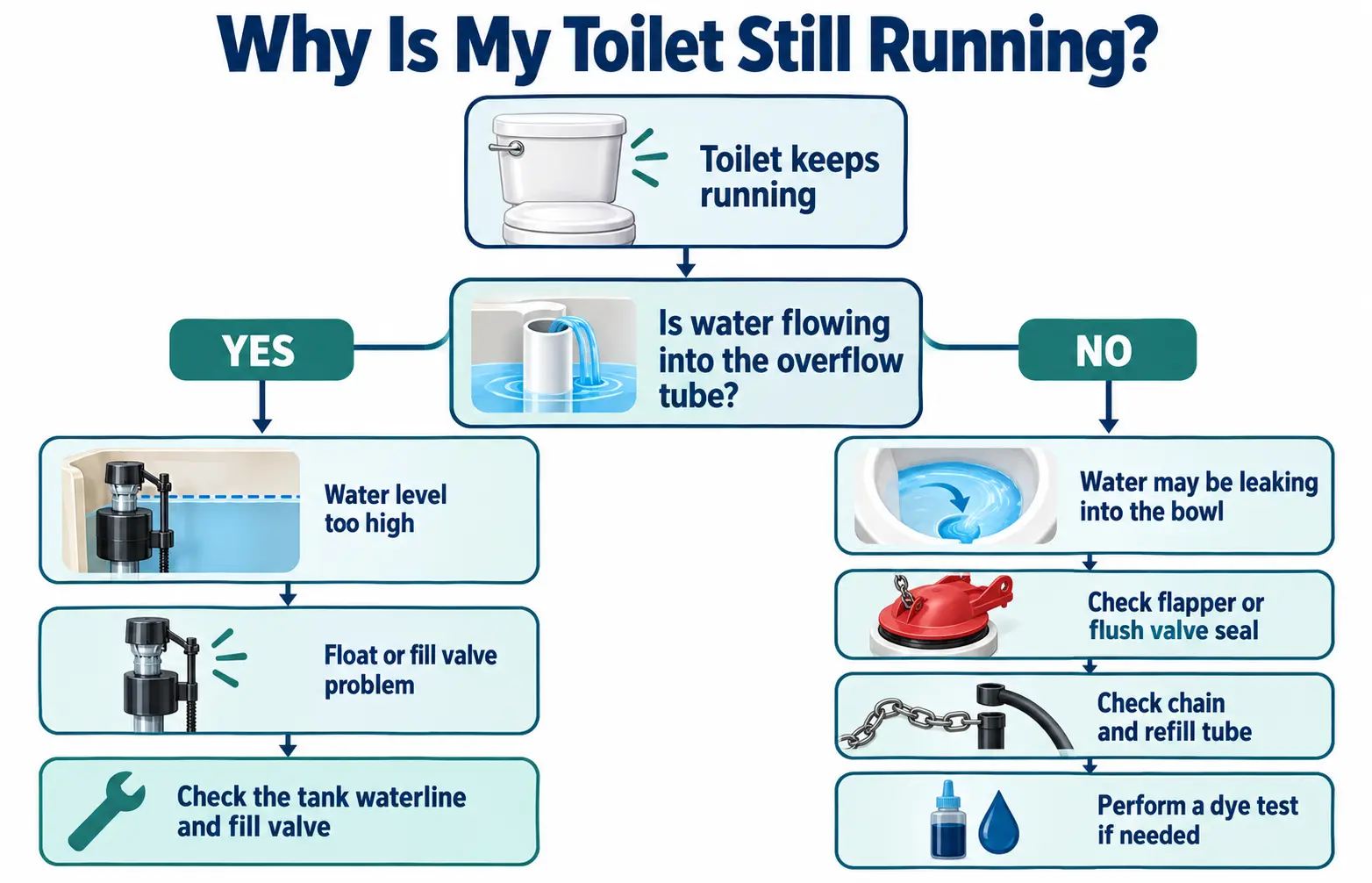
A toilet that keeps running usually has one of two problems: the fill valve is sending water into the overflow tube, or water is escaping from the tank into the bowl and the fill valve keeps replacing it. A sticking handle, tangled chain, worn flush seal, or incorrectly positioned refill tube can also be involved. The good news is that a few observations can often narrow down the cause before you buy any parts.
Water on the floor? Deal with that first.
If water is leaking outside the toilet, shut off the toilet's water supply if the valve moves normally, protect the floor, and get plumbing help if the source is unclear. Never force a stuck shutoff valve or continue using a toilet with cracked porcelain.
Why does my toilet keep running?
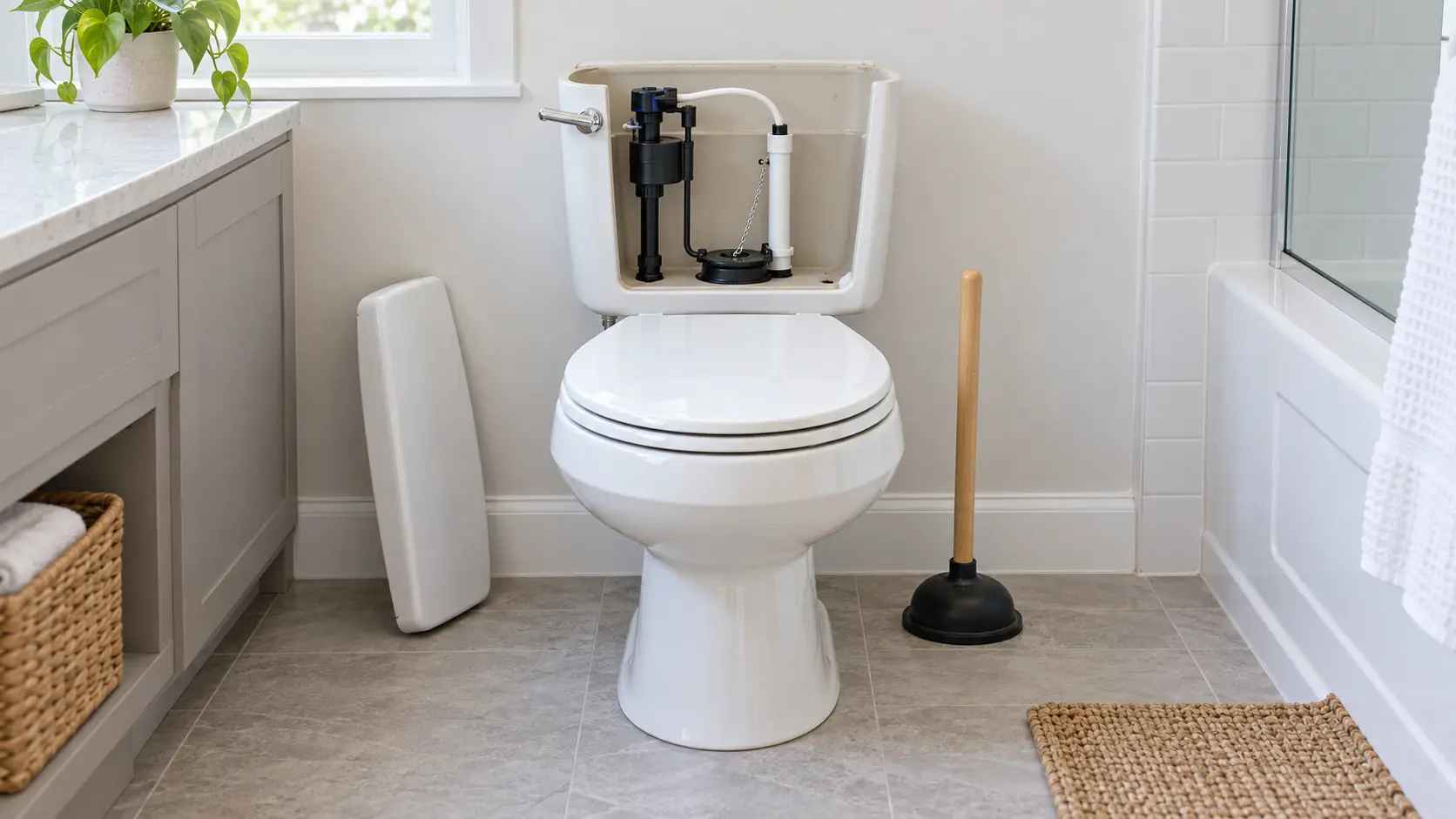
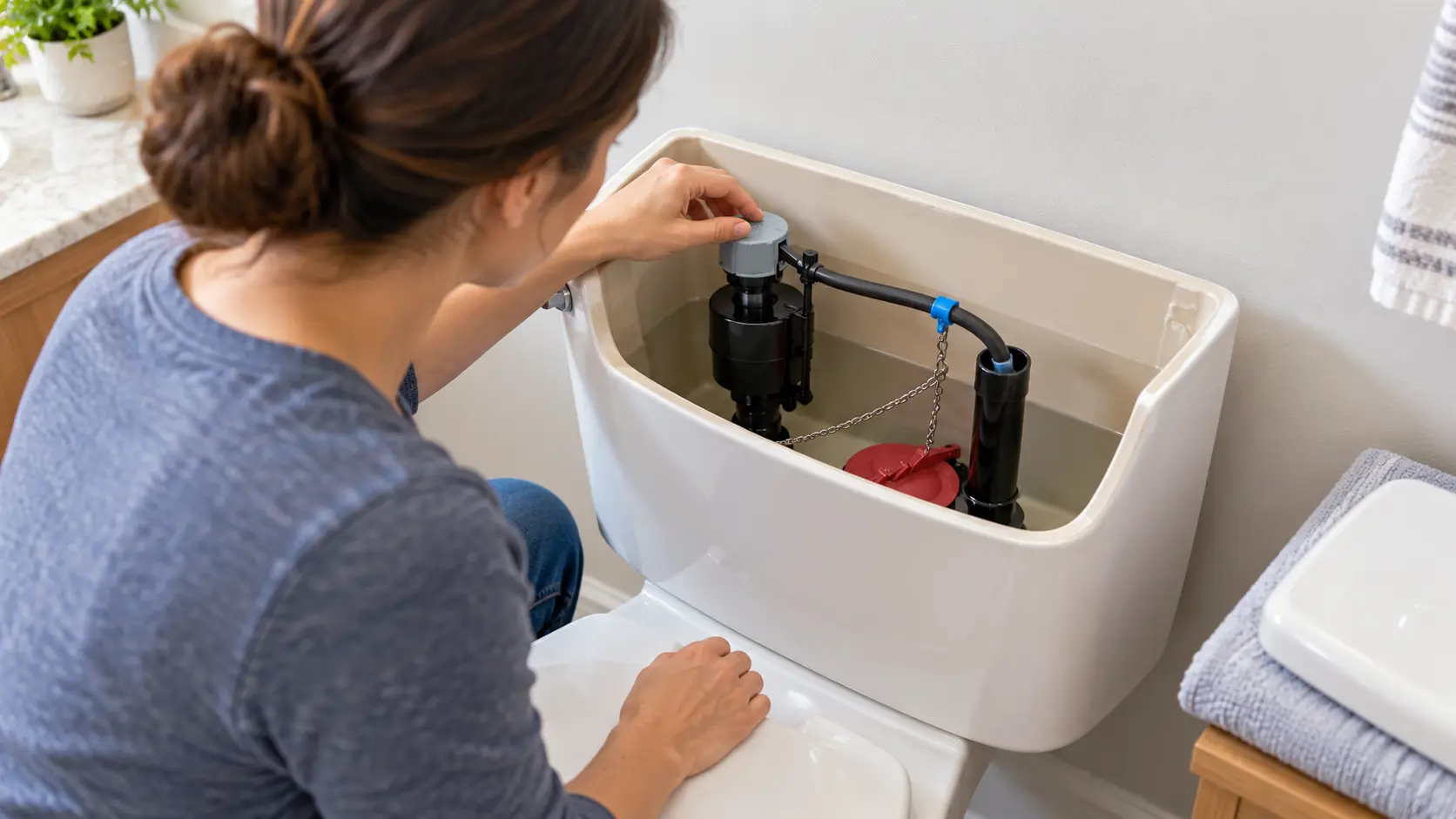
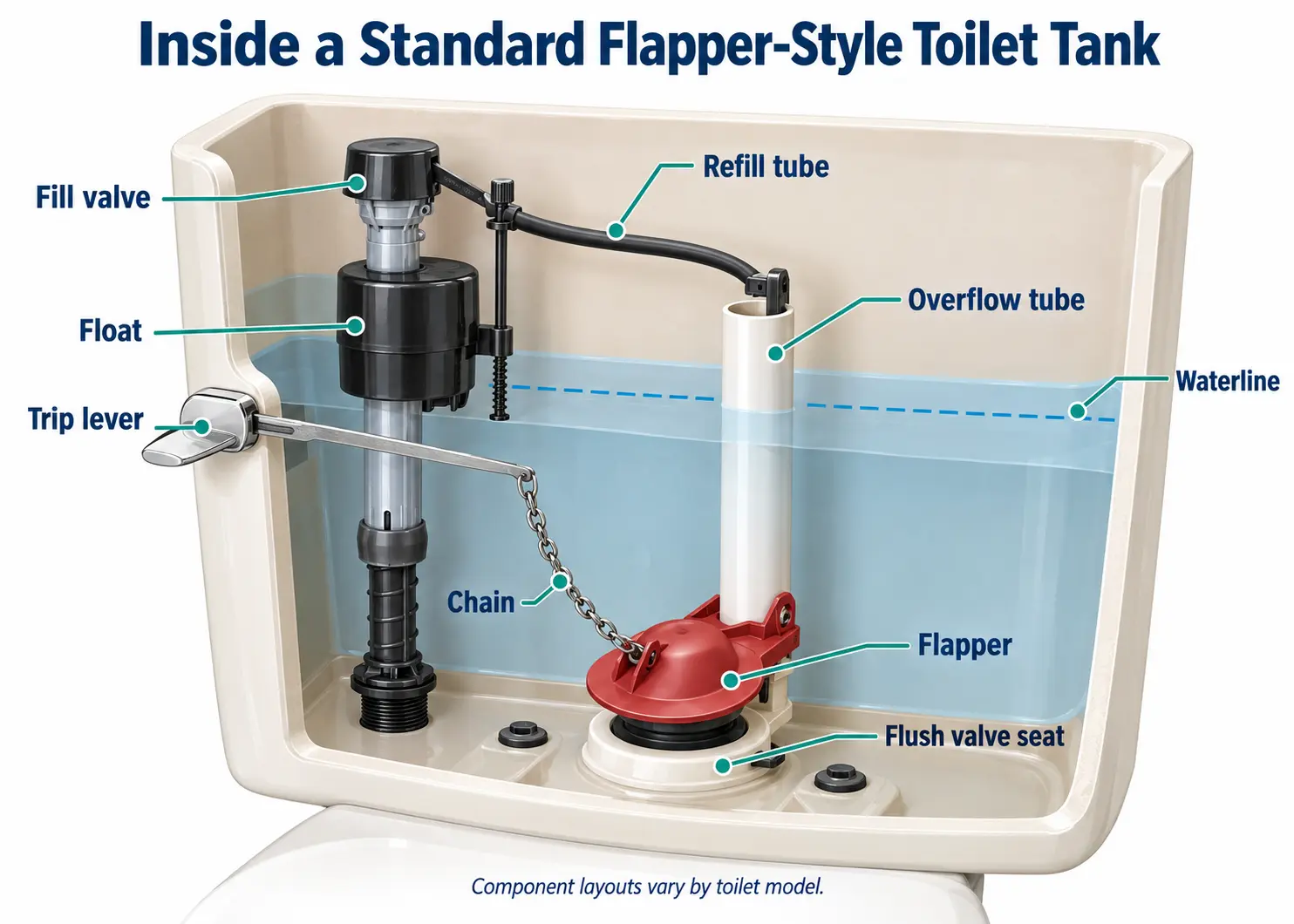
Inside a typical gravity-flush toilet, a fill valve refills the tank after a flush, while a flapper or other flush-valve seal holds water in the tank between flushes. An overflow tube provides a path for excess tank water to enter the bowl rather than spilling over the tank rim.
If the tank overfills, you may hear a continuous hiss and see water entering the overflow tube. If the seal leaks, water slowly escapes into the bowl; the fill valve then runs continuously or switches on now and then to replace it. This distinction helps you avoid replacing the wrong part.
A quick first look
- Carefully remove the tank lid and set it on a stable, padded surface. Stop if you have an unfamiliar electronic or concealed system that does not open in the usual way.
- Flush once and watch the tank refill. A normal fill cycle should end; listen for water that continues after the tank has reached its usual level.
- Look at the top of the overflow tube. Is water continuously pouring into it? If so, investigate the fill valve, float, and water-level setting first.
- If the water stays below the overflow opening but the toilet still runs, look for a seal that is not closing, a chain holding it open, or slow water loss into the bowl.
- Note whether the toilet runs nonstop, starts again without a flush, or leaks around the base. Those symptoms point to different problems.
This guide covers conventional residential gravity-tank toilets. Pressure-assisted, wall-hung/concealed-tank, and electronic systems can require their own service instructions.
What your toilet's symptoms mean
| What you notice | Likely area to check | First safe action |
|---|---|---|
| Steady hiss; water flows into the overflow tube | High water level, float, or fill valve | Compare the water level with the tank's marked level; consult the valve manual |
| Water trickles into the bowl after the flush is over | Flapper, canister/flush seal, or chain | Check that the seal seats fully; perform a dye test |
| Toilet starts refilling by itself, with no flush | Slow tank-to-bowl leak or refill-tube siphoning | Inspect the seal and refill tube; use a dye test |
| Handle sticks or the flush mechanism stays lifted | Trip lever, chain, or push-button actuator | Check for an obvious snag or interference |
| Water appears on the floor or at the base | External leak, not ordinary internal running | Shut off supply if safe and arrange repair |
How to find out where the water is going
Test A: Watch the overflow
With the lid off, let the tank refill. If water runs over the top of the overflow tube, the fill system may be set too high or failing to shut off. The correct level is the manufacturer's mark or specification, not one universal measurement for every toilet.
An obstructed or failing fill valve can also continue supplying water when it should stop.
Test B: Look for an internal leak
If the tank water stays below the overflow opening, but the fill valve runs again without anyone flushing, the tank may be losing water past a flush seal. A low or misplaced refill-tube end is another possible cause on certain designs.
Use the dye test below to check for tank water reaching the bowl.
The 10-minute food-coloring test
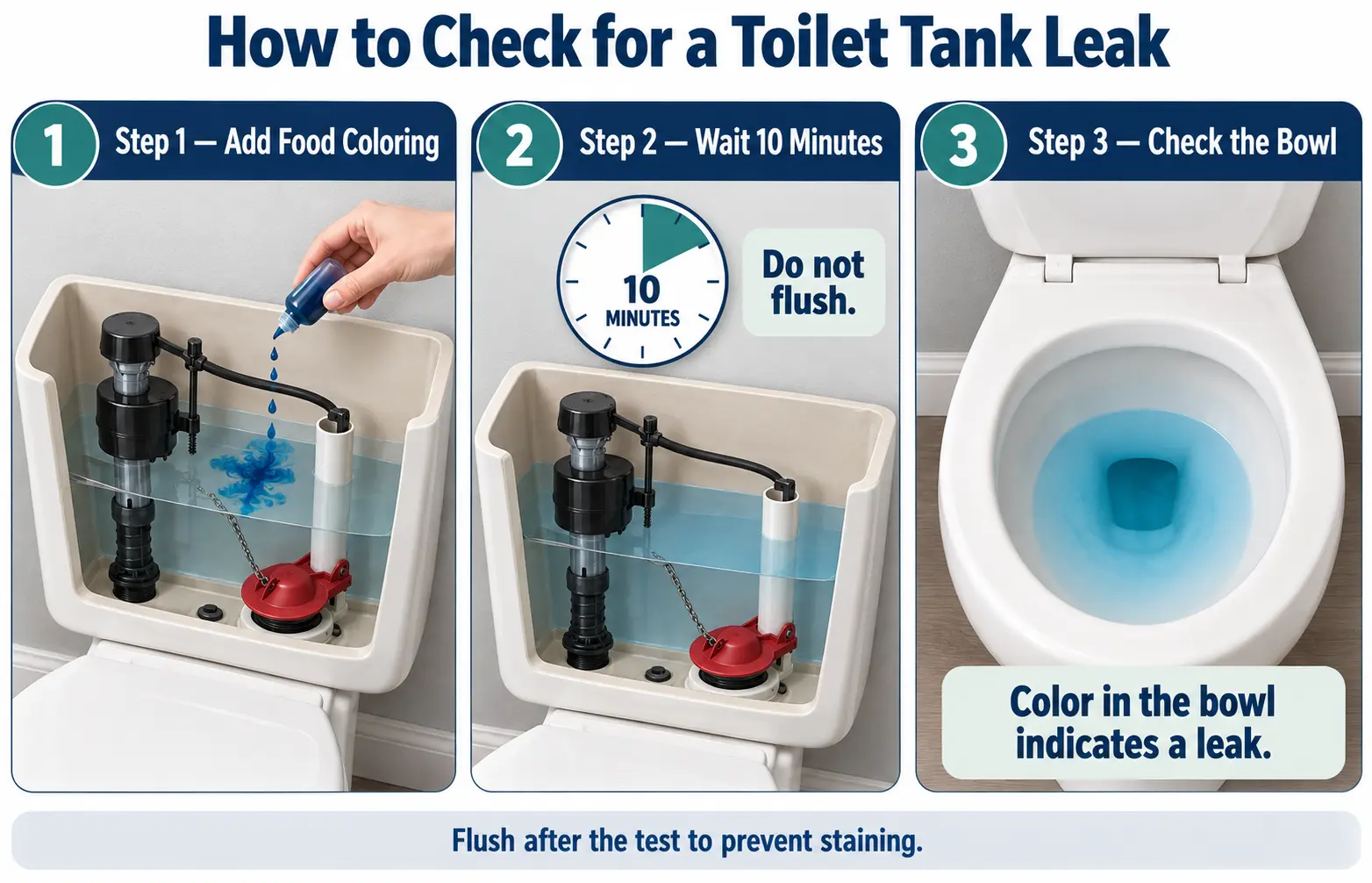
The U.S. EPA WaterSense program recommends a simple dye test to detect silent toilet leaks. You do not need to dismantle the toilet.
- Wait until the tank finishes filling. Add a few drops of food coloring or a toilet leak-detection dye tablet to the tank, not the bowl.
- Do not flush for 10 minutes.
- Look inside the bowl. If the color appears there, water is traveling from the tank into the bowl when it should not.
- Flush afterwards to reduce the risk of staining.
How to fix a toilet that keeps running
Choose the fix that matches your observation. If a procedure requires removing a valve cap, swapping a seal, or adjusting a special flush mechanism, use the instructions for your exact toilet or replacement-part model. Never force plastic parts, supply valves, or porcelain connections.
1. Check the handle, lever, and chain
A caught chain or sticking trip lever can prevent the flapper or canister from reseating. With the tank lid removed, look for a chain snagged on the lever, caught under the seal, or pulling the mechanism upward after you release the handle.
- Make sure the handle returns freely and the flush mechanism settles completely into its closed position.
- Free an obvious snag if you can do so without pulling or bending parts.
- Only adjust chain length according to the toilet's instructions. Different manufacturers and valve designs specify different amounts of slack.
A push-button toilet may have actuator rods instead of a standard chain. A rod that is too long can hold some dual-flush valves open; follow the specific manual rather than adapting chain instructions.
2. Inspect the flapper or flush-valve seal
If tank water leaks into the bowl, a rubber flapper or seal may be worn, warped, dirty, or unable to sit flat. A traditional flapper lifts from a seat at the bottom of the tank; canister and some dual-flush toilets use different sealing components.
- Turn off the water supply first if you need to handle or remove any tank component; avoid forcing a stuck shutoff valve.
- Check whether the rubber seal is seated correctly and whether mineral buildup or debris is preventing contact.
- If the manufacturer's instructions permit it, gently rinse or wipe an accessible seal and seating surface with water. Avoid abrasive tools and harsh chemicals.
- If the rubber is damaged or the leak continues, identify the toilet model and use the approved replacement seal or flapper.
If a new seal does not stop the leak, the underlying flush-valve seat or another internal connection may need professional service. Do not assume the replacement seal was the only possible fault.
3. Check tank water level and float setting
Water spilling into the overflow tube points toward the fill system. Some adjustable fill valves allow the float setting to be lowered; other valves are factory preset. Identify the fill-valve type before touching any adjustment.
- Locate the tank's waterline mark, if present, or consult the official product instructions.
- If your valve is adjustable, follow its directions to set the water to the specified level.
- Flush and allow the tank to refill. Confirm that the fill valve shuts off and water does not spill into the overflow tube.
Do not use a universal “half-inch below the tube” setting. Instructions and tank markings vary across manufacturers and models.
4. Address a fill valve that will not shut off
Sediment inside a fill-valve cap or a worn internal seal can stop the valve from closing. Kohler, Fluidmaster, and American Standard all describe debris-related fill-valve problems in their troubleshooting material.
- Confirm that the water is continuously entering the overflow and that the float is not simply set too high.
- Check the specific manufacturer's maintenance guide for a cleaning or flushing procedure for your valve.
- Only disassemble or flush a valve cap if its instructions clearly describe the steps and you can isolate the water safely.
- If cleaning does not help or the part is worn, replace the correct fill valve or have a plumber do the work.
Avoid generic advice to pry off any fill-valve cap: locking methods, seals, and reassembly vary.
5. Check the refill tube for siphoning
The small refill tube normally directs water toward the bowl-refill path during the fill cycle. On some tanks, a hose end that sits below the tank waterline can siphon water out of the tank and cause unexpected refills.
- Look for a refill hose that has slipped down into the overflow tube or disconnected from its designated port.
- Use the specified clip or connector arrangement for your flush-valve design. For some canister toilets, the hose connects to a dedicated port rather than a generic clip.
- Do not plug, kink, or permanently remove the tube: it is part of normal bowl refilling.
Incorrect hose position is one possible explanation for slow, recurring tank-water loss—not the first assumption for every running toilet.
What if your toilet has a canister or dual-flush system?
Do not buy a standard flapper just because the toilet is running. Many models use a canister/tower seal or a dual-flush valve seal instead. Push-button lids may use adjustable actuator rods. The repair principle remains the same—make sure the flush valve closes and seals—but the part and procedure change.
For example, Kohler documents both flapper- and canister-style toilets, and TOTO's dual-flush manual describes servicing a removable flush-valve seal. Some TOTO models also have fill valves that do not need ordinary water-level adjustment. Refer to the exact manual and the model number marked on the tank before choosing a part.
How to tell if the repair worked
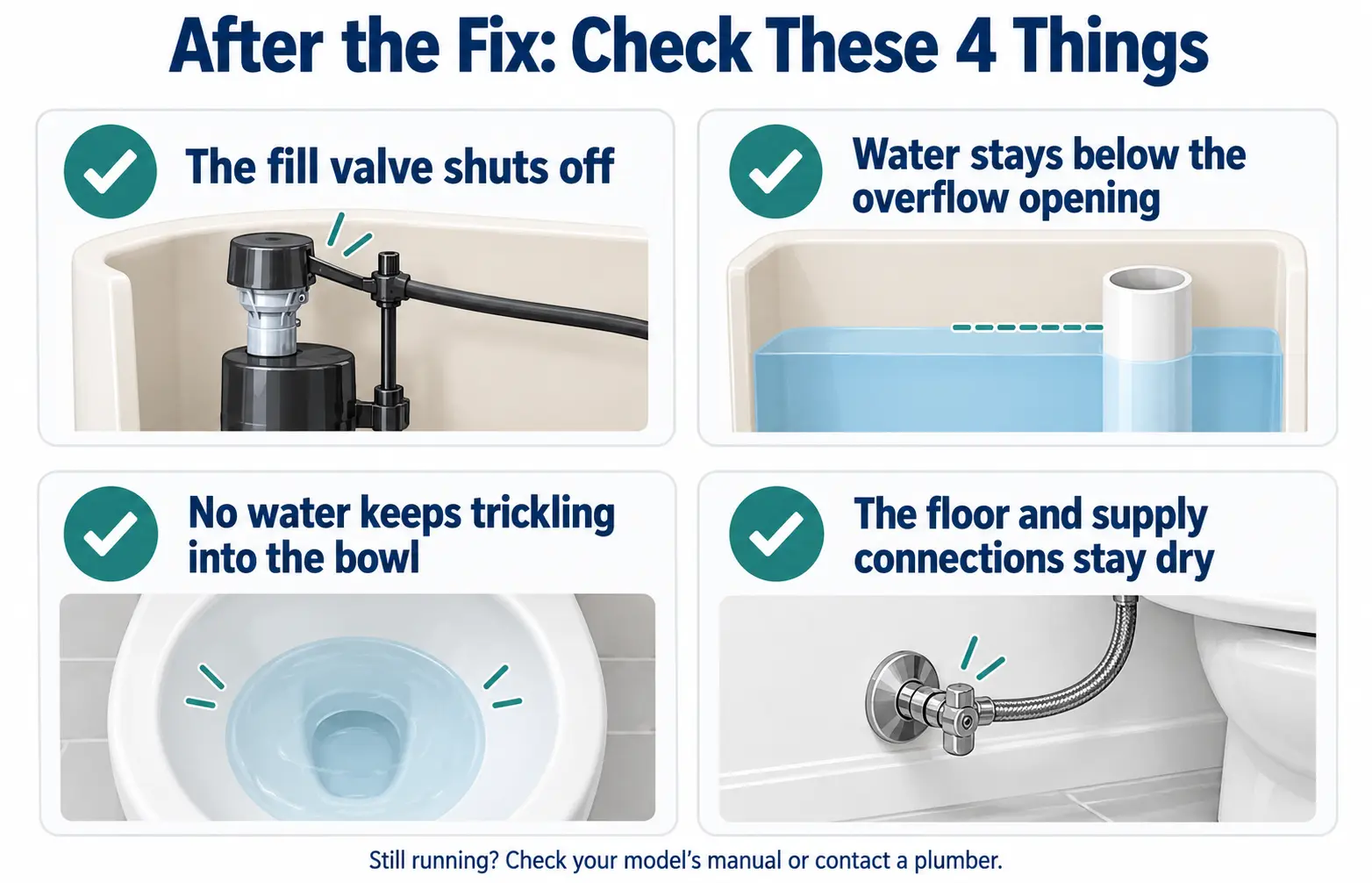
Once any disturbed components are reassembled and the supply is safely turned back on, use this checklist:
- Flush: The handle or button operates normally and the flush valve closes again.
- Refill: The tank reaches its intended water level and the fill valve stops.
- Overflow: Water does not continue flowing into the overflow tube.
- Seal: There is no ongoing trickle into the bowl; repeat a dye test if a slow leak was suspected.
- Outside: Tank, connections, and floor remain dry.
One successful flush is not always enough.
Run more than one normal flush-and-refill cycle, then listen later for unexpected refilling. Intermittent leaks can be easy to miss in a quick check.
When to call a plumber
Routine observation and model-approved minor adjustments can be reasonable homeowner tasks. Get professional help when:
- Water is leaking onto the floor, through a ceiling, or around the toilet base.
- The shutoff valve will not operate normally, a supply connection is damaged, or the tank is cracked.
- A correct, model-matched seal or fill-valve adjustment does not stop the running.
- Repair requires removing the tank, replacing the flush-valve base, or working with inaccessible plumbing.
- The toilet has pressure-assisted, concealed, electronic, or unfamiliar mechanisms that are not covered by its homeowner manual.
A wax-ring problem, trap clog, or drainage issue is a separate diagnosis; it is not a standard explanation for a tank fill valve that keeps operating. If your main problem is that the toilet will not flush, see our Toilet Won't Flush? Causes and Fixes guide instead.
Frequently asked questions
Why does my toilet keep running after I flush?
A brief refill is normal after flushing. If the water keeps running after the tank should be full, check whether it is entering the overflow tube or leaking past the flush seal. A sticking handle or chain can also prevent the valve from closing.
Why does my toilet run randomly when nobody used it?
The tank may be slowly losing water through a worn seal or, less commonly, through an incorrectly positioned refill tube. When the water level falls enough, the fill valve switches on to replace it. A dye test can help identify an internal leak.
Will adjusting the float stop a running toilet?
Only when the problem involves the water level or fill-valve shutoff. If the tank is losing water through the flush seal, changing the float setting will not fix that leak. Some fill valves are preset, so check your model first.
Should I replace the flapper first?
Not automatically. Watch the overflow and inspect the flush mechanism first. Some toilets have a canister or dual-flush seal instead of a flapper, and a poorly seated chain or a fill-valve issue can create similar sounds.
Can a running toilet waste water even when the bowl looks normal?
Yes. A slow internal leak may be hard to see but can make the fill valve operate repeatedly. The EPA recommends an annual dye check because silent toilet leaks can go unnoticed.
Sources and manufacturer guidance
The troubleshooting principles in this article are drawn from the following official references. Exact adjustment and replacement instructions depend on your toilet model.
- Kohler — Toilet Constantly Leaking or Running
- Kohler — Toilet Occasionally Leaking or Running
- Kohler — Tank Leak: Fill Valve Hose Position
- Fluidmaster — Toilet Repair Kit Installation and Troubleshooting Instructions (PDF)
- American Standard — Running Champion Two-Piece Toilet Troubleshooting
- TOTO — Installation and Maintenance Manual (PDF)
- TOTO — Dual-Flush Toilet Owner's Manual (PDF)
- U.S. EPA WaterSense — Home Maintenance and Toilet Leak Testing