A gas water heater not heating can leave every faucet cold, deliver only lukewarm water, or appear to work before the hot water disappears again. Those symptoms do not all point to the same repair. The safest starting point is to determine whether the heater is actually firing, whether the problem affects the entire home, and whether there are any warning signs that require immediate help.
This guide focuses on residential gas storage-tank water heaters, including models with standing pilots and electronic controls. Gas tankless and power-vent models may use different ignition systems and error codes. Always follow the instructions for the exact brand and model installed in your home.
Start with the symptom, not a replacement part
Use the symptom that best describes your situation. This first distinction can help you avoid replacing a gas valve or even the entire heater when the actual issue is water demand or plumbing elsewhere in the house.
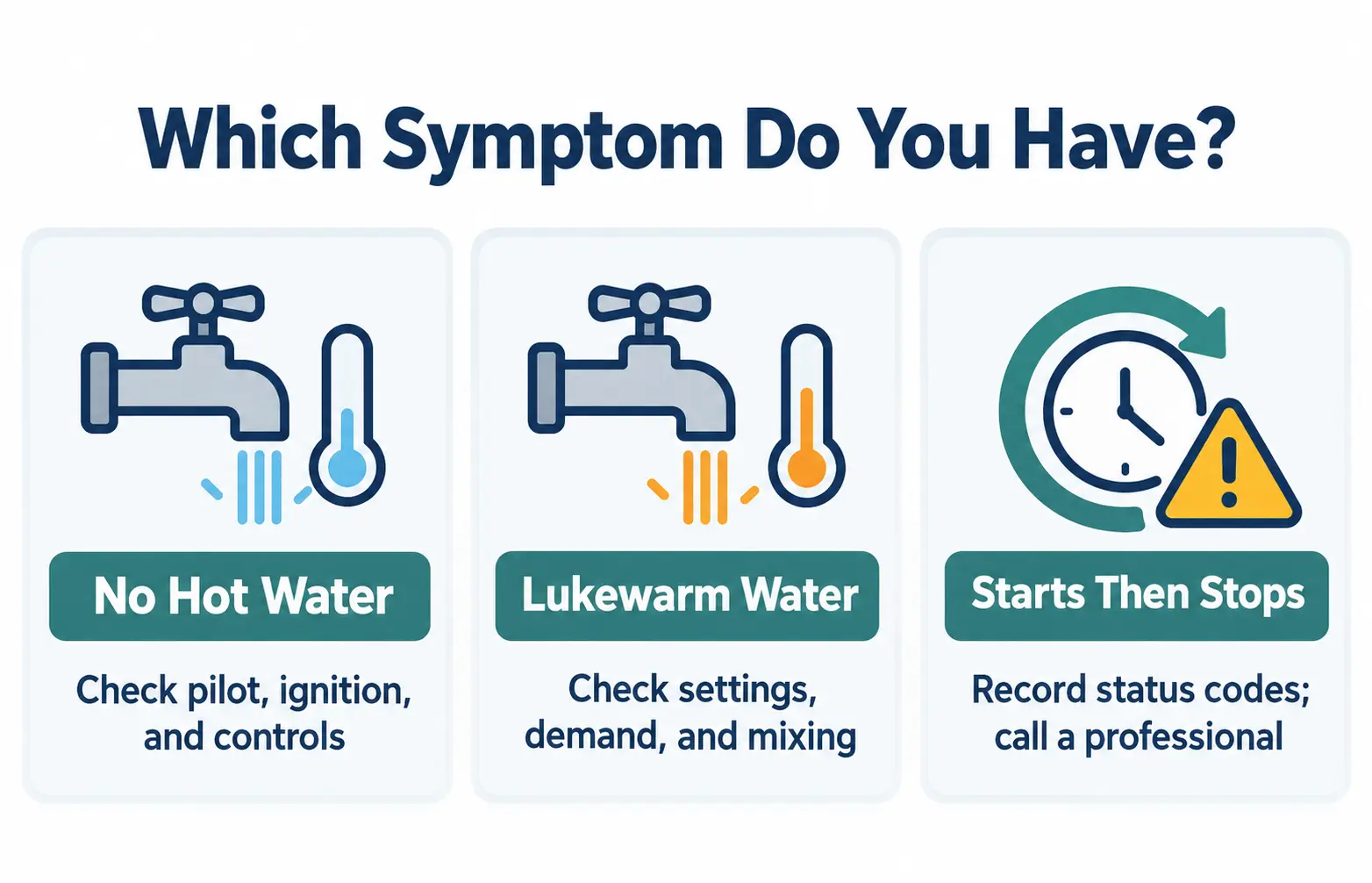
| What you notice | What it may mean | First safe check |
|---|---|---|
| All taps run cold | Heating or ignition may not be operating | Check the temperature setting and model-specific status indicator |
| Pilot is lit, but there is no hot water | The main burner may not be firing when heat is needed; another fault is also possible | Check whether the tank may already be at its set temperature; record any status code |
| Heater starts, then stops unexpectedly | Possible pilot, safety-control, combustion-air, venting, or gas-supply problem | Record the symptom; arrange service rather than repeatedly restarting |
| Water is lukewarm or runs out quickly | Temperature setting, high demand, slow recovery, sediment, or mixing may be involved | Compare multiple fixtures and recent hot-water use |
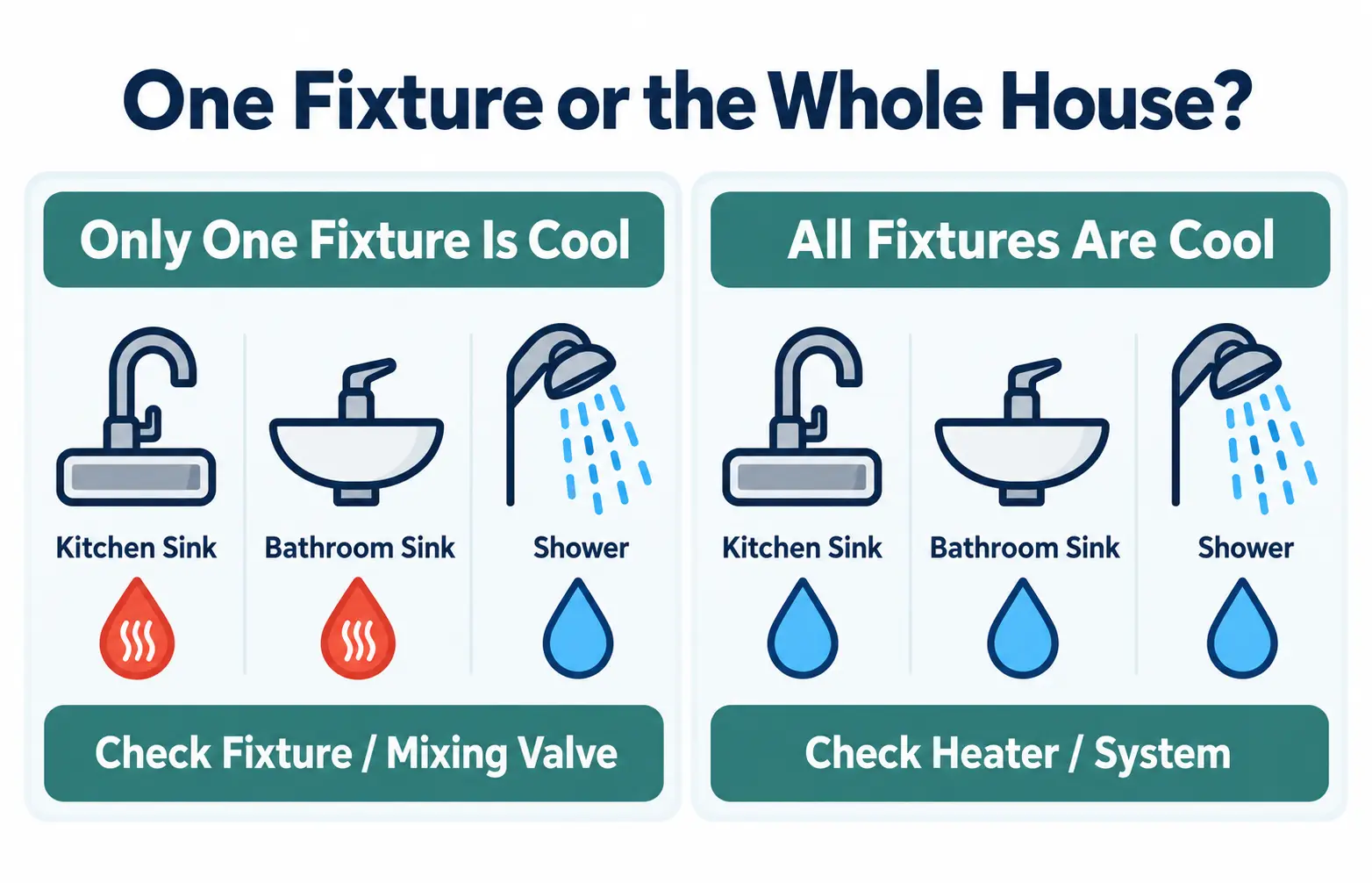
| Only one shower or faucet runs cool | A fixture or thermostatic mixing valve may be the problem | Compare that fixture with another hot-water faucet |
Five safe checks before calling for repair
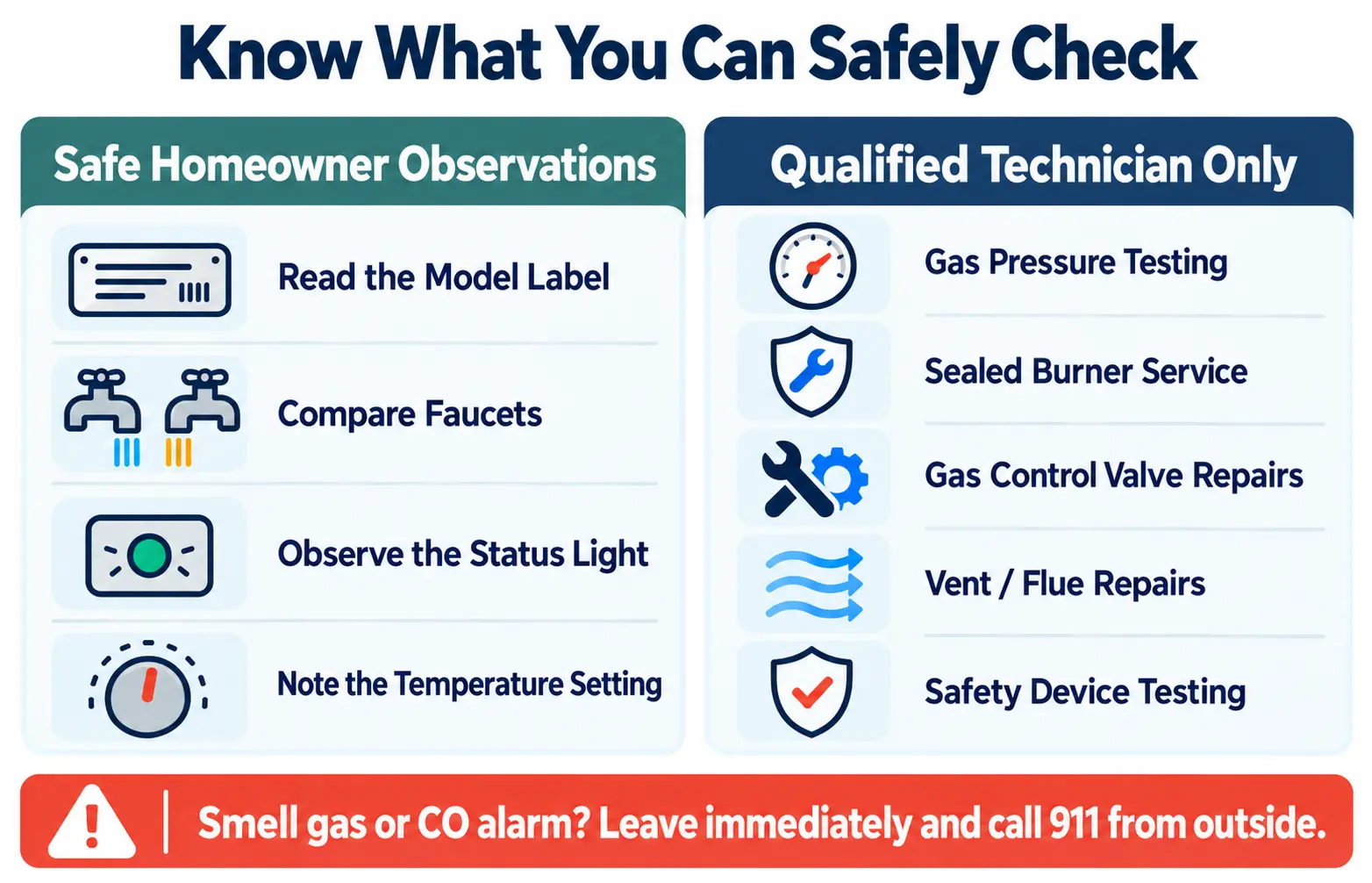
These checks are intended to be non-invasive. Do not open a sealed combustion chamber, disconnect gas tubing, test gas pressure, bypass a safety switch, or remove a gas-control assembly.
1. Identify the heater and ignition type
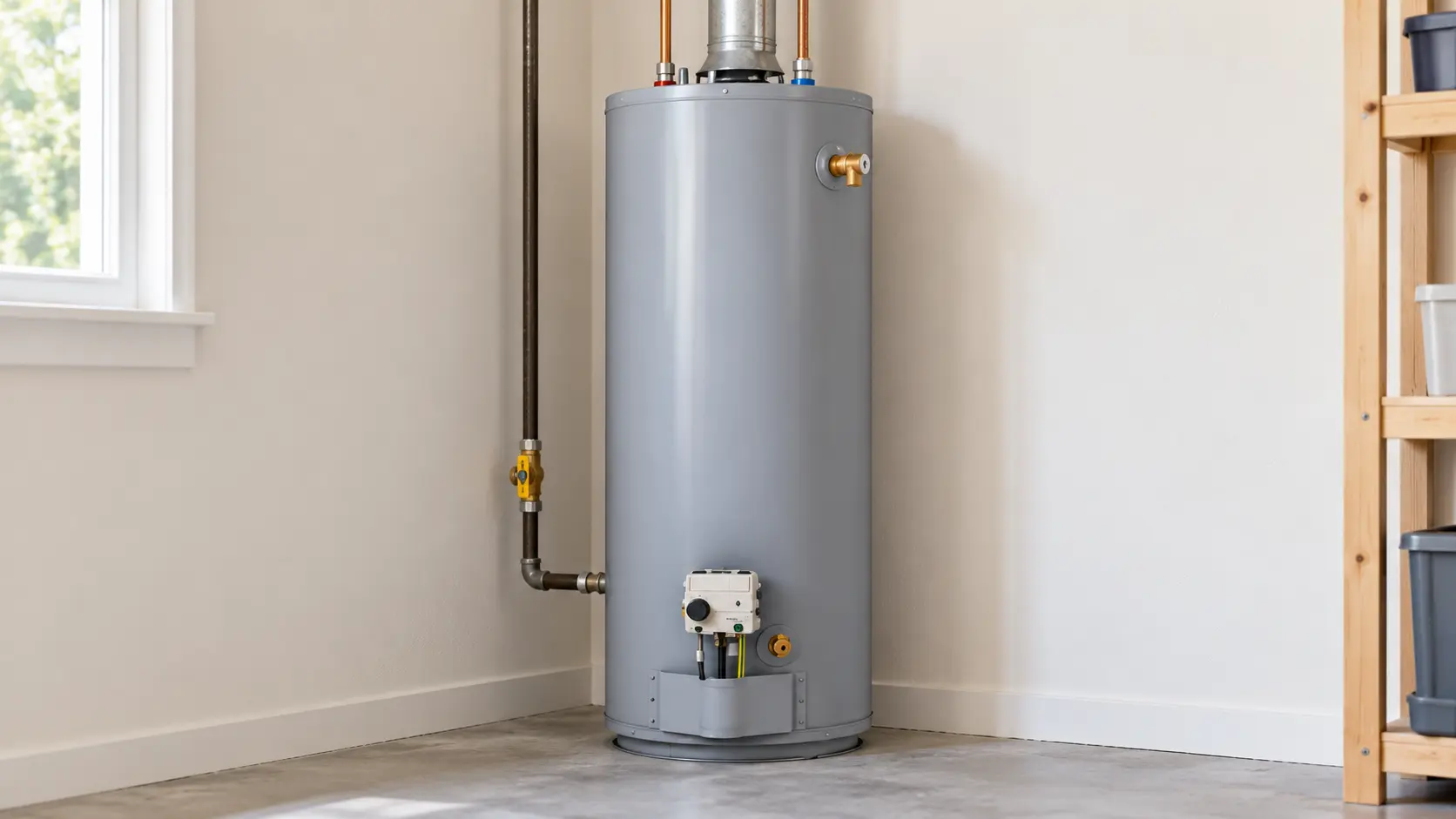
Find the brand, model, and fuel type on the rating plate without moving the appliance. A traditional standing-pilot heater behaves differently from an electronic-ignition or power-vent model. The label and owner's manual take priority over general advice.
2. Compare hot water at several fixtures
Carefully check hot-water performance at a sink and another fixture, avoiding scalding. If one shower is cool but other taps are hot, the shower's mixing control may be at fault. If every fixture is cold, continue investigating the heater and hot-water system.
3. Check the temperature setting
Look for an unexpectedly low or vacation setting. For many homes, 120°F is a common reference point, but dial letters do not necessarily equal exact delivered-water temperatures. Do not turn the control to its highest setting to force a fix: hotter water increases scald risk.
4. Observe the status indicator
If the heater has an accessible sight glass or status LED, observe it from outside and write down the pattern. A flashing light may mean normal operation on one model and something different on another. Look up the exact code in the manual; never use a generic flash-code chart.
5. Look for external warning signs
Without opening the heater, note any visible water pooling, unusual soot, damaged venting, or obviously obstructed exterior air openings. Keep stored items away from the appliance. If you notice signs of unsafe combustion, a damaged flue, or a serious leak, stop using the heater and have it inspected professionally.
If you have an electric water heater rather than a gas model, follow our broader water heater not heating guide. Electric heating elements and reset switches are not the normal troubleshooting path for a conventional gas storage tank.
Why a gas water heater may stop heating
1. The pilot is out or will not stay lit
On a standing-pilot model, a small pilot flame normally provides ignition for the main burner. If the pilot is out, the main burner cannot ignite in the usual way. Possible reasons include an interrupted gas supply, a pilot or igniter fault, or a problem with the flame-sensing system. On some older designs, a thermocouple helps keep the pilot safety valve open; other designs use a thermopile or electronic sensing.
What you can do: Read the lighting label and manual for your exact unit. If the manufacturer explicitly provides a homeowner relighting procedure and there is no sign of a gas or venting hazard, follow that procedure precisely. Never improvise with a match or lighter, remove the sealed burner door, or keep trying after the manufacturer's stated limit. If the pilot will not light or repeatedly goes out, stop and arrange qualified service.
2. The pilot stays lit, but the main burner does not start
A lit pilot does not prove that the water is being heated. The pilot flame and main burner have different jobs: the pilot provides ignition on standing-pilot units, while the main burner supplies the heat needed to recover tank temperature. Conversely, the burner being off can be completely normal when the thermostat is satisfied and the water is already hot.
If the tank is cold and the burner does not come on when heating is required, possibilities include an incorrect temperature setting, insufficient gas supply, a faulty gas-control thermostat, or another model-specific control problem. Bradford White's service troubleshooting chart lists both normal thermostat satisfaction and genuine gas/control faults under this symptom, illustrating why the observation alone is not a diagnosis.
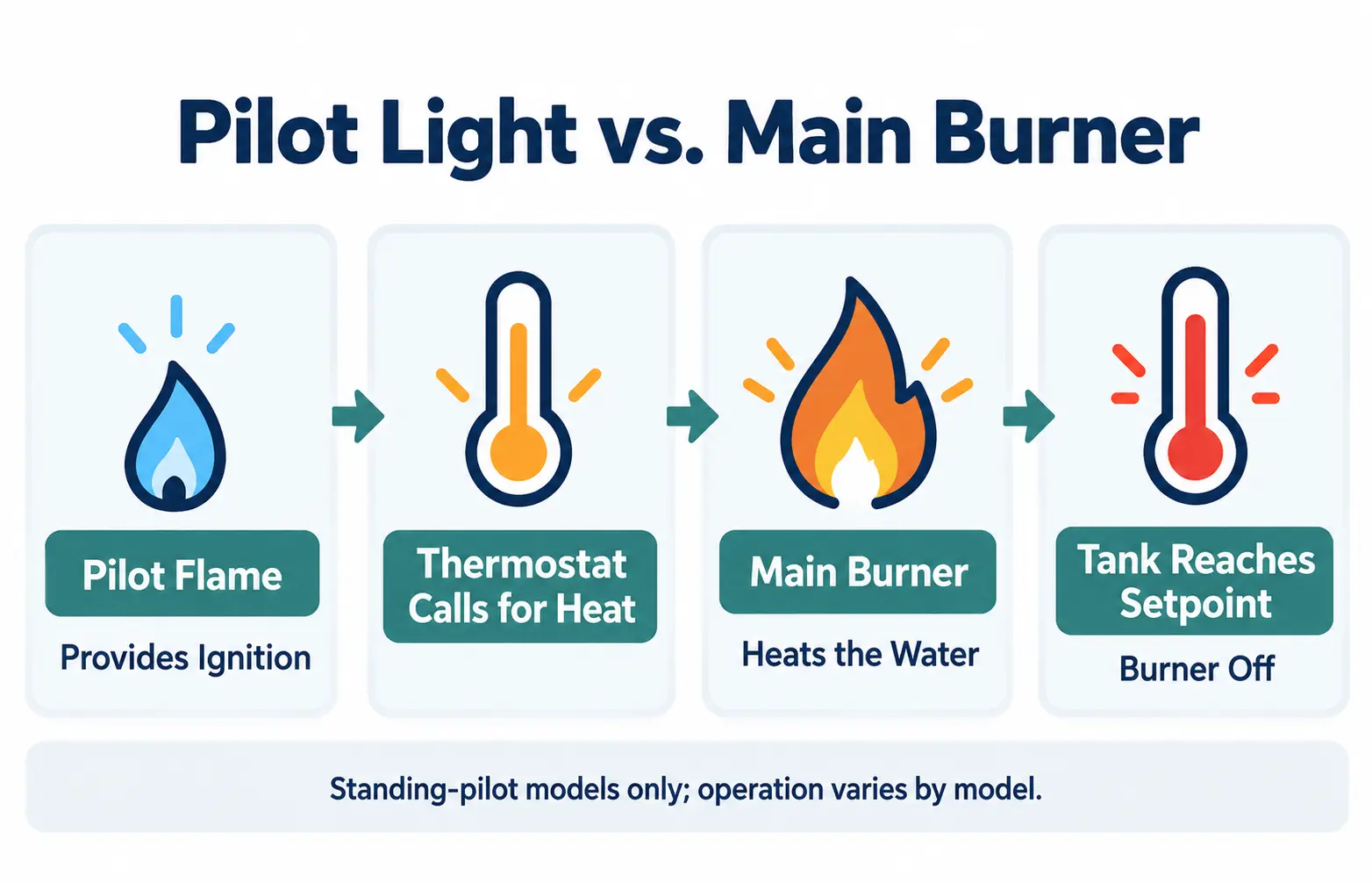
What you can do: Note the control setting and the actual hot-water symptom, then check your model's status instructions. Professional-only: testing inlet/manifold gas pressure, electrical or millivolt signals, and the gas-control valve.
3. The pilot or burner lights, then shuts off unexpectedly
Some heaters appear to start normally, warm the water briefly, and shut down before the tank has recovered. Depending on the model, possible causes include interrupted flame sensing, inconsistent gas pressure, restricted combustion air, a venting problem, or a safety control responding to abnormal conditions. A heater that shuts off because it has reached its set temperature is different from one that repeatedly fails while the water remains cold.
What you can do: Record when the shutdown occurs and any displayed fault code. Do not bypass a thermal switch, defeat a lockout, disassemble a burner, or repeatedly relight a unit that keeps failing. A qualified technician should determine whether the issue involves gas delivery, combustion, venting, or safety controls.
4. The heater is running, but the water is only lukewarm
Sometimes the gas heater is producing heat, but it is not enough to match the home's demand or reach the expected temperature at the faucet. A low temperature setting, unusually high simultaneous use, colder incoming water, an undersized tank, and slower recovery can all contribute. Sediment or lime buildup in an older tank can also reduce performance.
Do not assume sediment has stopped all heating or that replacing the gas valve will solve lukewarm water. A trained plumber may need to compare water temperature, burner operation, tank recovery, and the home's plumbing before identifying the cause.
5. Hot water is being lost or mixed with cold water
A faulty thermostatic shower valve or other mixing control can deliver lukewarm water even when the tank contains properly heated water. A damaged dip tube, reversed hot/cold connections after an installation, or a leak on the hot-water side of the plumbing system may also reduce usable hot water. A. O. Smith notes that a hot-water plumbing leak can make the burner run much of the time while the home receives surprisingly little hot water.
What you can do: Compare more than one fixture and note any visible leaks or constantly running water. If the complaint began immediately after a new installation, tell the installer. Do not disconnect pressurized fittings to test a dip tube or search for hidden leaks inside walls yourself.
What if the gas water heater is not getting hot enough?
When the heater produces some warm water, the pattern of use matters. Was the first shower hot and the third shower cool? Is every faucet lukewarm even after the tank has had time to recover? Or is only one fixture affected?
Hot water runs out after heavy use
Consider tank capacity, simultaneous showers, laundry or dishwashing, incoming water temperature, and recovery time. Allow the heater to recover according to its manual. If the pattern is persistent, a plumber can assess whether the system is correctly sized.
Water never gets more than lukewarm
Compare several fixtures, confirm that the control is not set unusually low, and note whether the main burner seems to operate. A mixing-valve, gas-control, dip-tube, or heating-performance problem may need professional diagnosis.
For many residential applications, the U.S. Department of Energy cites 120°F (49°C) as a common water-heater setting. This is not permission to raise the tank temperature indiscriminately: higher temperatures increase the risk of scald injury, and some installations use mixing valves or have particular water-quality requirements. Follow your equipment manual and seek professional advice for temperature changes beyond normal user controls.
Homeowner checks versus professional repairs
| Generally reasonable homeowner observation | Work for a qualified professional |
|---|---|
| Read the rating plate, lighting label, and owner's manual | Open the sealed combustion chamber or remove the burner assembly |
| Observe an accessible status light or viewing window without removing sealed parts | Test, adjust, or replace gas valves, pilot tubing, thermocouples, thermopiles, or igniters |
| Check normal user-accessible temperature controls | Measure or adjust gas pressure and manifold settings |
| Compare hot water at multiple fixtures and note recent demand | Diagnose or repair hidden hot-water leaks, crossover, dip tubes, or mixing valves that require plumbing disassembly |
| Record error codes and note external signs of water damage or obstruction | Repair vents and flues, test combustion, or reset and bypass safety devices |
A service manual may describe component tests and replacements in detail. That does not make those procedures appropriate for a homeowner. For example, Bradford White identifies its Defender service guide as intended only for qualified service providers.
When should you stop and call a professional?
- Emergency: You smell gas, hear a suspected gas leak, or a CO alarm sounds. Evacuate and contact emergency services or the gas utility from a safe place.
- Urgent inspection: You see soot, suspect damaged venting, or notice repeated flame loss or unexplained safety shutdowns.
- Service visit: The pilot will not stay lit, the main burner will not start despite a cold tank, or a model-specific fault code persists.
- Plumbing diagnosis: Several fixtures remain lukewarm despite adequate recovery time, the burner operates frequently with little hot water, or you suspect a mixing or hidden leak problem.
- Leak concern: Water collects around the tank or a fitting, or the temperature-and-pressure relief discharge produces unusual amounts of very hot water. Never block the discharge pipe. For an exterior tank leak, see our water heater leaking guide.
When contacting a professional, provide the heater's brand and model, whether it uses natural gas or propane, the observed status-light pattern, which fixtures are affected, and whether the water is completely cold or merely lukewarm. Those details are more useful than guessing which part needs replacement.
Prevent another no-hot-water problem
Schedule periodic water-heater inspection and maintenance according to the manufacturer's instructions. The CDC recommends annual service of fuel-burning equipment by a qualified technician. Keep the area around the heater clear of combustible storage, maintain working CO alarms, and have any venting or recurring ignition problem examined rather than concealed or bypassed.
If you notice rumbling, slower recovery, or reduced hot-water capacity, ask a professional whether tank maintenance or sediment assessment is appropriate for your model and water conditions. Do not remove a burner or open a sealed combustion door to clean sediment or inspect a pilot assembly.
Frequently asked questions
Why is my gas hot water heater not heating water even though the pilot is on?
The pilot may be lit while the main burner is off. That can be normal when the tank has reached its temperature setting, but it can also indicate a heating-control or gas-supply problem when the tank is still cold. Check the user setting and any model-specific status code; leave gas-control testing to a professional.
Why does my gas water heater get hot and then turn cold?
If the water turns cold after multiple showers, the household may be using hot water faster than the tank can recover. If heating repeatedly stops unexpectedly, a pilot, ignition, safety-control, gas-supply, or venting problem may be involved. Compare the timing and stop trying to restart a heater that repeatedly fails.
Can a gas water heater work without electricity?
Some conventional standing-pilot gas storage heaters do not need household electricity for their basic heating cycle. However, power-vent models, electronic ignition systems, and gas tankless heaters may require electrical power. Check the requirements of your particular model before assuming a power outage is irrelevant.
Should I replace the thermocouple if the pilot keeps going out?
Not based on that symptom alone. Some standing-pilot systems use a thermocouple, while others use a thermopile or different electronic sensors. Gas supply, airflow, venting, and safety-device faults can produce similar symptoms. A qualified technician can test the correct system before replacing parts.
Can a broken shower valve make the water heater seem faulty?
Yes. A malfunctioning shower or thermostatic mixing valve can deliver cool water even while the storage tank holds hot water. Comparing temperatures at other fixtures is one of the simplest ways to identify a possible fixture-level problem.
The bottom line
If your gas water heater is not heating, first determine whether you have an emergency, a heater that is not firing, or hot water that is being used, lost, or mixed before it reaches the faucet. Safe observations such as checking the user temperature setting, reading the model's status indicator, and comparing fixtures can narrow the problem. Gas controls, burner assemblies, venting, and safety-device repairs belong with a qualified professional.
Manufacturer and safety references
References support general troubleshooting principles. Lighting instructions, fault codes, and repair procedures vary by model; always consult the manual for your installed water heater.
- A. O. Smith — Residential Gas Water Heater Use and Care Guide (PDF), especially the troubleshooting section.
- A. O. Smith — Technical Bulletin 35: Not Enough Hot Water (Gas).
- Rheem — Water Heater Technical Bulletins, including Bulletin 1405 for standing-pilot gas troubleshooting.
- Bradford White — Defender Safety System Service Manual (PDF; professional service reference).
- American Gas Association — Using Natural Gas Safely.
- CDC — Carbon Monoxide Poisoning Basics.
- U.S. Department of Energy — Residential Water Heater Temperature Guidance.