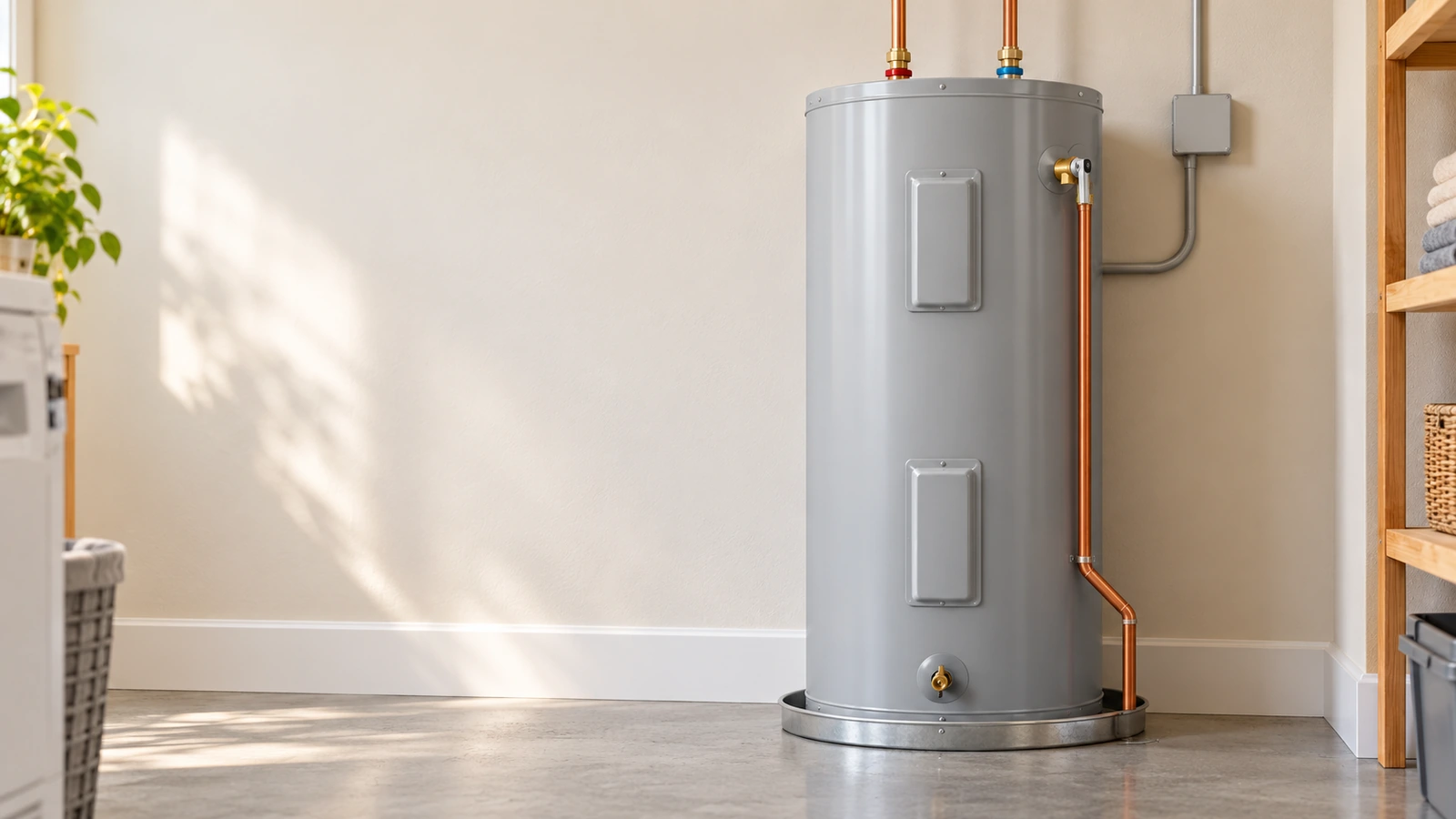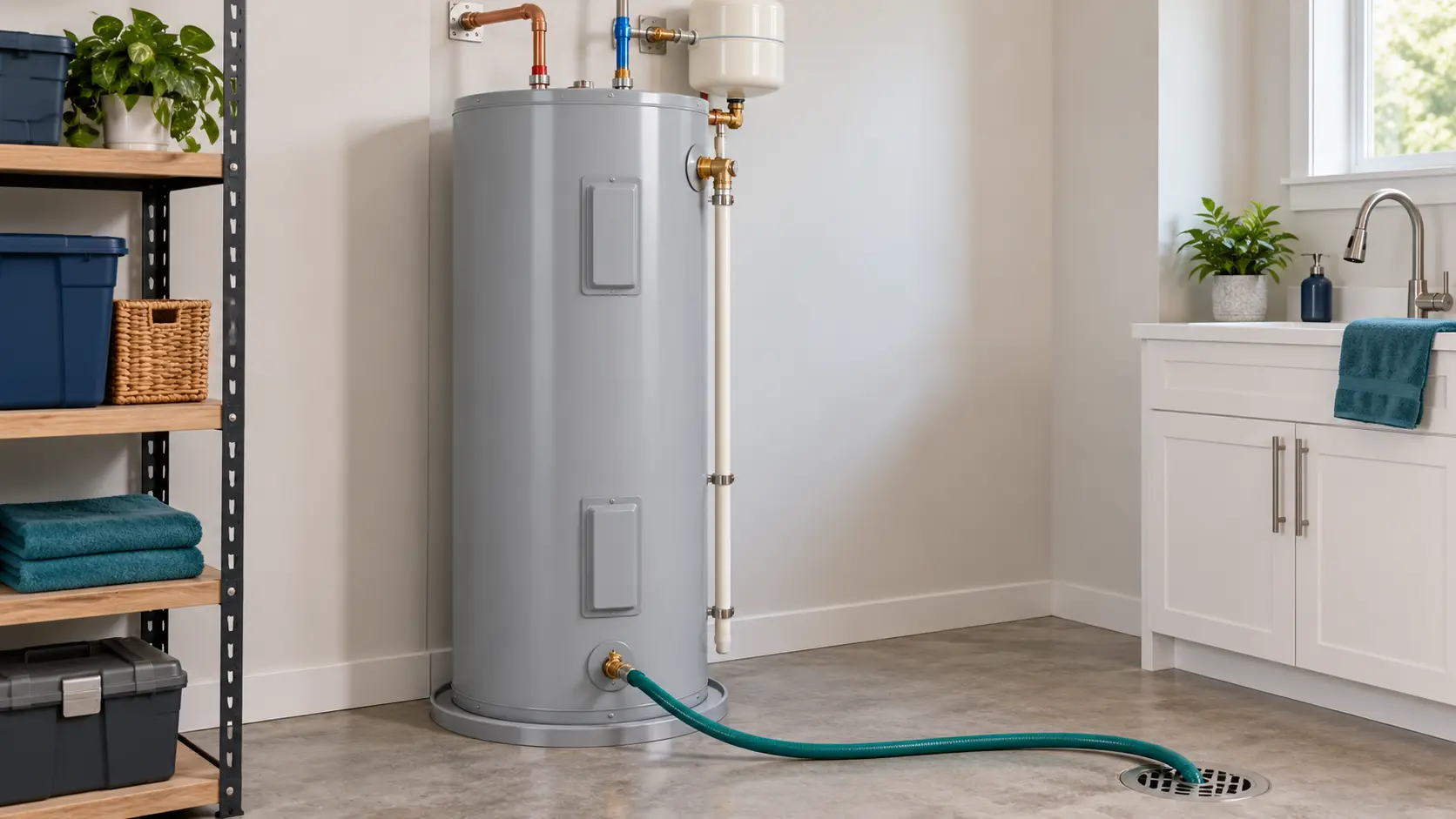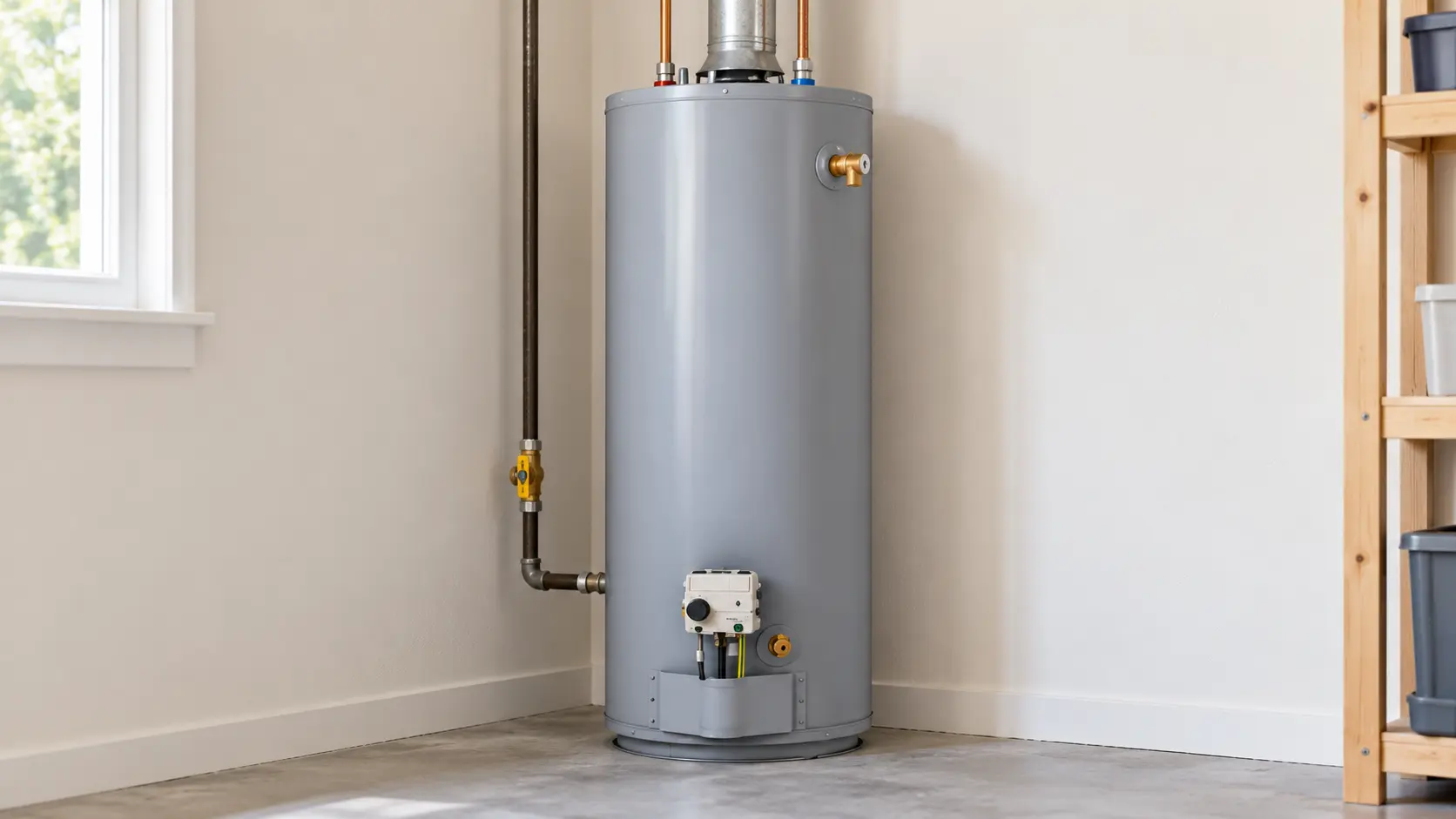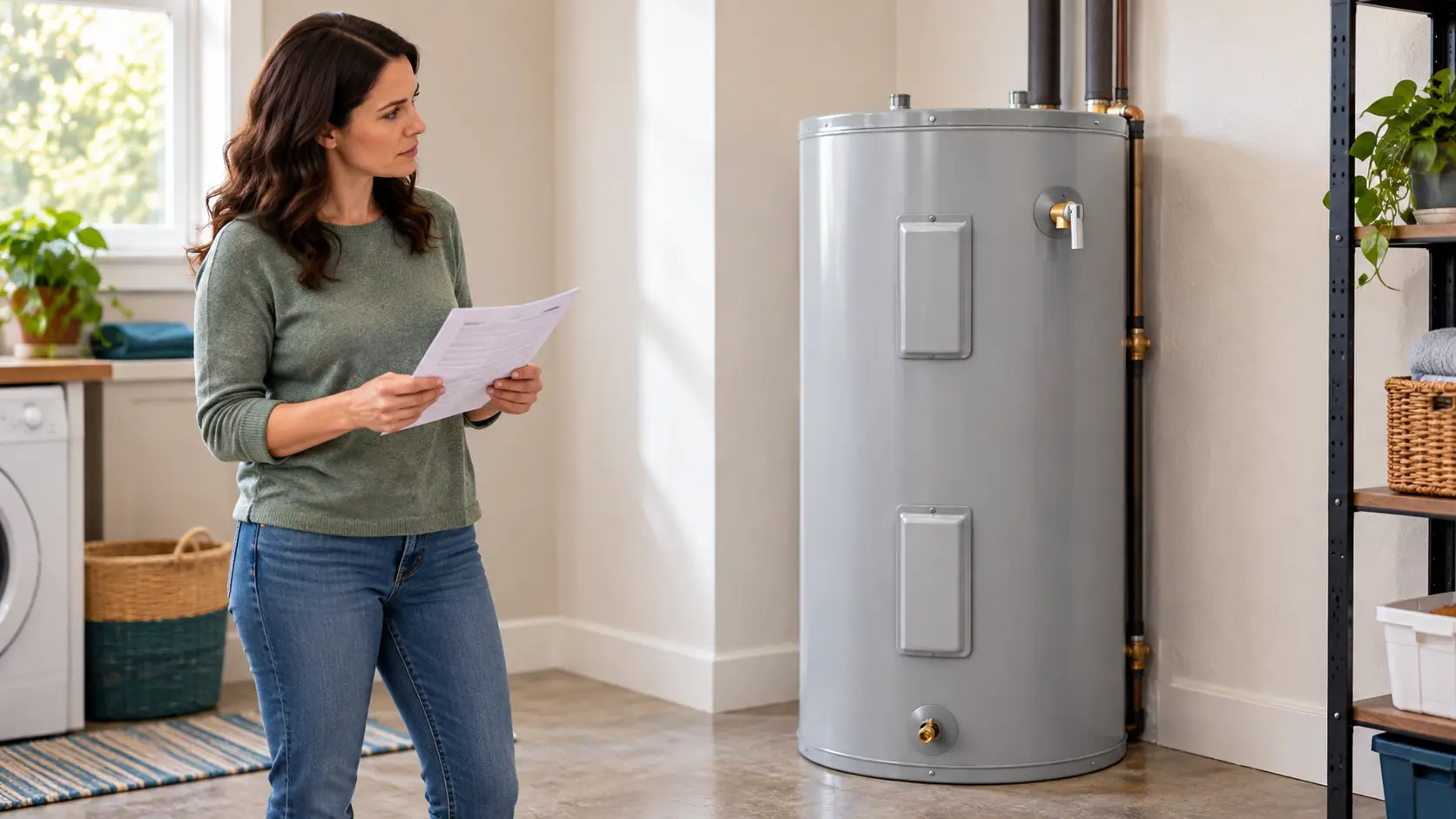
If your new water heater is not heating, the first question is whether it has ever produced hot water since installation. A brand-new electric tank that stays completely cold may have a power or installation-startup problem; a unit that delivers only lukewarm water may need more initial heating time or may have a different issue. Gas, hybrid, and tankless models have their own startup requirements.
Quick answer: what should you do first?
Check whether the problem affects every hot-water faucet, note how long the unit has been operating, and look for an error message on an accessible external display. Do not open panels, test wiring, or attempt gas repairs. If the tank's fill status or proper commissioning is uncertain, do not energize it just to see whether it works. For a heater that has never worked since installation, contact the original installer promptly.
Manufacturer context: A. O. Smith's new-installation no-hot-water guide identifies loss of electric power and dry-fired heating elements as possible explanations for a newly installed electric tank with no hot water at all.
1. Stop here if you notice a safety warning sign
Get to safety before troubleshooting
- Smell gas: leave the building immediately. Do not use switches, appliances, flames, or a phone inside. From a safe place, contact the gas utility or emergency services.
- Carbon monoxide alarm or suspected exposure: get everyone outside and contact emergency services. Carbon monoxide has no smell; headache, dizziness, nausea, and confusion can be warning symptoms.
- Water near electrical equipment, sparks, smoke, or burning odor: keep clear and have the installer or an appropriate professional make the system safe.
- Active leaks, unusual hot discharge from a relief line, or a repeatedly tripping breaker: stop testing. Never block a temperature-and-pressure relief discharge or repeatedly reset a tripped breaker.
See the American Gas Association's gas-safety guidance and the CDC's carbon monoxide guidance. If there is an immediate danger, do not continue with the checks below.
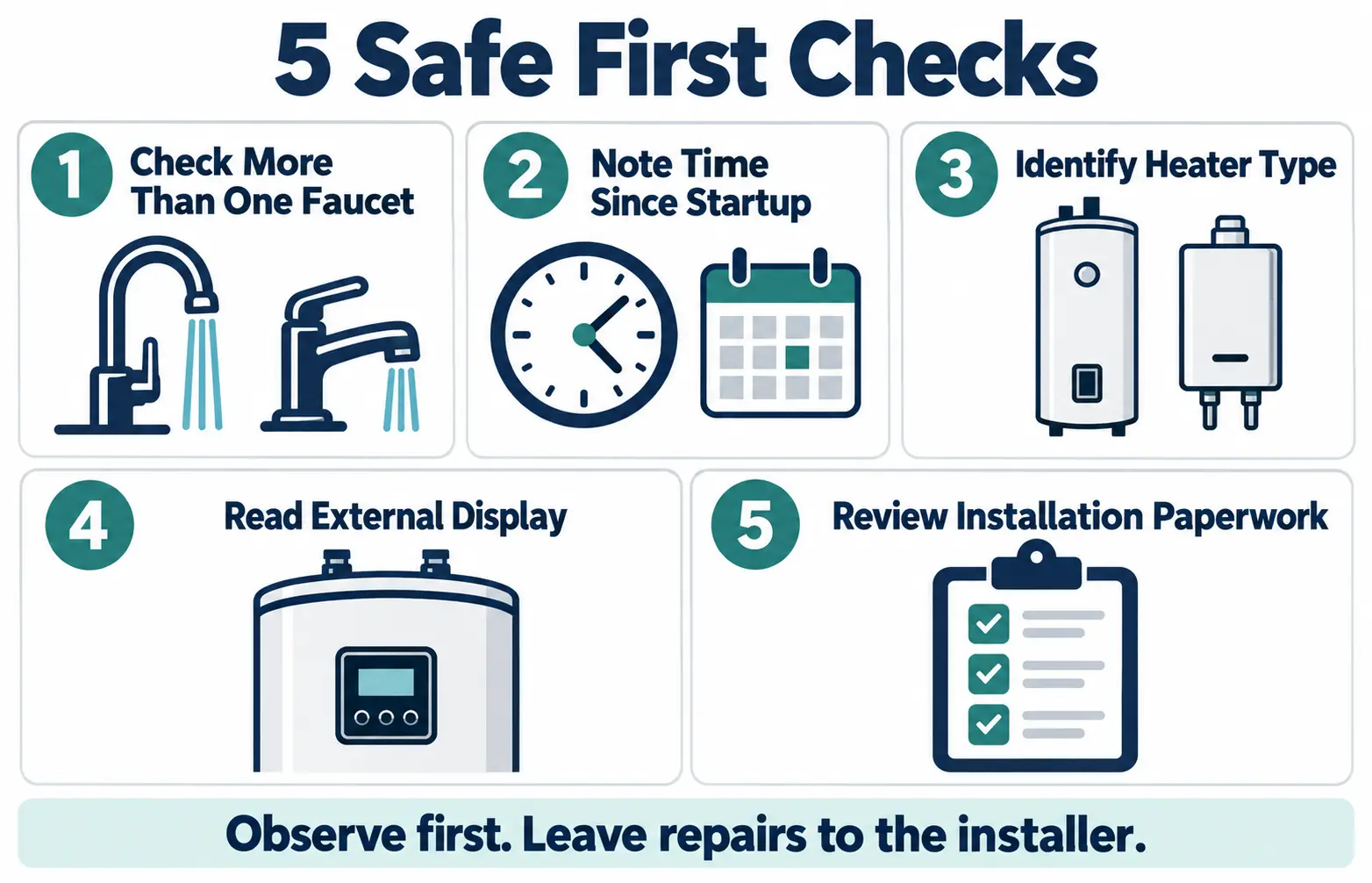
2. Five safe first checks for a newly installed water heater
These are observations, not instructions to service an electrical, gas, or pressure system. Follow the documentation for your exact model and the installer's handover instructions.
Check 1. Try more than one hot-water fixture
Carefully test a kitchen or bathroom faucet and another fixture. If one shower stays cold while other taps get hot, a shower cartridge or mixing-valve issue may be involved. If every hot tap is cold, the heater or shared hot-water system deserves more attention. Avoid scalding water during checks.
Check 2. Record when the unit was first started
A newly filled storage tank is not instantly ready. Ask when the installer confirmed startup, whether the heater has completed its expected initial heating cycle, and whether anyone has used significant hot water since then.
Check 3. Identify the exact water-heater type
Is it an electric storage tank, gas storage tank, hybrid heat-pump tank, or tankless system? Read the model label only if safely accessible. A gas pilot discussion does not apply to most electric tanks, and a tankless flow issue does not explain every storage-tank problem.
Check 4. Observe external controls and indicators
If the model provides a normal user-facing screen, note the displayed mode, temperature setting, warning, or code. You may inspect the position of an accessible, clearly labeled breaker from a safe location, but do not switch power on unless the installer has confirmed the tank is fully filled and startup is safe. Do not open covers or electrical panels.
Check 5. Compare the handover instructions with what you see
Review the owner's manual and installation paperwork for expected warm-up behavior, an approved homeowner-facing operating mode, and any displayed alert. If the heater is newly installed but never worked, ask the installer to finish or verify the commissioning procedure rather than experimenting with hidden resets or fuel controls.
3. Match the symptom before guessing at the cause
“Not heating” can describe several different conditions. The distinction helps your installer narrow down the right checks.
| What you notice | Possible explanation | Best next step |
|---|---|---|
| No hot water at any tap since installation | Startup or power not completed; on an electric tank, an installation-related element problem is another possibility | Confirm installation time and call the installer if no proper initial heat-up occurs |
| Water is warm, but never truly hot | Initial recovery, user-facing mode, temperature control, or plumbing/mixing issue | Check the manual's expected operating behavior and report all-fixture temperatures |
| Hot water arrives but runs out quickly | Demand exceeds capacity, incomplete recovery, mixing problem, or a component issue | Note the first-use duration and what else was running |
| Only one faucet or shower stays cold | Local faucet/shower mixing problem rather than a heater-wide failure | Compare other fixtures and ask for a fixture-level inspection |
| It worked for days or weeks, then stopped | Newly developed electrical/control/fuel issue, water-quality concern, or another fault | Record when performance changed; do not assume the new unit is defective |
| External error or repeated breaker trip | Model-specific fault or electrical problem | Record the exact indication and contact qualified service |
Possible explanations are not diagnoses. For example, Whirlpool's water-heater support discusses fixture mixing, demand, and heating controls as different reasons for insufficient hot water.

4. How long should a new water heater take to heat up?
There is no universal wait time. Tank size, incoming water temperature, heating capacity, fuel type, control mode, and how much hot water is being used all matter. A tankless heater works differently from a tank that must warm a stored volume of water.
For one residential electric tank family, an A. O. Smith installation manual explains that a cold tank can take several hours to heat. Its troubleshooting timing belongs to that manual; it should not be applied to every model. Hybrid heat-pump operating modes can also affect recovery behavior.
5. Installation-related causes worth asking about
Installation mistakes are one possibility, not a conclusion. The original installer is best positioned to verify work performed during setup.
Power supply or electrical connection
A new electric tank may not have received the correct supply, or a breaker may be off or tripped. The installer should verify supply and wiring safely. Homeowners should not probe terminals or remove access covers.
Heating element damaged by dry firing
On some electric storage heaters, energizing the element before the tank is full can damage it. A. O. Smith specifically identifies this new-installation failure mode. Do not try to replace or test an element yourself.
Water lines or hot-water mixing
Incorrect hot/cold connections, a plumbing crossover, or a faulty mixing valve may make delivered water cooler than expected. A single affected shower may point to the fixture rather than the new heater.
Incomplete gas commissioning
For a gas heater, ignition, gas supply, controls, and venting must be verified under the exact manufacturer's instructions. These are installer/service tasks; do not purge a gas line or modify a vent.
Unexpected operating mode or error
Some hybrid and electronically controlled units display operating modes and fault codes. The meaning depends on the exact model, so record the code rather than relying on a generic code list.
Water demand or capacity mismatch
If the water starts hot but runs out quickly, simultaneous showers or appliances might exceed the system's delivery capacity. This differs from a tank that has never heated at all.
6. What changes by water-heater type?
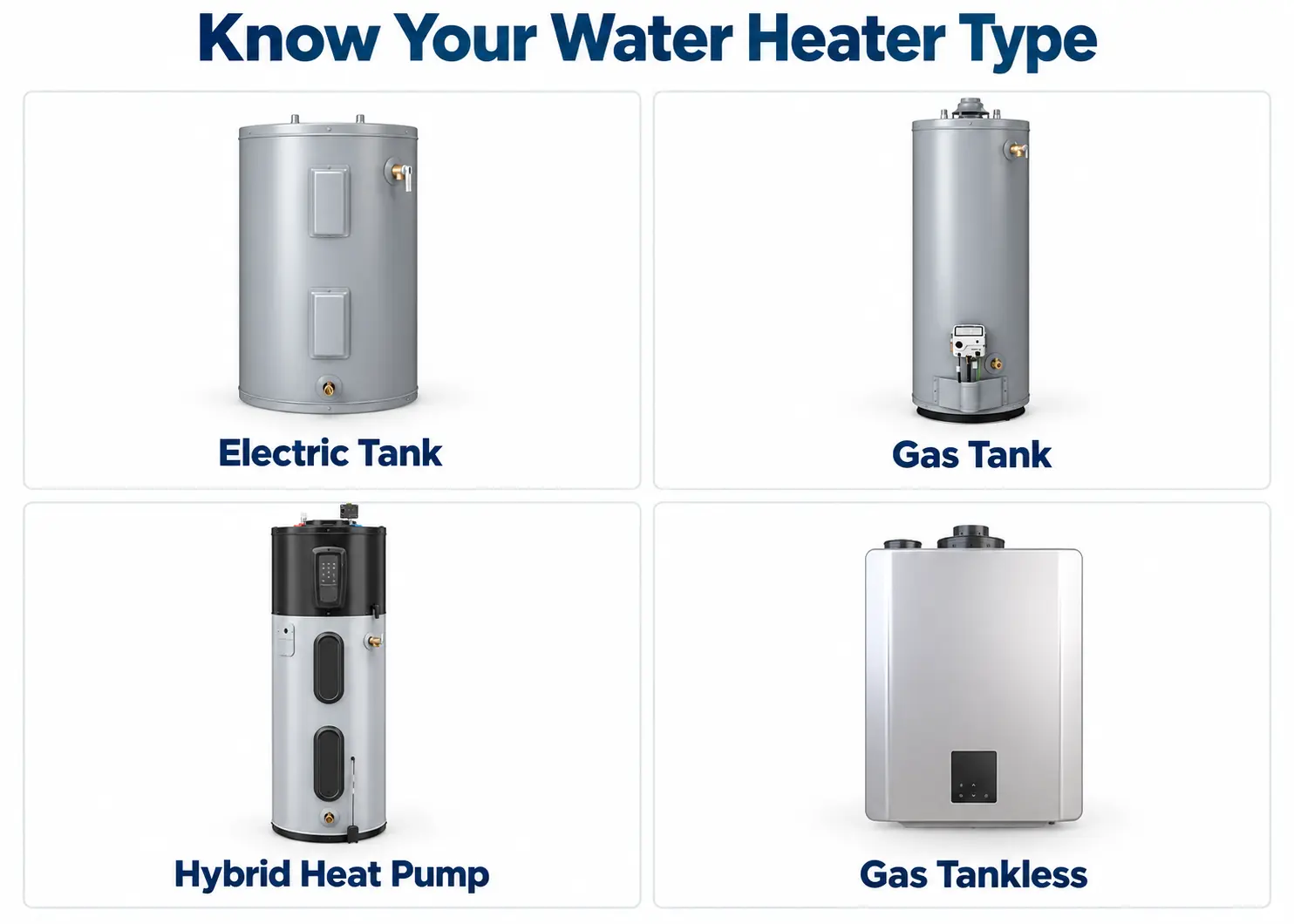
New electric tank water heater not heating
If a brand-new electric storage tank has never delivered any hot water, the first installation questions concern correct electrical supply, a fully filled tank before energizing, and whether the heater completed its heating cycle. A. O. Smith lists no power and a dry-fired upper element among the likely explanations for a specific new-installation no-hot-water scenario. Other controls or plumbing issues may also be involved.
Do not operate an uncertain installation to “test” it. Have the installer verify tank fill, wiring, safety controls, and heating elements. Rheem's electric-heater manual directs repairs involving wiring, thermostats, elements, or safety devices to qualified personnel.
New gas tank water heater not heating
Gas water heaters may have an external status light, an electronic control, a pilot assembly, or other model-specific ignition arrangements. Record what the outside indicator shows and compare it with the unit's own manual. The installer should confirm correct gas startup and venting.
Do not use a random relighting procedure found online: ignition and safety steps differ among models. For broader gas-water-heater symptoms after normal operation, see our gas water heater not heating guide.
New hybrid heat-pump water heater not heating
Hybrid heaters combine a storage tank with additional heat-pump controls, operating modes, and installation requirements. Inspect only the normal user-facing display or app and record the exact mode and error code. Do not assume that a fault number has the same meaning across brands.
As a model-specific example, a Bradford White hybrid installation manual documents a particular startup code for an incompletely filled tank and another for incorrect incoming voltage. Those codes are not universal, and correction belongs to the installer.
New tankless water heater not heating
A tankless unit must detect sufficient hot-water flow and satisfy its own ignition and operating conditions. If the hot tap is barely open, a unit may not activate. Rinnai, for example, documents a minimum activation flow for some gas tankless models; the exact threshold depends on the model.
Record any external error code and whether the problem changes at different fixtures. The installer should verify commissioning, water flow, power, fuel supply where applicable, and venting. Never alter gas connections or defeat safety controls to force ignition.
7. What if the new heater worked at first, then stopped?
A water heater that worked for a few days or weeks but later stopped belongs in a slightly different branch from a heater that never started. Record the date of the first successful hot-water use, when the trouble began, whether an alert appeared, and whether the issue affects one fixture or the whole house.
Early failure can involve installation, a component fault, controls, a change in electrical or fuel supply, or other factors. Age alone does not establish the cause. Deposits on a removed element, for example, do not establish whether dry firing, water chemistry, or another factor caused a failure. Have the installer or manufacturer-authorized service provider diagnose it rather than replacing parts by guesswork.
8. When to call the installer—and what to say
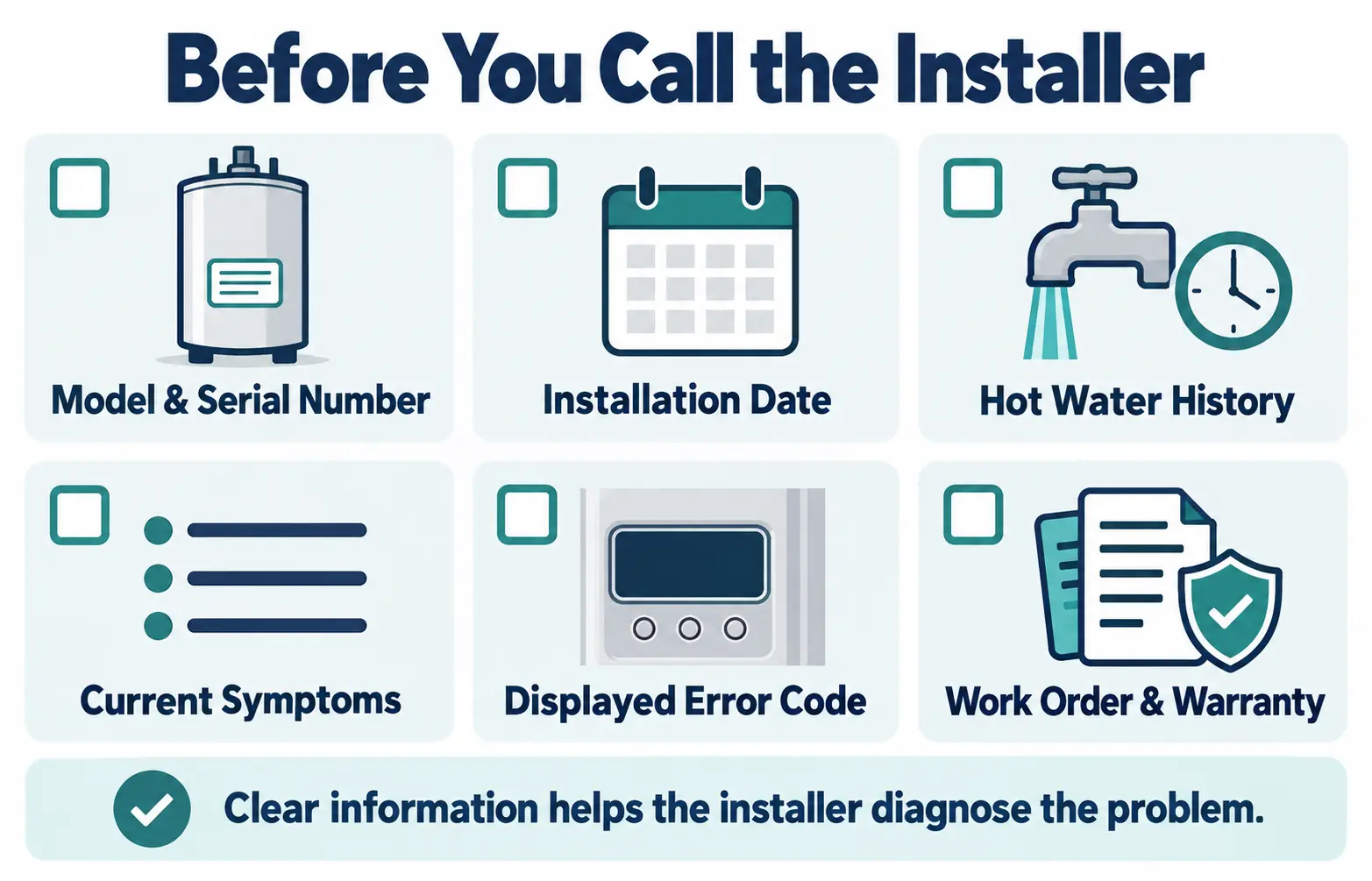
Contact the original installer promptly if the unit never delivered hot water after the expected model-specific startup period, has an error that you cannot resolve using ordinary user controls, shows unsafe symptoms, or failed soon after replacement. For an urgent gas/CO emergency, follow the evacuation guidance above instead of waiting for a callback.
Have these details ready
- Manufacturer, model, serial number, and heater type
- Installation date and installer contact
- Whether hot water ever worked
- Cold everywhere, lukewarm, brief supply, or one cold fixture
- Time since startup and recent water use
- Exact external error or status indication
- Receipt, work order, warranty documents, and any safe photos
Ask the installer to verify
- The model's startup and handover procedure was completed
- A storage tank was properly filled and air purged before energizing
- Electrical supply and controls, where applicable
- Hot/cold piping, mixing, and hot-water delivery
- Gas/ignition/venting or tankless-flow commissioning, if applicable
- Any recorded fault and the correct service path
- Whether an installer callback or manufacturer warranty claim applies
Frequently asked questions
Why is my brand-new electric water heater completely cold?
Possible new-installation causes include no electrical power, a heater that was energized before the tank was full, or a controls/wiring issue. A qualified installer should confirm the cause. Do not remove covers, measure live voltage, or replace elements yourself.
Should I wait longer for hot water after a water-heater replacement?
A newly filled storage tank may require an initial heating period, sometimes several hours for certain electric models. The time varies with the appliance and operating conditions. Ask when commissioning was completed and check the exact owner's manual rather than relying on a universal countdown.
Does a new water heater need to be reset?
Not as a routine solution. Some heaters have safety cutoffs or user-facing fault acknowledgments, but internal reset buttons and fault causes vary. A tripped safety control can signal a condition that needs investigation. Follow model-specific owner instructions and contact the installer instead of repeatedly resetting anything.
Can I relight the pilot on a newly installed gas water heater?
Only use the procedure for your exact unit if the manufacturer expressly identifies it as an appropriate owner operation and no warning condition exists. For a new installation that never operated correctly, contacting the installer is preferable. Never improvise ignition, gas-line purging, or gas-control adjustments.
Why is my new water heater only making lukewarm water?
The tank may still be recovering from initial startup, a mode may limit recovery, household demand may be high, or a mixing/plumbing problem may be involved. Compare several fixtures; do not simply raise the temperature, which may create a scald risk.
Why is my new heater hot at the kitchen sink but cold in the shower?
A single-fixture problem can involve the shower's mixing valve or cartridge rather than the new heater. Note which fixtures work and have the responsible professional examine the affected fixture.
Can a new water heater stop heating after only a few weeks?
Yes. A recent installation does not eliminate the possibility of a control, supply, component, or installation issue. Document when the symptom changed and request a diagnosis; do not assume that scale, a defective tank, or installer error is proven from the unit's age alone.
Who should I call first—the installer or the manufacturer?
The original installer is generally the practical first contact when the heater never worked after installation or when a handover issue is suspected. The manufacturer can help with model documentation and warranty eligibility. If a gas leak or CO emergency is suspected, seek emergency assistance immediately instead.
Manufacturer manuals and safety references
These references support the technical explanations. Water-heater instructions, startup requirements, and error codes vary by model; use the documentation supplied with your unit for operation or service decisions.
- A. O. Smith — No hot water after a new installation
- A. O. Smith — Residential Electric Water Heater Installation and Use & Care Guide (PDF)
- Rheem — Residential Electric Water Heater Use & Care Manual (PDF)
- A. O. Smith — Residential Gas Water Heater Use & Care Guide (PDF)
- Bradford White — Hybrid Electric Heat Pump Water Heater Manual (PDF)
- Rinnai — Tankless water heater questions and minimum-flow behavior
- Whirlpool Water Heaters — Not enough hot water
- American Gas Association — Using Natural Gas Safely
- CDC — Carbon Monoxide Poisoning Basics
This guide provides homeowner education, not a substitute for a model-specific manual or evaluation by a qualified installer or service technician.