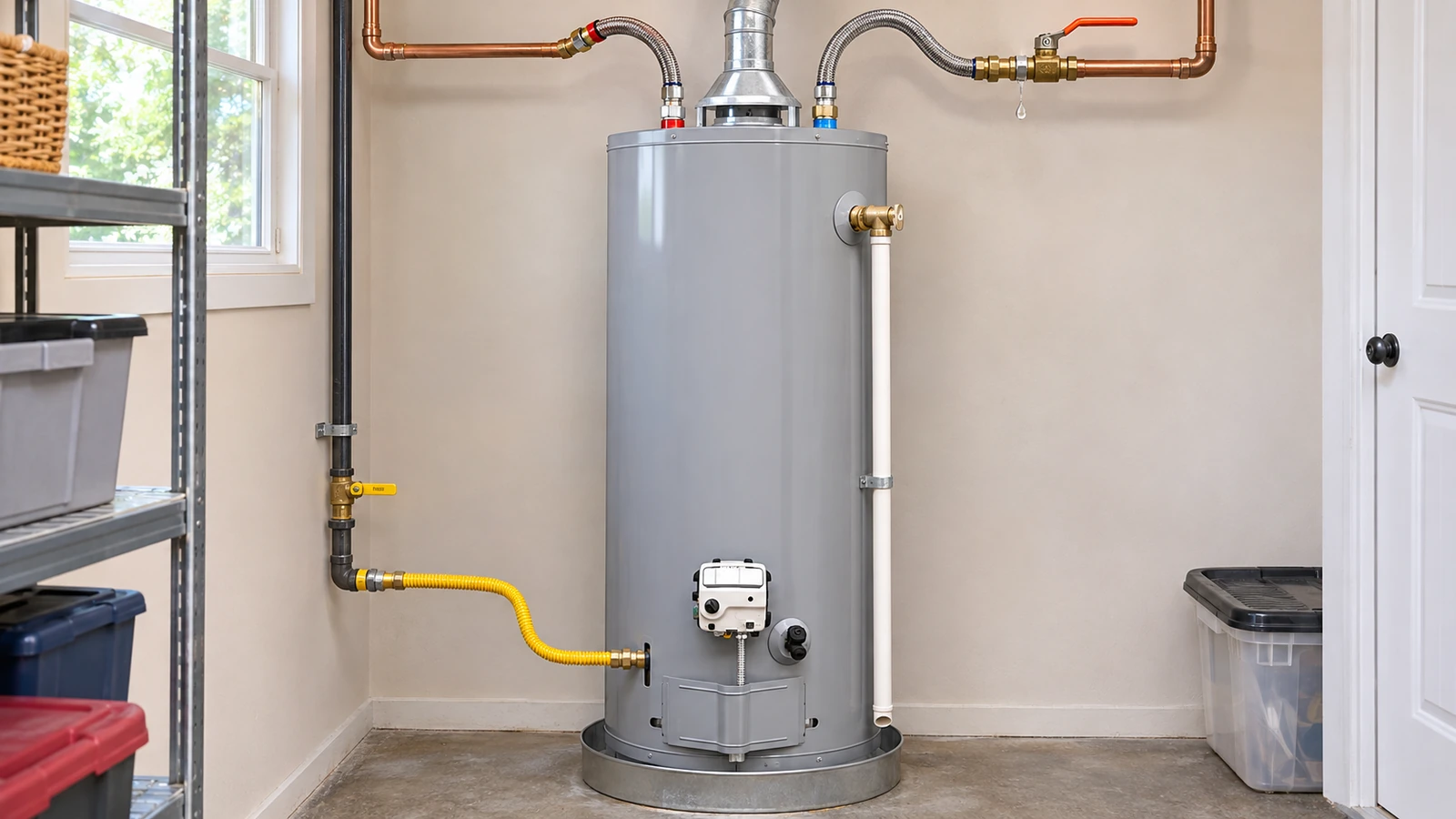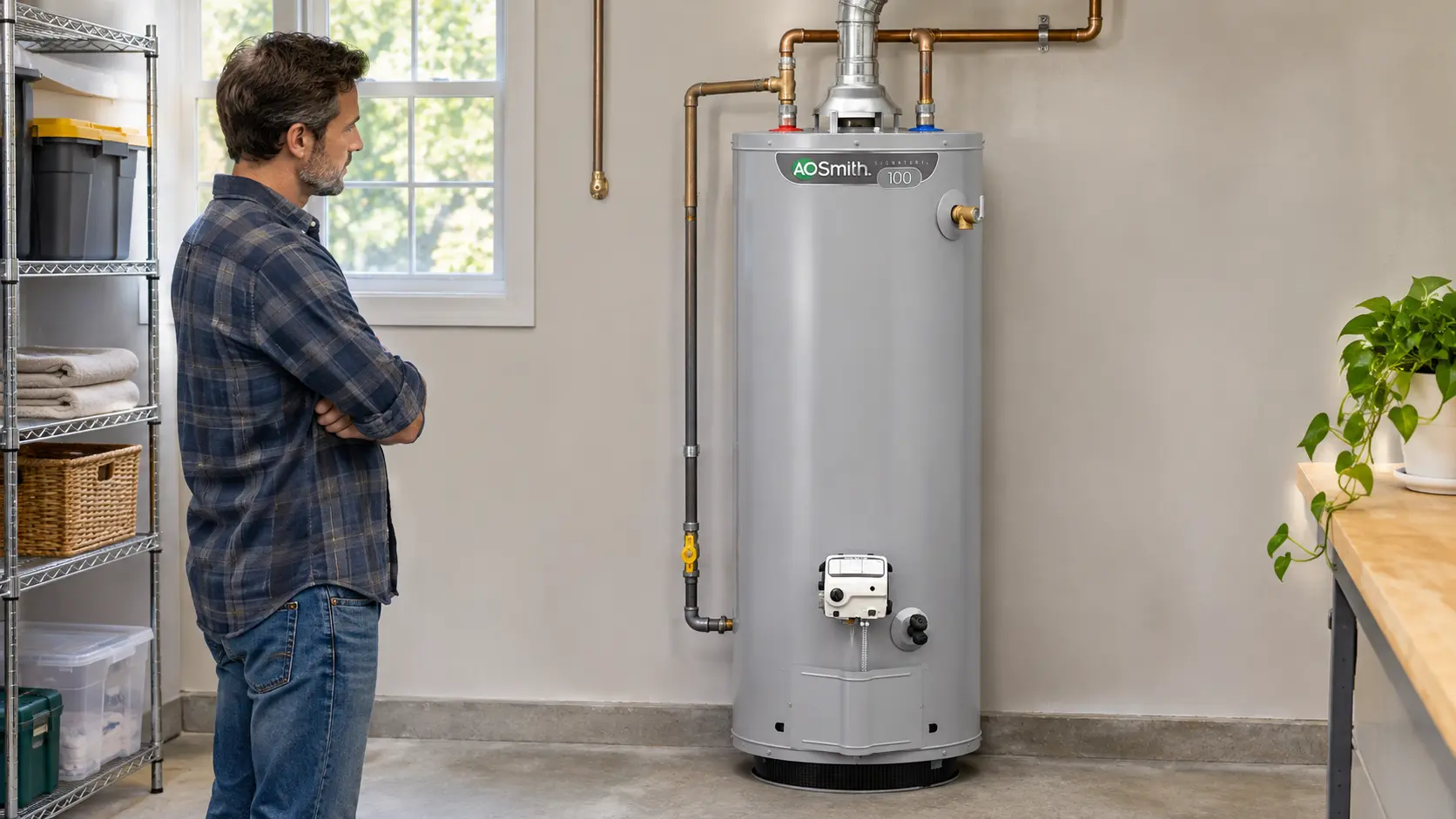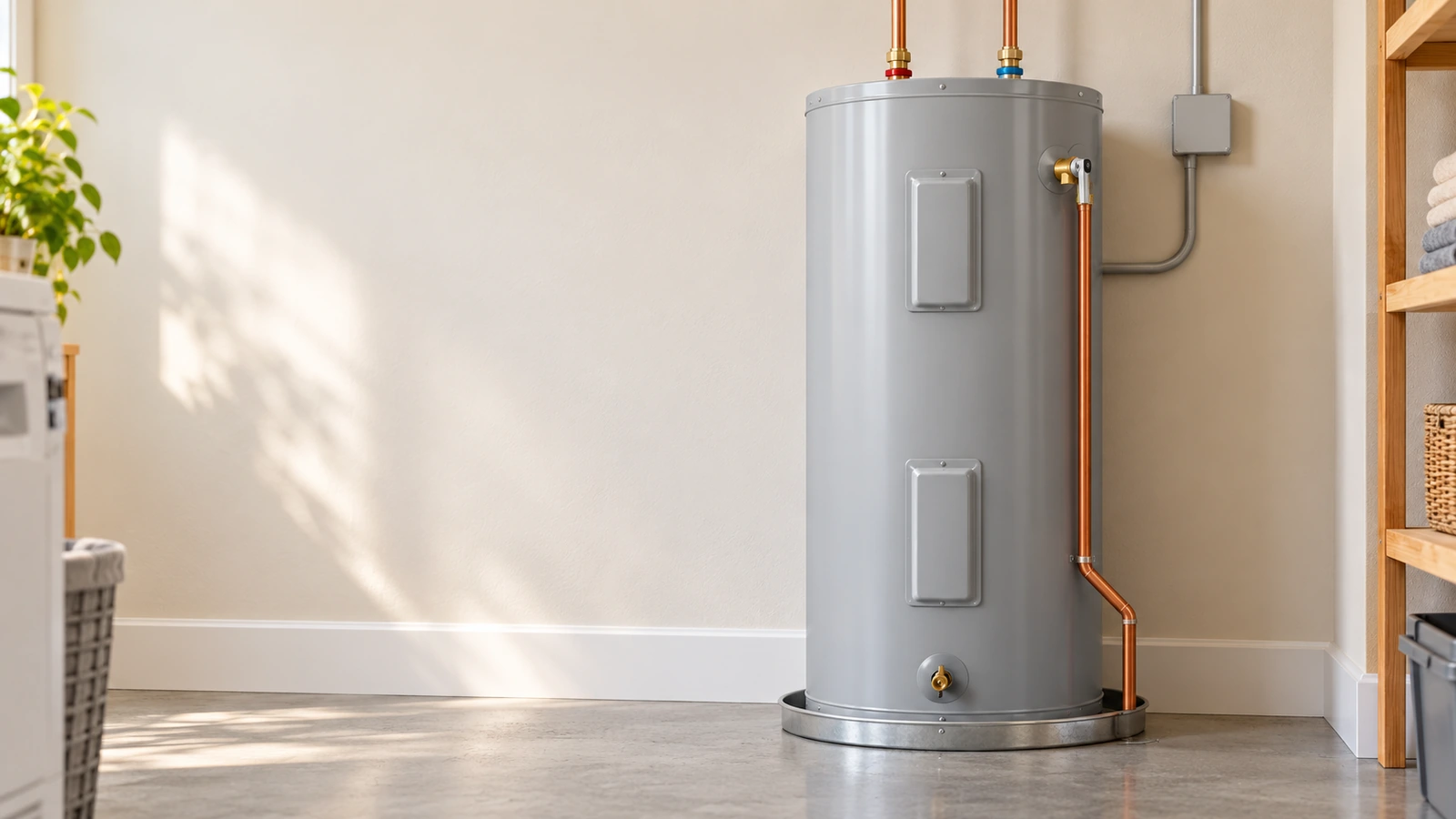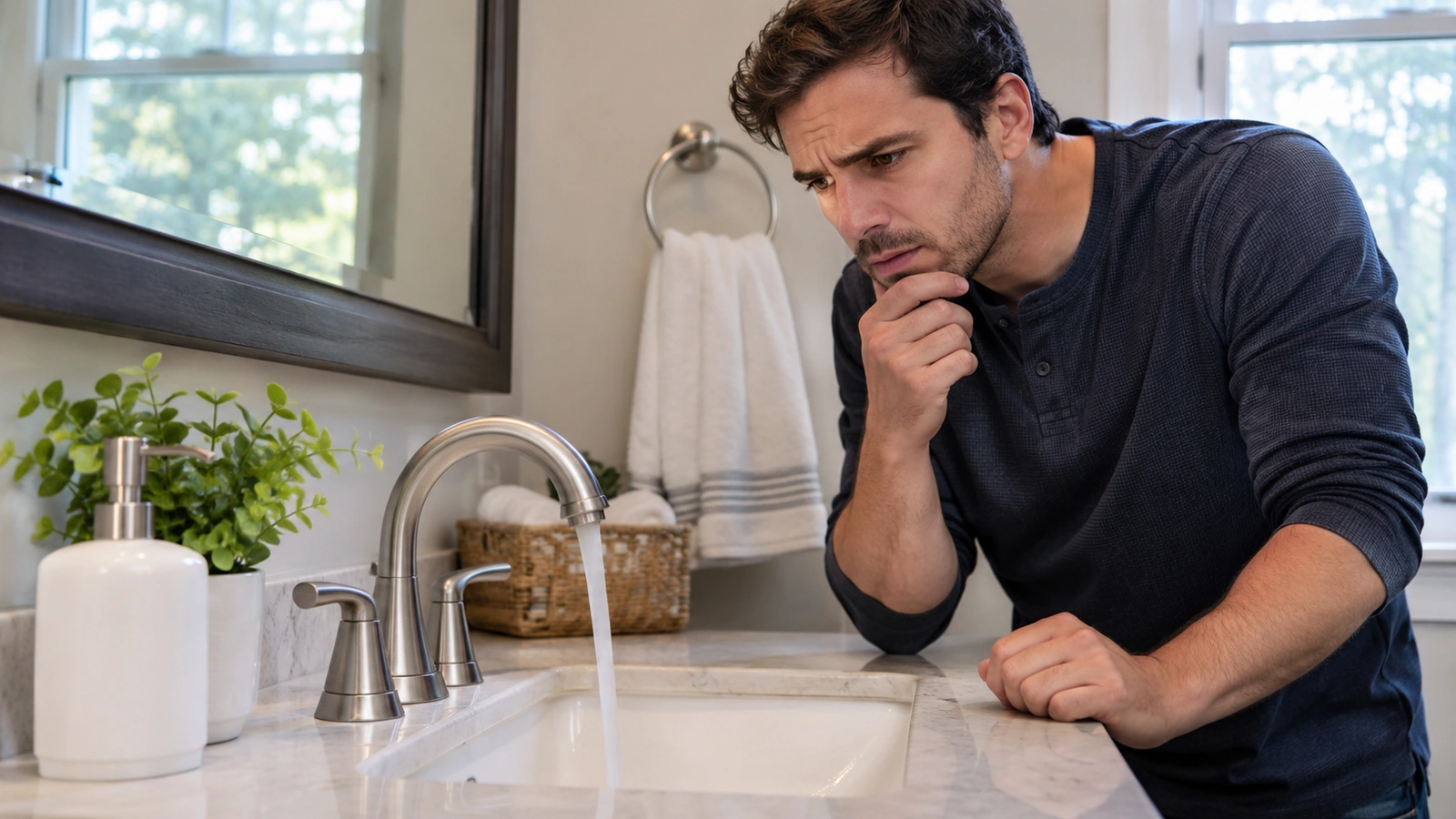
If your water heater is not getting hot enough, first notice how the water temperature changes. Water that is lukewarm at every faucet points to a different problem than a shower that turns cool after several minutes or a single fixture that never gets as hot as the others. Those patterns can help you decide whether to check a normal setting, reconsider hot-water demand, or call a professional.
This guide focuses on inadequate hot-water temperature, not a heater that produces no warmth at all. You can make the first comparisons without opening the heater or guessing which part has failed.
Safety comes before troubleshooting
If you smell gas or a carbon monoxide alarm sounds, get everyone outside and contact emergency help or the gas utility from a safe location. Stop if you see smoke, scorching, water on electrical equipment, repeated electrical trips, or heavy discharge of hot water. Avoid exposing skin to unexpectedly hot water. Never defeat a temperature-limiting device, open electrical or sealed combustion covers, or adjust gas or pressure-safety components.
First, Match the Lukewarm-Water Pattern
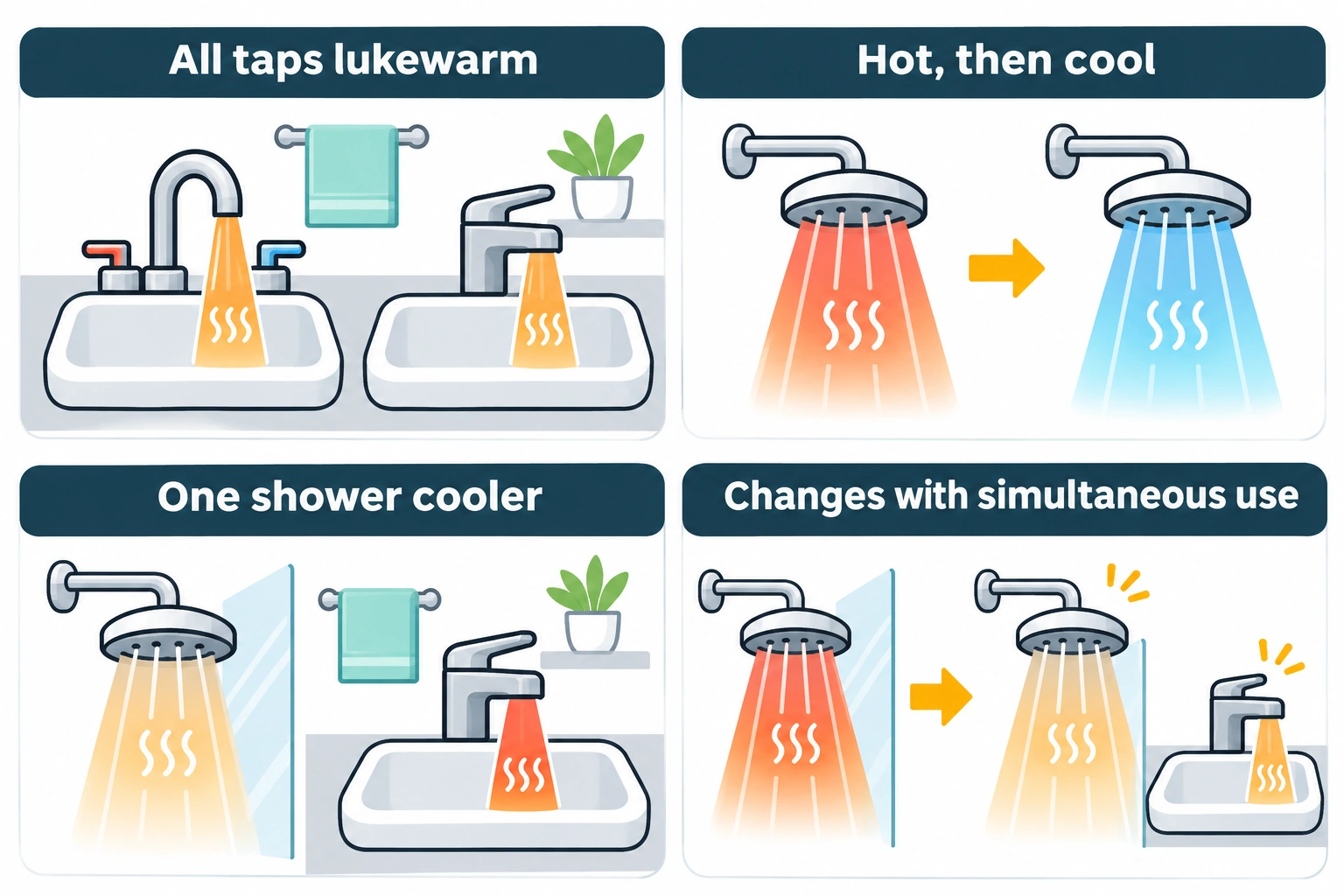
“Not hot enough” is a symptom, not a diagnosis. A storage tank might be depleted by several back-to-back showers while still heating normally. A single lukewarm shower might be caused by its own mixing control. On a tankless unit, temperature may change when the flow through the heater changes. Start with what you actually observe.
| What happens | What it may suggest | Safe next step |
|---|---|---|
| Every faucet stays lukewarm, even before heavy use | A low operating setting, mixing issue, or inadequate heating | Review accessible settings and compare fixtures |
| Water starts hot, then cools after showers or laundry | Demand exceeding available stored hot water or reduced recovery | Note the sequence of use and whether performance recovers |
| One shower is cool but other hot taps work well | A fixture cartridge, limit setting, or localized mixing problem | Compare another fixture; report the difference to a plumber |
| Temperature changes when another faucet opens | Flow, mixing, demand, or equipment-capacity behavior | Record which fixtures were running and the heater type |
| Water is completely cold at all taps | A broader no-heat or shutdown problem | Use the separate no-hot-water troubleshooting guide |
Make Four Safe Observations Before Blaming the Heater
You do not need to run a large-volume draw test, open an access panel, or change a thermostat to collect useful information. Keep the comparison simple and stop immediately if water becomes dangerously hot or another warning sign appears.
1. Compare more than one fixture
At a sink, allow enough time for water already sitting in the pipe to clear, without leaving a tap running unattended. Compare the hot-water behavior with a second sink in another area and, if safe, a shower. Avoid touching the stream directly to judge its maximum temperature. An adult should manage the check where children or people with limited mobility could be exposed.
If two sinks become comfortably hot but one shower stays cool, the heater may be performing normally. If several widely separated fixtures remain lukewarm, a central temperature, heating, or distribution issue becomes more plausible. Neither result identifies a component by itself.
2. Write down when the temperature changes
Was the first use of the day already lukewarm? Did the first shower feel normal but the next two become cooler? Did the problem appear only when the dishwasher, washing machine, or another shower was also drawing hot water? Write down the order of use, the approximate duration, and whether the problem repeats under lighter demand. This is more informative than describing the heater as simply “broken.”
3. Read the normal user controls and model label
Find the manufacturer's name and model number on an accessible exterior label. Identify whether you have a gas storage tank, electric tank, tankless unit, or hybrid heat-pump water heater. From a normal operating interface, note any displayed temperature, vacation or away mode, schedule, fault code, or status indicator. A numbered or lettered dial may not represent a precise faucet temperature.
Do not remove an electric water heater's access covers to reach internal thermostats or resets. Do not remove a gas burner's cover, disconnect tubing, or repeatedly reset an appliance that reports a fault. Use the exact model manual to interpret its user-facing information.
4. Note what recently changed
A new shower head or valve, recent plumbing work, an added bathroom, more people using hot water, a change in seasonal inlet-water temperature, or a new operating schedule can all change what you notice at the tap. If the problem began immediately after installation or service, tell the installer. These clues help a plumber distinguish an installation or mixing issue from a heater that cannot meet demand.
Water Is Lukewarm Everywhere, Even Without Heavy Use
If multiple fixtures supply only mildly warm water when the home has not just used a large amount of hot water, think in terms of temperature delivered to the fixtures versus temperature the heater can produce. A storage tank may be heating inadequately, but central mixing or distribution can also cool the delivered water.
Check for an unintended low or away setting
Some heaters offer a user-accessible temperature control, vacation setting, timer, or efficiency mode. If a familiar operating mode was changed recently, compare the current selection with the exact manual. A normal user setting may explain reduced heating without a failed component; a display that looks normal, however, is not proof the heater is reaching its intended temperature.
Do not turn the temperature to its highest position to “test” the heater. The U.S. Department of Energy cites around 120°F (49°C) as a common reference for many residential applications, but the correct design and settings depend on the appliance, anti-scald protection, household needs, and water-quality considerations. Tank settings and actual faucet temperatures are not necessarily the same.
Consider mixing before assuming a tank failure
A thermostatic mixing or tempering valve intentionally blends hot and cold water to limit delivery temperature. If that valve is malfunctioning or a plumbing cross-connection is present, several faucets may receive lukewarm water even while a tank contains hotter water. This is especially worth reporting if the heater appears to operate but delivered temperature has changed across the home.
Do not bypass, remove, or change anti-scald controls yourself. A qualified plumber can evaluate whether the issue is in the hot-water distribution, a central mixing assembly, or the heater. If only one fixture is affected, start with the fixture-specific section below.
Know when inadequate heating needs service
Persistent lukewarm water throughout the house, despite normal accessible settings and an opportunity for the system to recover, warrants professional diagnosis. Depending on the model, the cause could involve a thermostat, sensor, heating element, burner control, interrupted heating cycle, or another condition. A homeowner cannot reliably identify those failures from faucet temperature alone.
If your heater delivers completely cold water or no longer operates at all, use our water heater not heating guide, which covers broader shutdown and no-heat symptoms. This page stays focused on partial heating and insufficient delivered temperature.
Hot Water Starts Normally but Runs Out Too Soon
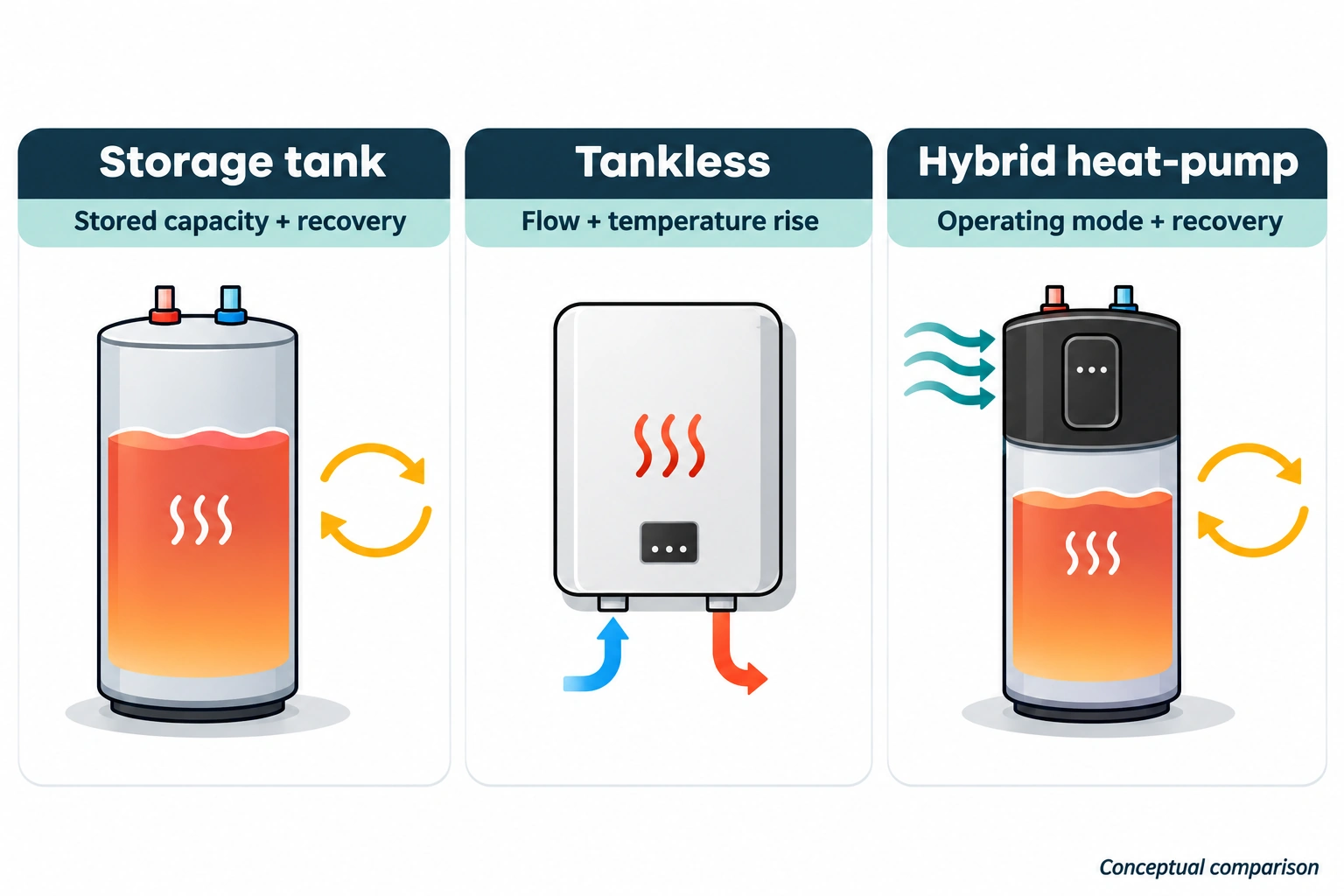
A warm first shower followed by a cool second shower is different from water that is always lukewarm. For a storage heater, the amount of usable hot water depends on stored capacity, incoming cold water, the temperature of the stored water, how rapidly it is drawn, and how quickly the heater replaces the heat used.
Look at overlapping hot-water demand
Back-to-back showers, a high-flow shower head, laundry, and kitchen use may consume available hot water faster than the system can replenish it. A tank's labeled gallons do not equal an unlimited number of gallons at any desired faucet temperature. And a properly sized heater can still feel inadequate during unusually heavy, simultaneous use.
Before concluding that the tank is undersized, compare what happens during an ordinary, lighter-use period. If performance is satisfactory then but deteriorates mainly during peak demand, household usage and equipment sizing deserve discussion with a plumber. Do not assume a larger tank is automatically the right fix.
Distinguish temporary depletion from poor recovery
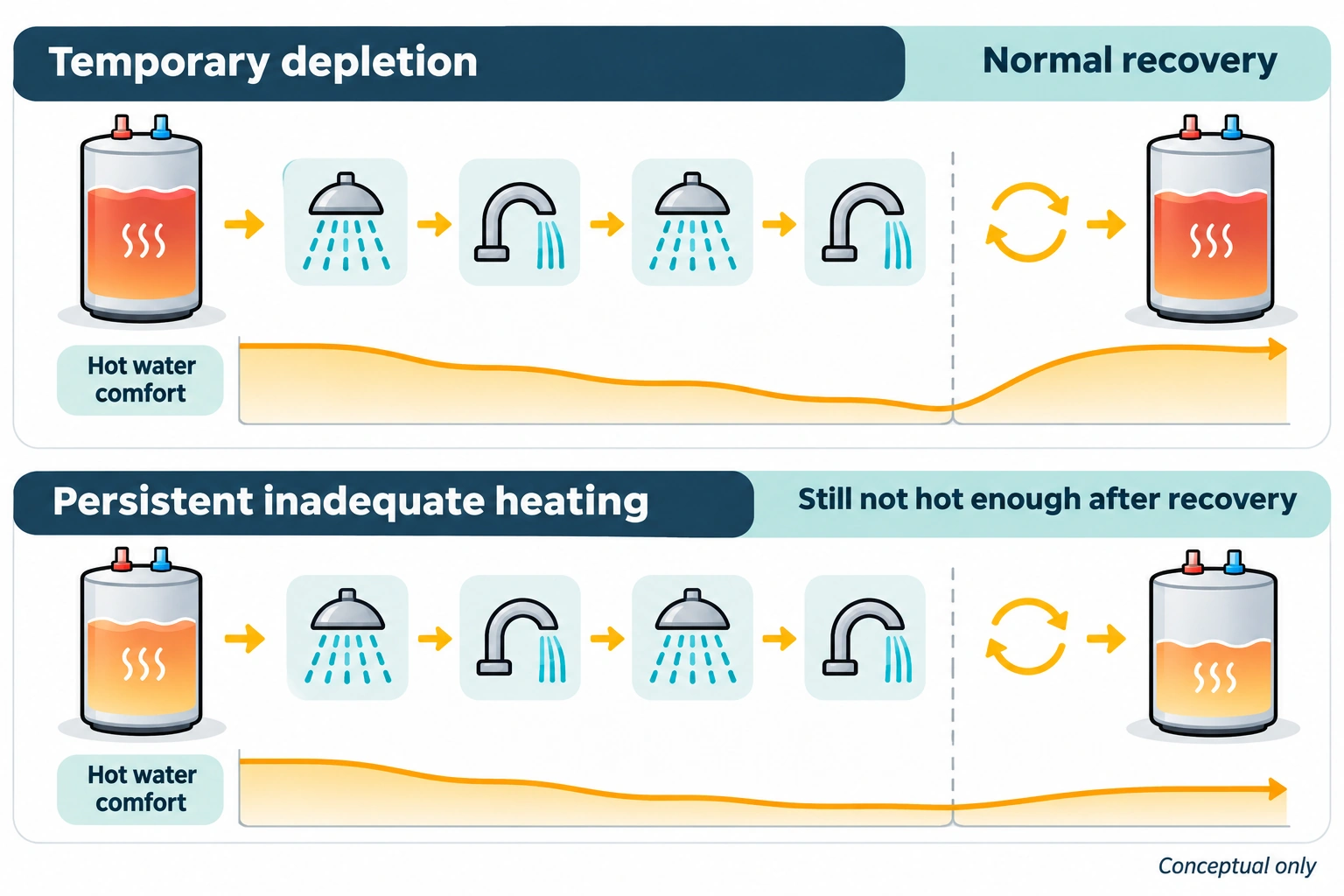
After a substantial draw, a storage heater needs time to restore its water temperature. That time varies with fuel type, heater capacity, incoming water temperature, operating mode, and the exact model. A gas tank, electric tank, and hybrid heater may behave very differently. There is no universal “wait 20 minutes” or “wait one hour” rule that proves a heater is healthy.
Observe whether normal hot water returns after the recovery period described in your manual, without deliberately draining the tank as a test. If the unit never returns to normal performance or runs out unusually quickly even with modest demand, the problem is not explained by a busy household alone.
Why a professional may check usable hot-water delivery
When the pattern persists, a technician may investigate tank recovery, heating performance, thermostatic controls, plumbing mixing, or the cold-water inlet arrangement. On some storage tanks, a dip-tube issue can affect how much usable hot water reaches fixtures; on some electric designs, a partial heating fault can reduce effective delivery. Sediment or mineral buildup may also contribute under certain conditions, but noise or a lukewarm shower does not prove sediment is the cause.
Manufacturer technical bulletins sometimes describe controlled temperature-and-volume draw tests. Their procedures and thresholds vary by model and source, and they can expose someone to scalding water. They are not universal homeowner instructions. Leave draining, flushing, internal testing, and component decisions to the exact manufacturer guidance and qualified service where appropriate.
One Shower Is Lukewarm but Other Faucets Are Hot
When a kitchen or bathroom sink becomes normally hot but one shower remains cool, investigate the fixture's delivery behavior before deciding the water heater is defective. Modern shower valves often contain pressure-balancing or thermostatic features, and many have an adjustable maximum-temperature limit.
Compare the problem fixture with a nearby sink
Notice whether the shower was always cooler, became cooler after a cartridge replacement, or changes temperature only when another tap runs. Check another fixture carefully without taking apart the shower. Report whether the shower's control travels through its usual range and whether the issue began after plumbing work.
Do not defeat a shower's anti-scald protection
A cartridge, limit stop, or local mixing assembly may require inspection, cleaning, adjustment, or replacement, but the correct procedure depends on the valve and its installation. Arbitrarily moving a limit stop or removing an anti-scald component can make the shower dangerously hot. A plumber can check the correct fixture and compare it with the rest of the house.
A useful distinction
One cool shower and several hot sinks usually calls for a different first service visit than an entire house with lukewarm water. Tell the professional which fixtures work normally; it may save an unnecessary water-heater replacement.
Temperature Drops When More Than One Fixture Runs
Opening another shower, faucet, or appliance changes total hot-water demand. A storage heater may deplete its supply more quickly; a tankless heater must raise incoming water temperature while handling the combined flow; and certain shower valves may react to pressure or mixing changes. These are different mechanisms that can produce a similar complaint.
Record the combination that causes the drop
Note whether temperature changes only when a second shower starts, when the washing machine fills, or even when a small sink faucet opens. Also note whether the second fixture is using hot water, cold water, or both. Avoid intentionally creating large simultaneous demand just to stress-test the system.
Compare capacity with normal household use
If the symptom consistently follows increased demand, ask a qualified installer to compare the equipment's rated hot-water delivery with the fixtures and appliances actually used. Tank capacity, recovery rate, tankless flow limits, and incoming-water temperature are different sizing factors. A label showing one capacity or flow figure cannot by itself establish what the system will deliver under every condition.
Tankless Water Heater Not Getting Hot Enough
A tankless heater does not rely on a large stored volume of hot water. It heats water as it passes through the unit, within the appliance's flow and temperature-rise limits. That can make its lukewarm-water pattern distinct from a storage tank's gradual depletion.
Low flow may affect heater activation
Some tankless models require a minimum hot-side flow to start and maintain heating. At a very low-flow faucet or when a mixing fixture draws only a small amount of hot water, the heater may cycle or fail to activate as expected. The minimum flow varies by model, so a figure copied from another heater is not a reliable test for yours.
If a higher-demand fixture seems to work but a very low-flow fixture does not, record the difference. Do not modify internal flow sensors, strainers, gas controls, or plumbing to force activation. Follow the manufacturer guidance for any ordinary user-facing setting and ask the installer to evaluate a persistent issue.
More simultaneous flow may exceed available heating capacity
Even a properly functioning tankless heater has a maximum heating output. When incoming water is colder, the heater must supply a larger temperature rise to reach the same outlet target. At sufficiently high combined flow, the unit may not maintain the expected delivered temperature. This does not mean tankless hot water is unlimited at every flow rate.
Use status information, not trial-and-error servicing
Record an accessible display setting, warning, or fault code and consult the exact model manual. A scale, sensor, venting, combustion, or electrical issue can affect operation, but a lukewarm tap does not establish which condition exists. Tankless descaling, inlet-filter servicing, gas adjustments, and internal checks should follow model-specific instructions and the appropriate professional service requirements.
Hybrid or Heat-Pump Water Heater Only Produces Warm Water
Heat-pump water heaters move heat from surrounding air into stored water. Many hybrid models also use electric resistance heating when needed, but the available modes and how they operate differ across products. A heater in an efficiency-focused or vacation mode can respond differently to a large draw than the same heater in its normal hybrid mode.
Check the selected mode and schedule
At the normal owner interface, look for an energy-saving, hybrid/auto, electric/heater, vacation, or scheduled mode. The names and behavior are model-specific; do not assume every hybrid unit automatically uses backup heating or that a particular mode is always the best choice. Compare the selection with the manufacturer manual and note whether it changed around the time hot water became inadequate.
Separate expected recovery behavior from a fault
Some efficiency-prioritizing modes recover more slowly after heavy use. That alone does not prove a malfunction. However, persistent lukewarm delivery after the expected recovery period, a new warning message, or a sudden reduction in performance warrants service. Avoid opening heat-pump cabinets, electrical compartments, or sealed refrigeration components.
What a Qualified Technician May Need to Check
A service visit should test the explanation that fits your observations, not replace a component based on the words “not hot enough.” Bringing the pattern, fixture comparison, exact model number, recent changes, and visible error codes helps make that evaluation more focused.
Delivered temperature and mixing
A plumber may check fixture cartridges, central tempering devices, cross-connections, or the difference between heater output and faucet delivery.
Capacity and recovery
A professional may compare the household's demand with the model's rated delivery and verify that heating recovers as designed.
Electric or hybrid heating performance
Internal thermostats, elements, sensors, control logic, and model-specific heat-pump faults require qualified electrical or appliance service.
Gas or tankless operation
Gas firing, combustion, venting, flow control, and protective shutdowns belong with trained technicians. Do not adjust gas pressure or defeat safety systems.
For a gas storage-tank heater that is not firing or repeatedly shuts down, see our separate gas water heater not heating guide. This avoids treating every lukewarm-water complaint as an ignition problem.
When to Stop and Call for Help
| Situation | What to do |
|---|---|
| Gas odor, suspected carbon monoxide exposure, or CO alarm | Evacuate immediately and contact emergency responders or the gas utility from a safe location. |
| Burning smell, smoke, repeated breaker trips, or water reaching electrical equipment | Stop using the affected equipment and obtain qualified emergency or electrical assistance as appropriate. Do not keep resetting it. |
| Heavy leaking or forceful hot-water discharge | Stay clear of hot or pressurized water and arrange urgent professional help. Never cap a temperature-and-pressure relief discharge pipe. |
| Every fixture stays lukewarm after normal recovery | Schedule water-heater and distribution-system diagnosis; share the model, status, and temperature pattern. |
| One shower remains cool while other fixtures are hot | Have a plumber evaluate the fixture and its mixing or anti-scald controls. |
| Repeated fault codes, shutdowns, or unexpectedly reduced hot-water supply | Arrange model-specific service rather than repeated resets or unverified component replacements. |
Before the appointment, write down your heater's brand, model, whether it is gas, electric, tankless, or hybrid, which fixtures are affected, whether water starts hot or never gets hot, recent demand, and any accessible fault message. Photos of an exterior rating label or display can be useful when safely obtained.
Frequently Asked Questions
Why is my water heater only making lukewarm water?
Possible reasons include a low or away setting, a central or fixture mixing problem, reduced heating performance, or demand greater than the system can meet. If every tap stays lukewarm even without recent heavy use, a qualified technician should distinguish those causes rather than replacing a thermostat or heater on suspicion alone.
Why does hot water run out faster than it used to?
The household may be drawing more hot water, incoming water may be colder, the system may be recovering more slowly, or usable hot-water delivery may have changed. Compare the timing and usage pattern with the manufacturer's normal operation; persistent change deserves diagnosis, not an automatic tank flush.
Why is the shower not hot enough when the kitchen faucet is?
That pattern makes a shower-specific cartridge, limit stop, or mixing control a reasonable possibility. Do not remove anti-scald protection or change hidden valve settings to make the shower hotter. Ask a plumber to check the fixture before replacing the heater.
Does a tankless water heater need a minimum flow to heat water?
Many tankless heaters do. The flow required to start and maintain heating varies by manufacturer and model. Very low hot-side flow or certain mixing conditions can cause inconsistent heating, while high combined demand can exceed the unit's available heating capacity. Consult the exact operating manual.
Is 120°F the right water-heater setting for every home?
No. Around 120°F (49°C) is a common residential reference, but requirements can differ based on equipment, plumbing design, scald protection, water hygiene, and household needs. A heater's selected temperature is not a guaranteed temperature at every faucet. Never turn up the temperature indiscriminately to compensate for a suspected failure.
Should I flush the water heater because it is not hot enough?
Not based on this symptom alone. Mineral deposits may affect some systems, but lukewarm water can result from several unrelated causes. Maintenance requirements and safe draining or flushing procedures vary by model and may involve hot, pressurized water. Consult the manufacturer instructions and a qualified professional before servicing.
The Bottom Line
If your water heater is not getting hot enough, start with where the problem happens, when the water cools, and what type of heater you have. Lukewarm water throughout the house, hot water that runs out quickly, and a single cool shower do not all call for the same repair. Compare fixtures and normal user-facing information safely, then bring the pattern to a qualified professional if it persists. Leave electrical, gas, pressure-system, and concealed plumbing repairs to trained service providers.
Manufacturer and Safety References
These resources explain the technical principles behind the distinctions above. They are not substitutes for the instructions and safety warnings for your exact installed model.
- A. O. Smith — Technical Bulletin 35: Not Enough Hot Water (Gas).
- A. O. Smith — Technical Bulletin 36: Not Enough Hot Water (Electric).
- A. O. Smith — Technical Bulletin 42: Undersizing.
- Rinnai — Residential Tankless Water Heater FAQ.
- ENERGY STAR — How Heat Pump Water Heaters Work.
- U.S. Department of Energy — Purchasing Energy-Efficient Residential Water Heaters.