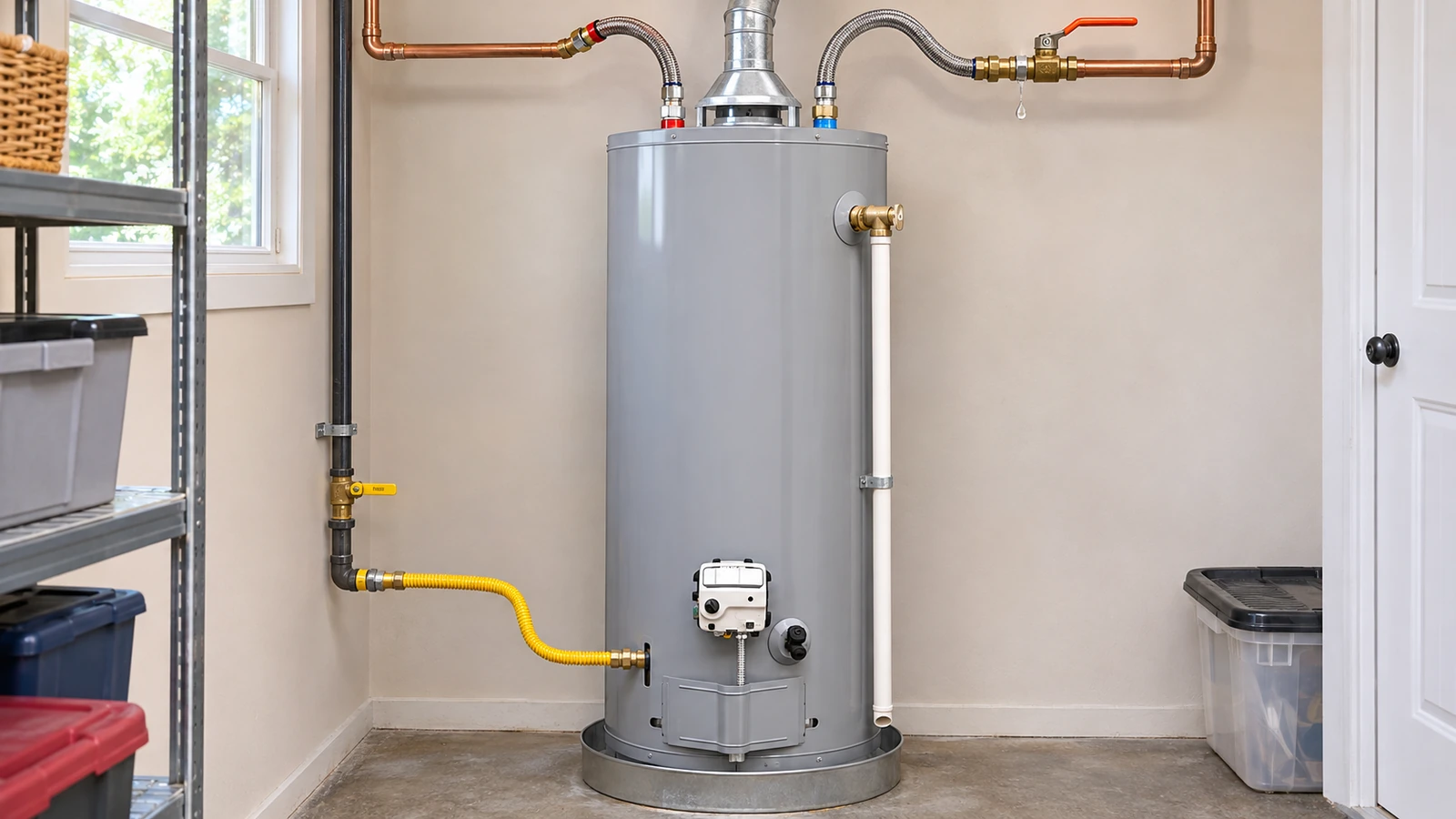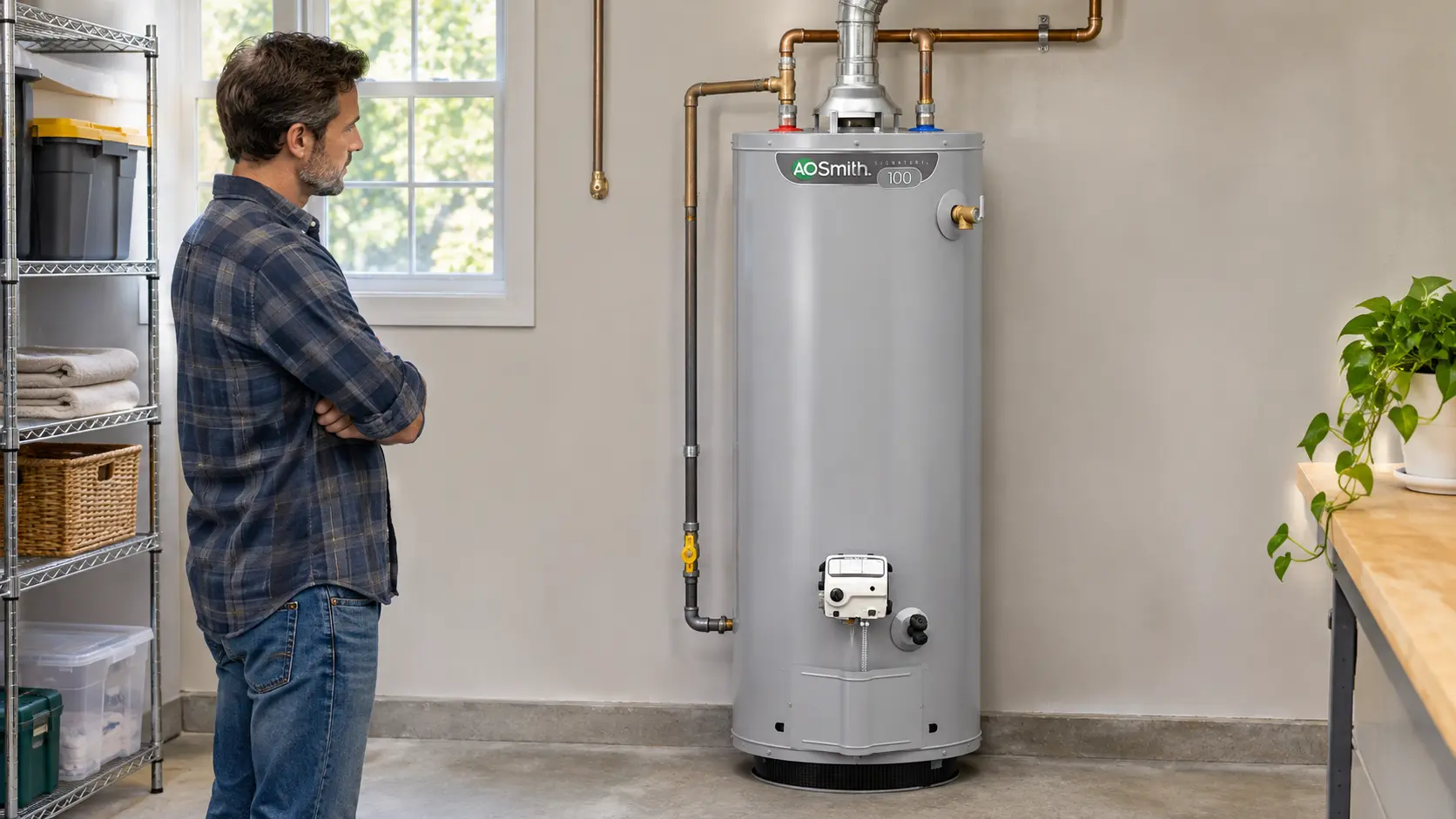
If your water heater pilot light keeps going out, the flame may not be staying established, its safety sensor may not be detecting it reliably, or the heater may be shutting down because of a gas-supply, airflow, venting, or control problem. The timing matters: a pilot that goes out as soon as the lighting control is released is not necessarily failing for the same reason as one that stays on for hours and then goes out.
This guide is for residential gas storage-tank water heaters with a standing pilot. It explains what the symptoms may mean, what you can observe without opening the appliance, and when to arrange qualified service. It does not replace the lighting label or instructions for your exact model.
Gas or carbon monoxide warning: leave first
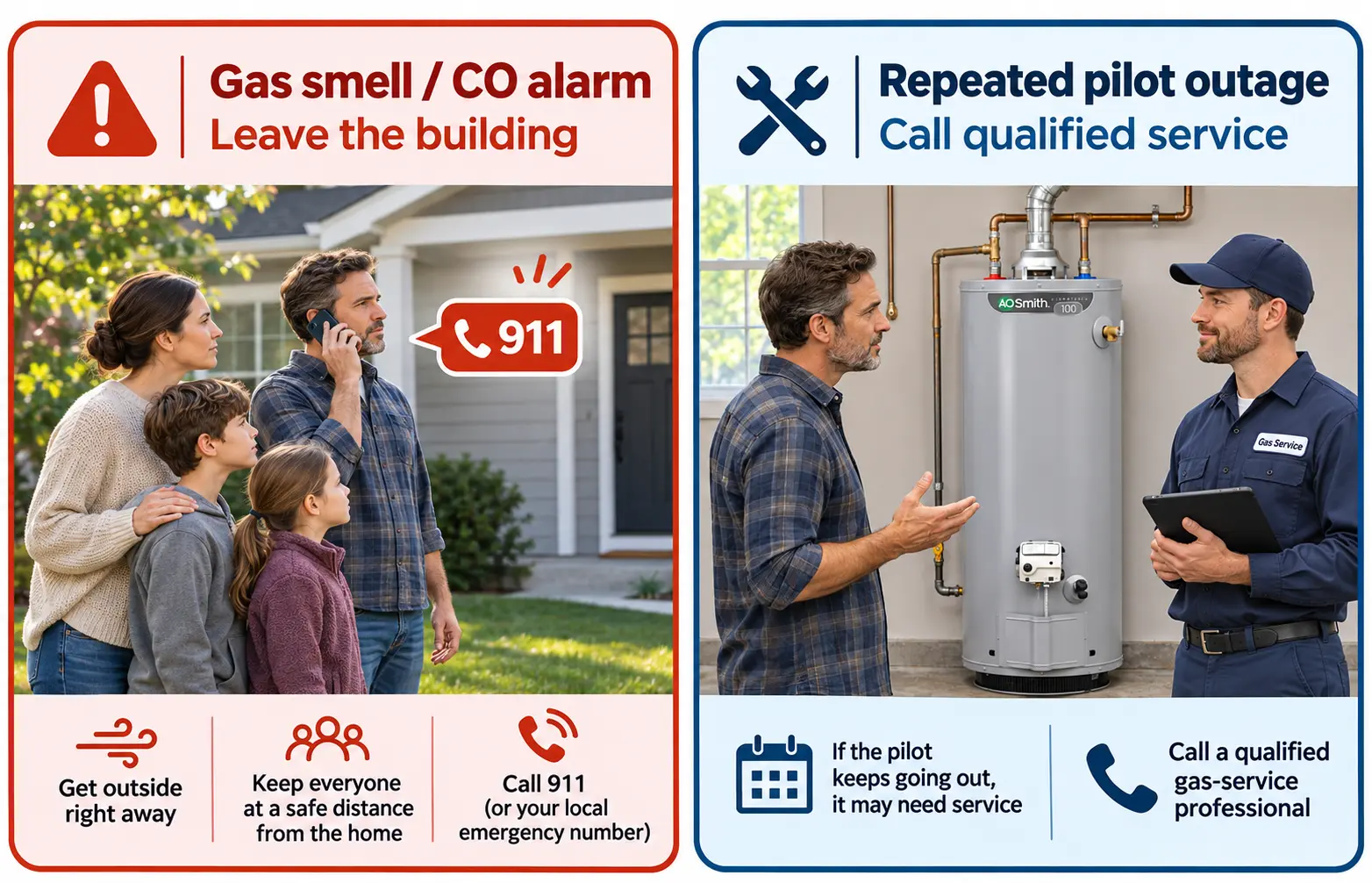
If you smell gas or suspect a leak, leave the building with everyone immediately. Do not operate switches, appliances, flames, or a phone inside the affected area. From a safe place, call 911 or your gas utility. Do not return until responders say it is safe.
If a carbon monoxide alarm sounds, get everyone outside and call emergency services. CO has no smell. Headache, dizziness, nausea, weakness, or confusion may also be warning signs of exposure. Do not attempt to relight or troubleshoot the heater during a suspected gas or CO emergency.
What It Means When a Water Heater Pilot Light Keeps Going Out
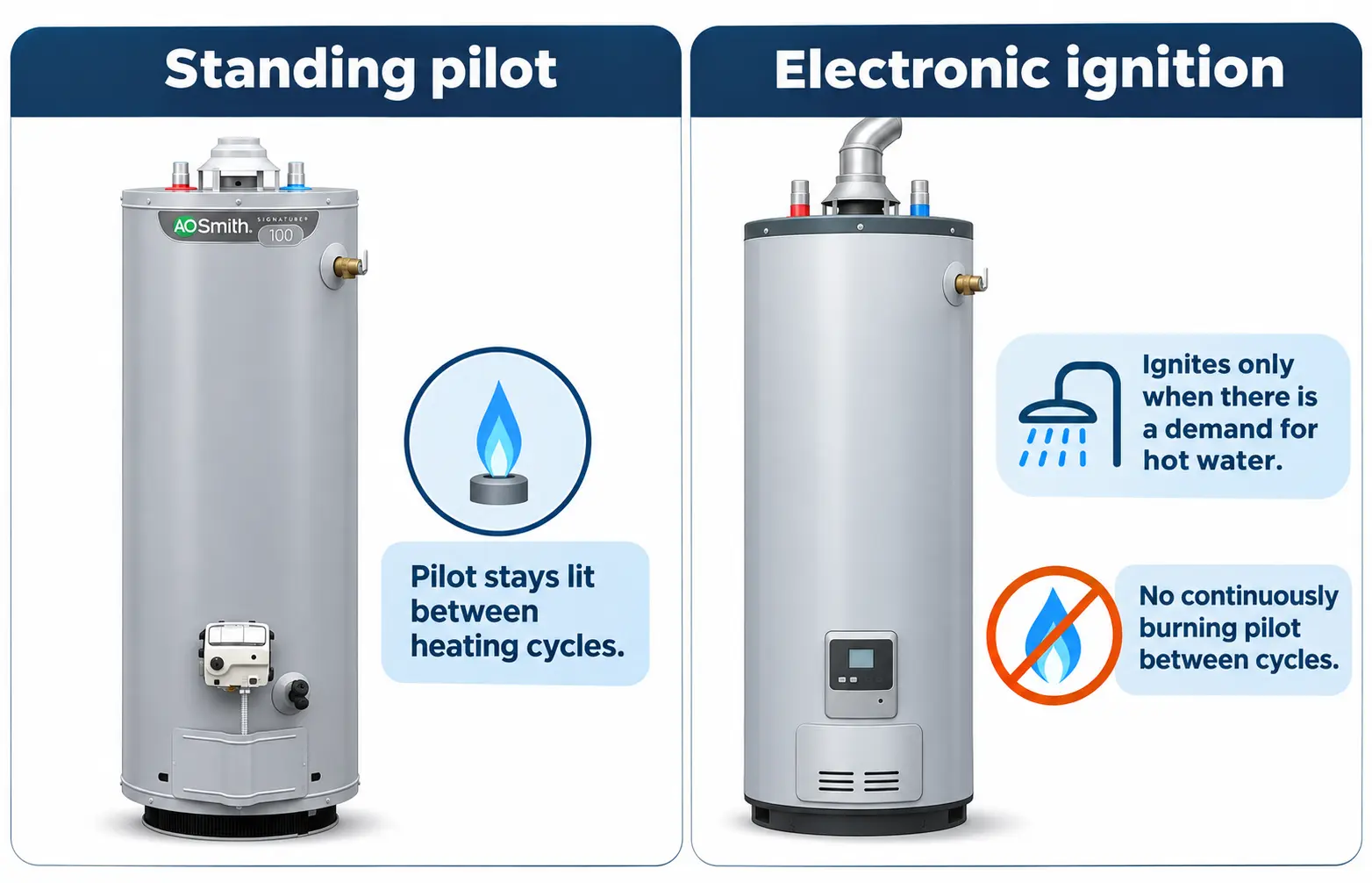
A standing pilot is a small flame that stays lit to ignite the larger main burner when the tank needs heat. The main burner cycles on and off as water temperature changes; on a conventional standing-pilot unit, the pilot normally remains lit between those heating cycles. When the pilot goes out, the main burner cannot ignite in its usual way, so the tank may stop recovering hot water.
These systems include a flame-proving safety arrangement. Depending on the design, a thermocouple, thermopile, or other sensor helps the gas control recognize whether an appropriate flame is present. The gas control is intended to interrupt fuel flow when flame is lost. A safety feature is not a guarantee that a suspected gas leak is harmless; any gas odor or suspected leak still requires immediate evacuation.
First make sure your heater actually has a standing pilot
Some gas heaters use intermittent pilots, electronic ignition, or a hot-surface igniter rather than a continuously burning pilot. The absence of a visible flame between heating cycles can be normal for those systems. Power-vent, tankless, and other electronically controlled heaters may follow entirely different ignition sequences.
Check the model number and the manufacturer's user instructions. Do not assume a water heater has a standing pilot simply because it uses natural gas or propane. If the heater uses electronic ignition, follow its fault-code documentation instead of a generic pilot-relighting guide.
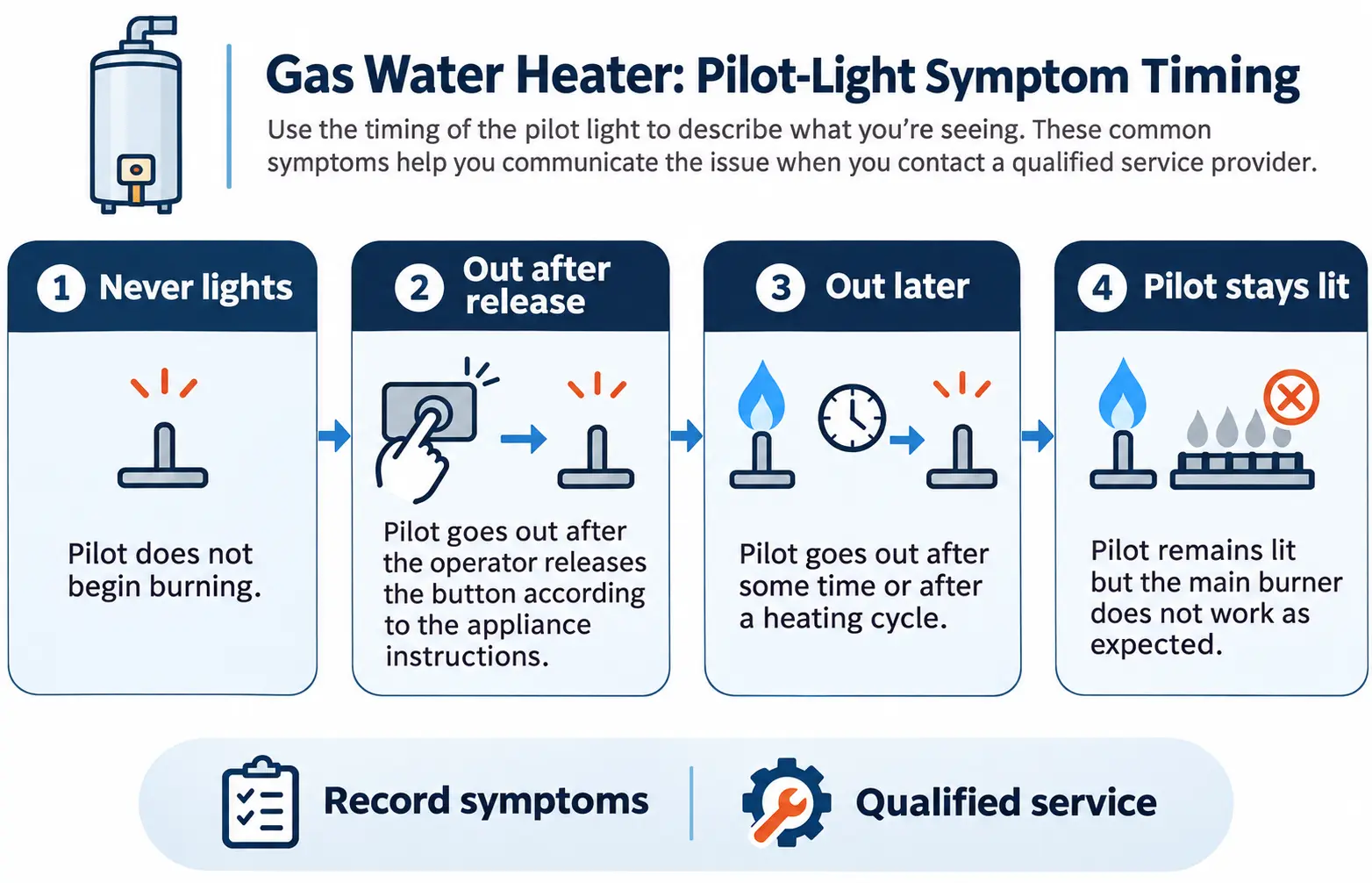
When Does the Pilot Go Out? Match the Symptom
Before choosing a replacement part, describe exactly when the flame disappears. Manufacturer service materials distinguish several patterns because different components or conditions can produce them.
| What you notice | What may be involved | Safe next step |
|---|---|---|
| Pilot will not light at all | Ignition, available gas supply, pilot passage, or a control-related problem | Review the exact model's label; arrange service if it will not light |
| Pilot lights but goes out when the lighting control is released | Flame sensing, a weak pilot flame, or gas-control issues | Stop repeated attempts; report the timing to a qualified technician |
| Pilot stays lit at first, then goes out later | Intermittent flame, gas supply, airflow, venting, or a protective shutdown | Record when it happens and request inspection |
| Pilot goes out around main-burner operation | Possible draft, combustion-air, venting, flame-sensing, or control fault | Do not investigate the burner internally; arrange service |
| Pilot stays lit but the water remains cold | Main-burner, thermostat, gas-control, or other heating problem | Use the broader gas water heater not heating guide |
The table describes possibilities, not diagnoses. The same symptom may have different causes on different water heater models, and a normal status light does not rule out every fault.
If it goes out as soon as the control is released
On a standing-pilot design that uses a manually held lighting control, the pilot-safety mechanism must recognize a stable flame before the heater can remain in its normal operating condition. If the flame disappears immediately when the control is released, the system may not be proving the flame. A thermocouple or thermopile problem is one possibility, but poor pilot-flame contact, an unsuitable flame, or a control fault may produce similar behavior.
Do not conclude that a particular part has failed based only on the timing. Avoid extending button-hold times, forcing controls, adjusting the sensor, or repeating lighting attempts beyond the exact manufacturer's instructions. A service professional can test the appropriate system.
If it goes out after hours or after a heating cycle
A pilot that initially stays lit may be affected by a change that occurs later: a draft, unstable gas supply, insufficient combustion air, altered venting conditions, or a protective device reacting to an abnormal event. The main burner shutting off when the tank reaches its set temperature is normal; the standing pilot repeatedly going out is not.
If you notice that the problem tends to happen during windy weather, after the burner runs, or when nearby exhaust equipment operates, share that observation with the technician. These correlations can be useful, but they do not establish the cause and are not a reason to experiment with venting or airflow.
Common Reasons the Water Heater Pilot Will Not Stay Lit
A recurring pilot outage is a symptom, not a diagnosis. The causes below are documented across conventional gas water heater designs, but no one cause should be assumed without the appropriate model-specific checks.
1. Thermocouple, thermopile, or flame-sensing trouble
A thermocouple on some standing-pilot systems generates a small electrical signal when heated by the pilot flame. Other systems use a thermopile or a different sensor and gas-control arrangement. If the required flame signal is absent or unreliable, the control may not allow the pilot to remain lit.
The sensor itself might be faulty, but it may also be responding correctly to a pilot flame that is too weak or unstable. A poor connection or a gas-control problem may create a similar symptom. A homeowner cannot confirm a failed sensor by looking at the exterior control or by noting that the pilot went out.
Professional diagnosis: a trained technician can identify the actual flame-proving design, inspect the pilot assembly safely, and assess the sensor and control under the manufacturer's service procedure. Do not remove a burner door, bend the sensor, perform millivolt tests, or replace gas-control components yourself.
2. An unstable or restricted pilot flame
The pilot needs an appropriate supply of fuel and air for a stable flame. A restricted pilot passage, debris, deterioration, or a problem with its burner assembly may interfere with flame quality or flame sensing. Some models have a viewing window, but the pilot can be difficult to see even when it is operating normally.
A small or irregular-looking flame is a reason to report what you observed, not proof that the thermocouple is bad. Flame appearance varies with the design and viewing conditions. If the flame is visible only by opening a sealed combustion chamber, do not open it.
Leave the repair to a professional: cleaning pilot orifices and tubing, repositioning flame-sensing parts, and opening sealed assemblies can affect fuel delivery and combustion safety.
3. Interrupted or inconsistent gas supply
A pilot requires a suitable gas supply to remain lit. Low or fluctuating gas pressure, a supply interruption, a regulator issue, or another gas-delivery fault may cause ignition failures or intermittent flame loss. These conditions require different checks depending on whether the heater uses natural gas or propane.
Do not loosen fittings, disconnect tubing, test gas pressure, adjust a regulator, or turn the gas system on and off repeatedly to look for an explanation. If there is a gas odor, leave immediately and report the suspected leak from a safe location. Otherwise, tell a qualified service technician or your gas supplier what happened.
4. Drafts or inadequate combustion air
Strong air movement can disrupt a small flame, and insufficient combustion air can prevent safe, stable operation. A crowded utility closet, stored items near designed air openings, or changes in nearby ventilation may contribute on some installations. The actual requirements depend on the heater and the room.
From a safe distance, you can note whether boxes or belongings appear to block manufacturer-designated clearance or air openings. Do not dismantle grilles, defeat safety devices, alter doors, block drafts with makeshift barriers, or relocate the heater. A professional should evaluate air supply, pressure relationships, and installation requirements.
5. Venting faults or protective shutdowns
The exhaust path is essential to safe gas-water-heater operation. Damaged or poorly performing venting, unusual combustion conditions, or an activated thermal or safety limit can be associated with loss of heat or pilot operation. The cause may be serious even if relighting temporarily appears to work.
Visible soot, scorch marks, a damaged flue connector, unusual odors, or evidence of exhaust spilling into the room warrant stopping use and arranging prompt professional assessment. Carbon monoxide cannot be identified by smell. Never disconnect a vent, bypass a limit switch, or operate the heater with a safety device defeated.
6. Gas-control or other model-specific component failures
The gas-control assembly manages several functions and may also respond to sensors or safety limits. A control fault can mimic a weak pilot or sensing problem. Some modern gas controls use status lights and protective lockouts, but a flash pattern that means one thing on one product may mean something different on another.
Record the exact sequence of flashes or the displayed error code and look it up only in the documentation for the installed model. Gas valves, thermostats integrated with gas controls, igniters, thermal switches, and internal safety circuits are not suitable parts for trial-and-error replacement by a homeowner.
Safe Checks You Can Make Without Opening the Heater
You can collect useful information without reaching into the burner compartment or working on the fuel system. These are observations, not repair instructions.
Identify the exact model
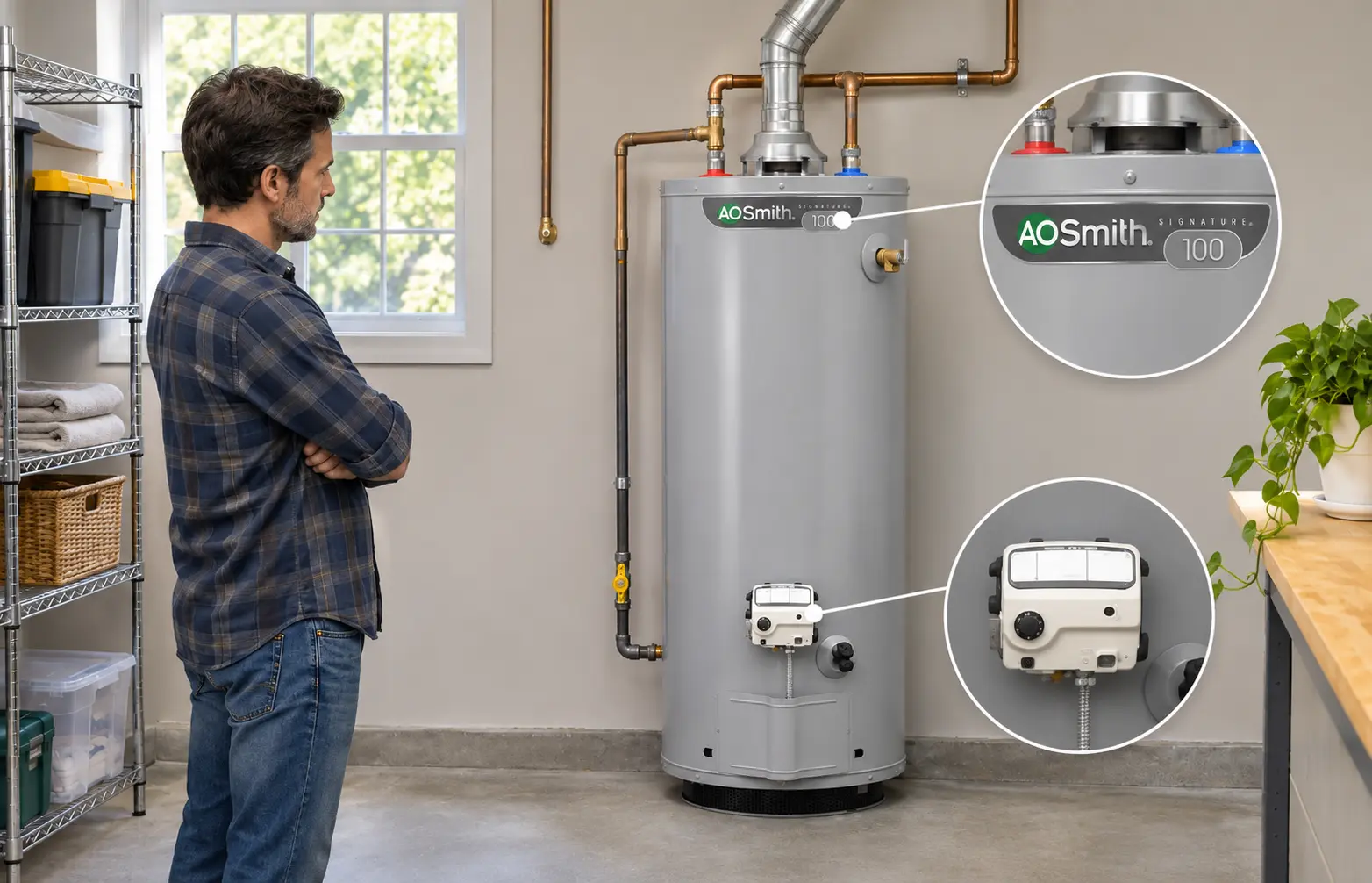
Read the exterior rating plate when it is safely accessible. Record the brand, model number, and whether it uses natural gas or propane. Use that model's manual rather than a generic online procedure.
Observe an external status indicator
If provided, read a user-facing display, status LED, or designed sight glass from its normal viewing position. Do not remove a sealed access door to see the flame.
Describe the timing
Write down whether the pilot never lights, goes out after the approved lighting procedure, fails later, or seems to fail around a burner cycle. Note any visible error message.
Check the surrounding area visually
Notice stored clutter, apparent blockage of designed air openings, visible water damage, unusual soot, or vent damage. Do not move piping, alter ventilation, or touch hot components.
Do not remain near a suspected gas or carbon monoxide hazard to gather photographs, model numbers, or fault codes. Emergency actions take priority over documentation.
Should You Try to Relight a Pilot That Keeps Going Out?
Repeated pilot outages call for qualified service, not repeated relighting. A single extinguished pilot following a clearly identified interruption is different from a pilot that will not remain lit. For an isolated, non-emergency situation, some manufacturers publish operator lighting instructions on the appliance and in its manual. Whether an attempt is appropriate depends on the exact model and its warnings.
Never use a generic sequence of knob positions, button-hold times, or retry counts from another heater. Never use an improvised flame, force a control, open a sealed burner chamber, or bypass a lockout. If the manufacturer does not clearly permit an operator procedure, if the instructions are unclear, or if the pilot will not stay lit after the permitted procedure, stop and request service.
A pilot that briefly relights is not necessarily repaired
If a recurring outage is caused by an intermittent gas, venting, combustion-air, flame-sensing, or safety-control fault, restoring the flame does not remove that underlying condition. Do not keep relighting a heater to get one more tank of hot water.
What not to do when the pilot will not stay lit
- Do not keep repeating ignition attempts or defeat an automatic shutdown.
- Do not remove the burner assembly, sealed combustion door, pilot tubing, or gas valve.
- Do not scrape or clean a pilot orifice or adjust the thermocouple position.
- Do not test for a gas leak with a flame, or manipulate gas connections to test pressure.
- Do not modify a flue, block an air opening, or bypass a thermal safety switch.
When to Call a Plumber or Gas Technician
Use the severity of the situation, not just how long you have been without hot water, to decide what to do next.
| Situation | Response |
|---|---|
| Possible gas leak, gas odor, CO alarm, or suspected CO exposure | Leave immediately with others and call 911 or the gas utility from a safe location; do not go back until cleared |
| Visible soot, damaged venting, scorching, or other signs of unsafe combustion | Stop using the heater and arrange prompt professional inspection; evacuate if a gas or CO emergency is suspected |
| Pilot repeatedly goes out, will not remain lit, or the heater enters a protective lockout | Do not continue relighting; book a qualified gas-water-heater service professional |
| Pilot remains lit, but the main burner or hot-water output is the problem | See the broader gas water heater troubleshooting guide and arrange diagnosis if the issue persists |
What to tell the service professional
Have the following details ready only if you can obtain them safely:
- The model number, fuel type, and approximate age if known.
- Whether the heater has a standing pilot, electronic ignition, or a visible status light.
- Exactly when the pilot goes out and whether the problem happens every time or intermittently.
- Any status-light flash pattern or error code copied from the normal user display.
- Any relevant change, such as recent service, a change to the room, strong winds, or a prior outage.
- Whether there is no hot water at all, or the pilot problem was observed before the water became cold.
These details help distinguish an ignition problem from a safety shutdown or a broader hot-water complaint. They do not authorize a homeowner to carry out internal tests.
How to Reduce the Risk of Future Pilot Outages
There is no maintenance shortcut that makes every pilot outage preventable. However, a properly installed and serviced gas water heater is less likely to have avoidable operating problems.
Arrange regular qualified maintenance
The CDC recommends having gas-burning appliances, including water heaters, serviced by a qualified technician every year. A professional can evaluate combustion, venting, gas controls, and the manufacturer's applicable maintenance requirements. Describe any prior pilot outages even if the heater is operating on the appointment day.
Keep the installation area appropriate for the heater
Respect the clearances and combustion-air provisions specified for the installed model. Keep household storage from obstructing designated openings, and do not enclose the appliance in a tighter space or alter the room's ventilation without professional review. Dryer exhaust, household fans, and building pressure conditions may be relevant to a service assessment.
Maintain carbon monoxide alarms and report changes
Install and maintain CO alarms according to their instructions and applicable local requirements. If you notice new soot, a damaged vent, repeated shutdowns, or a change in ignition behavior, have the heater assessed rather than treating the change as normal wear.
Frequently Asked Questions
How do you fix a pilot light that keeps going out?
The correct fix depends on whether the problem involves flame sensing, pilot fuel flow, gas supply, air movement, venting, or a control or safety device. Because those faults require different professional tests, replacing a thermocouple or repeatedly relighting the heater is not a universal solution. Record the symptom and arrange service for repeated outages.
Does gas keep flowing if the pilot light goes out?
Conventional standing-pilot gas water heaters are designed with flame-safety controls intended to shut off gas to the pilot or burner when the required flame is lost. However, you cannot confirm that a particular appliance or gas connection is safe based on that design alone. If you smell gas or suspect a leak, evacuate immediately and contact emergency services or your utility from outside.
Is it an emergency if a water heater pilot light goes out?
Not every isolated pilot outage is an emergency. A recurring failure requires professional service because a safety or combustion problem may be involved. A gas odor, suspected gas leak, CO alarm, or suspected CO exposure is an emergency: leave the building and call for help from a safe location.
Will the pilot stay lit if the thermocouple is bad?
On a design that relies on a thermocouple to prove the pilot flame, a faulty signal can prevent the pilot from staying lit. But other models use a thermopile or different flame-sensing system, and a weak pilot flame or gas-control fault can resemble sensor failure. The symptom alone cannot confirm whether the thermocouple is defective.
Why does my water heater pilot light go out after the burner runs?
If a standing pilot disappears around a heating cycle, possible issues include changing drafts, combustion-air or venting conditions, gas supply instability, or a protective shutdown. The main burner normally stops when the tank reaches its target temperature, but the standing pilot should not repeatedly extinguish. Arrange service rather than attempting to adjust the burner or venting yourself.
Should the pilot light be on all the time?
On a conventional standing-pilot heater, yes: the small pilot flame ordinarily remains lit even when the main burner is off. On an intermittent-pilot or electronic-ignition system, a continuously visible pilot may not be part of normal operation. Confirm your water heater's ignition type in its model documentation.
The Bottom Line
If your water heater pilot light keeps going out, focus on when the flame is lost and whether your heater truly uses a standing pilot. A flame that dies as the lighting control is released, one that goes out after hours, and one that fails around burner operation provide different clues—but none identifies a defective part with certainty. Gather only safe exterior observations, follow your exact model's instructions, and arrange qualified service for repeated failures. Leave immediately if there is any suspected gas or carbon monoxide emergency.
Manufacturer and safety references
These resources explain general system behavior and safety principles. Manufacturer labels and the instructions for your exact installed model take precedence. Professional service material is not a homeowner repair manual.